Customer Story Hub
Smarter training, stronger deterrence: How Sanford Health uses Axon VR and TASER 7
At a Glance
Agency: Sanford Health Fargo Security Team
Population served: 400+ patients, staff, and visitors
Sworn / professional staff: 70 officers
Coverage area: Sanford Medical Center Fargo campus
Key Solutions: TASER 7, Axon VR, vRBT
Key Results
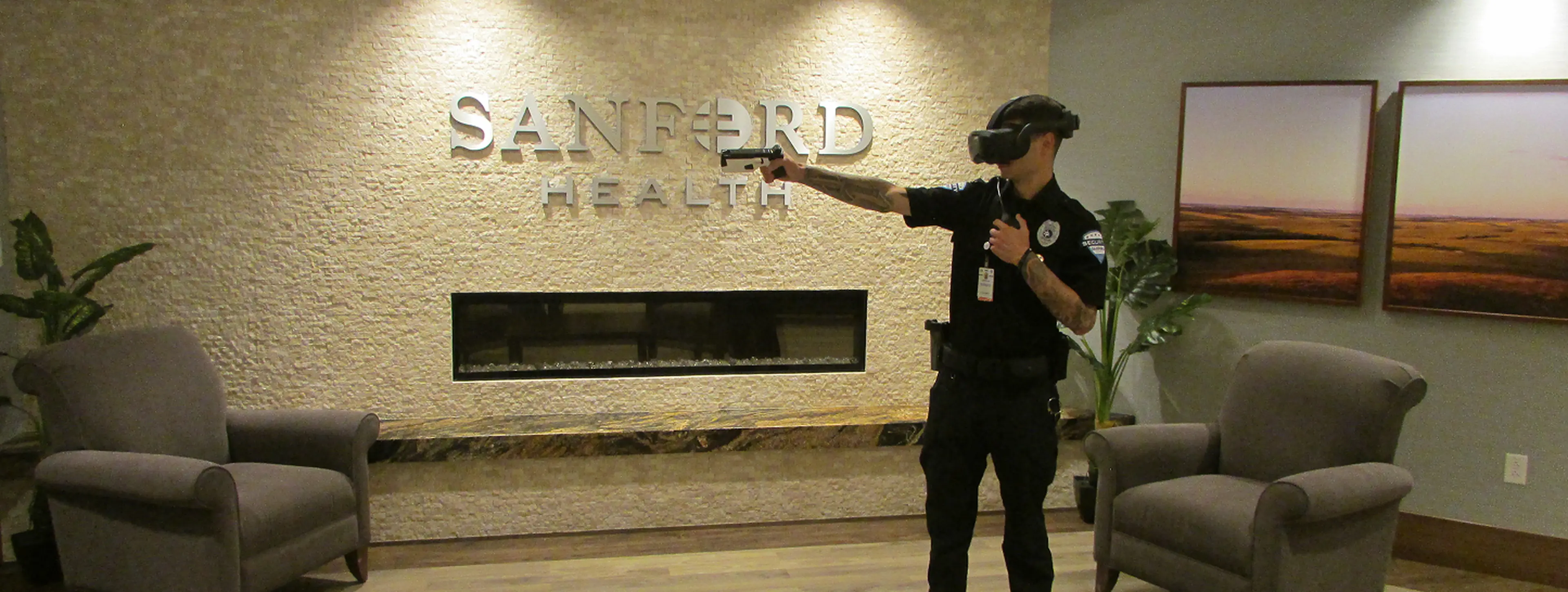
Replaced a 4-hour quarterly training session with monthly VR training sessions of 15-minutes per officer
8 year streak without a TASER 7 deployment, thanks to de-escalation training and the deterrent effect
Day-shift training timeline reduced from 2 weeks to 3 days with Axon VR
Saved an estimated $40,000 a year in TASER 7 cartridge costs with use of Axon VR
Executive summary
The Sanford Health Security Team in Fargo, North Dakota, oversees three hospital campuses that together receive more than 10,000 patients, doctors, staff, and visitors each day. The team includes 70 officers who are staffed in groups of 8 to 10 per shift across three daily shifts. They field roughly 2,500 calls a month and navigate high-stress environments including Sanford Health’s emergency department, inpatient units, and a psychiatric unit. Despite this unpredictable setting, the security team has gone eight years without needing to deploy a single TASER energy weapon.
Training Supervisor Jordan Hall attributes that record to crisis intervention training, disciplined staffing, and a TASER 7 and Axon Virtual Reality program that replaced aging TASER X26P devices. The result is a security team that draws and arms a TASER energy weapon only two to three times a year, relying on it mainly as a visible deterrent rather than a tool of last resort.
Hall’s team is now centralizing its VR training location, adding new practice scenarios, and building programs to demystify the TASER 7 for nursing and administrative staff who work alongside security every day.
The challenge
Before the Sanford Health Fargo Security Team adopted TASER 7, campuses relied on TASER X26P devices that required manual updates and made evidence handling after deployment a slow, tedious process.
With workplace violence in healthcare sharply rising since 2020, the team needed more responsive technology that would allow them to support Sanford Health’s large patient population and the rising number of behavioral health cases moving through the emergency department.
Sanford also recognized the importance of training, and while classroom-based scenario training was effective, it was also pulling officers off shift for hours at a time. This often resulted in overtime pay and officers on the floor would run short-staffed.
The solution
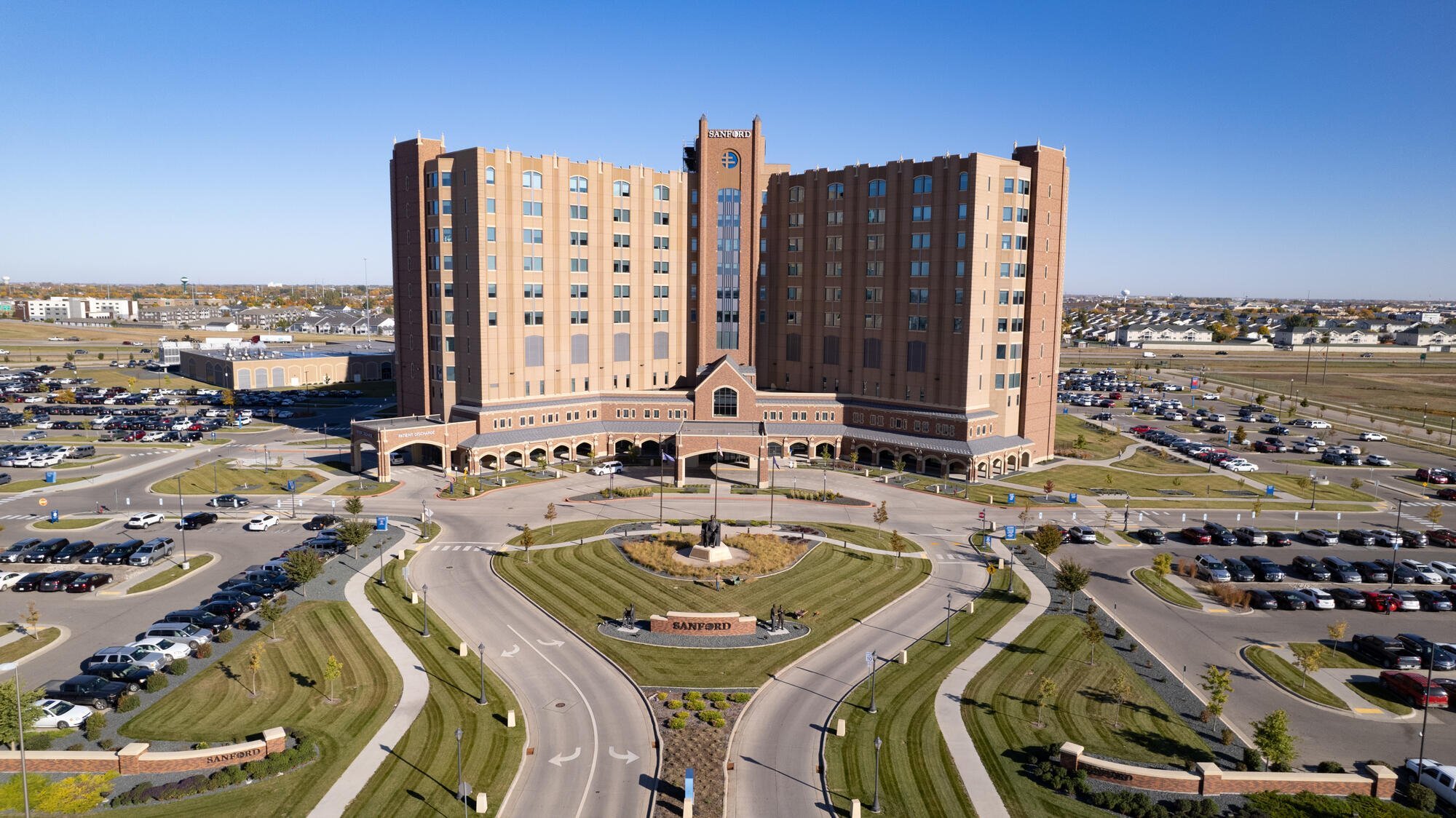 The Sanford Health Fargo Security Team rolled out TASER 7 and Axon VR simultaneously, pairing an updated device with a new training platform for officers.
Faster, lower-friction weapon management
TASER 7’s rechargeable batteries and dock system replaced the manual update cycle the team managed with the X26P, and evidence from any deployment now uploads automatically to Axon Evidence instead of requiring officers to pull it by hand.
Efficient and effective training
Sanford Health Security officers run live, scenario-based training with supervisors acting as role players, supplemented by Axon VR's healthcare-specific scenarios. These more niche scenarios allow officers to practice interacting with disgruntled patients, distressed family members, and violent visitors in the waiting room.
I would invest in VR training. That's the biggest thing. The amount of stuff you can do with it is boundless.
Results
Deterrence, not deployment
Sanford Health's security team has not deployed a TASER energy weapon in eight years, despite their significant call volume and workplace violence climbing since 2020. Officers draw and arm a TASER energy weapon only two to three times a year. For their team, the TASER 7 has served as a cue for de-escalation.
Having the TASER 7 as that backup, I think, gives our officers some more confidence to de-escalate.
In one recent incident, a patient brought in by the police for a mental health evaluation grabbed an object and threatened hospital staff. When de-escalation attempts stalled, security team officers drew and armed a TASER energy weapon; the patient complied immediately, and the team regained control without firing.
Confidence built through repetition
Active TASER 7 training carries real costs; cartridges run roughly $20 to $50 apiece, which limits how often officers can practice outside of their annual certification. Axon VR removes that constraint: officers can run holster draws, target acquisition, and trigger pulls repeatedly without the cost or risk of an accidental discharge.
Hall said the difference can be seen at annual certifications where newer officers struggle with a 21-foot drill involving an individual running at them in a HALT suit, while veteran officers who train more consistently in VR move through the drill with ease.
Training that doesn't cost staffing hours
Full scenario-based training sessions can pull officers off the floor for multiple hours, but Axon VR training sessions can be taken in between calls, letting officers train in less time. Training that once took two weeks to get through for day-shift officers now takes just three days with Axon VR.
VR is worth it because if officers are struggling, we can just throw them in for 10 to 15 minutes of practice once a month
The security team currently manages to fit in training roughly every three months given competing demands, with a goal of conducting training every month.
Reducing fear of the tool itself
Because officers understand how TASER 7 works and how effective it is as a deterrent, the security team is starting to bring nursing and administrative staff into that understanding as well. One hospital administrator asked to fire a TASER energy weapon herself while walking by an officer training session.
The team is now working toward performing demonstrations to hospital staff that would include a live exposure by a volunteer officer. Demystifying TASER technology will create an air of comfort and security across the health system’s personnel.
Conclusion and Looking Ahead
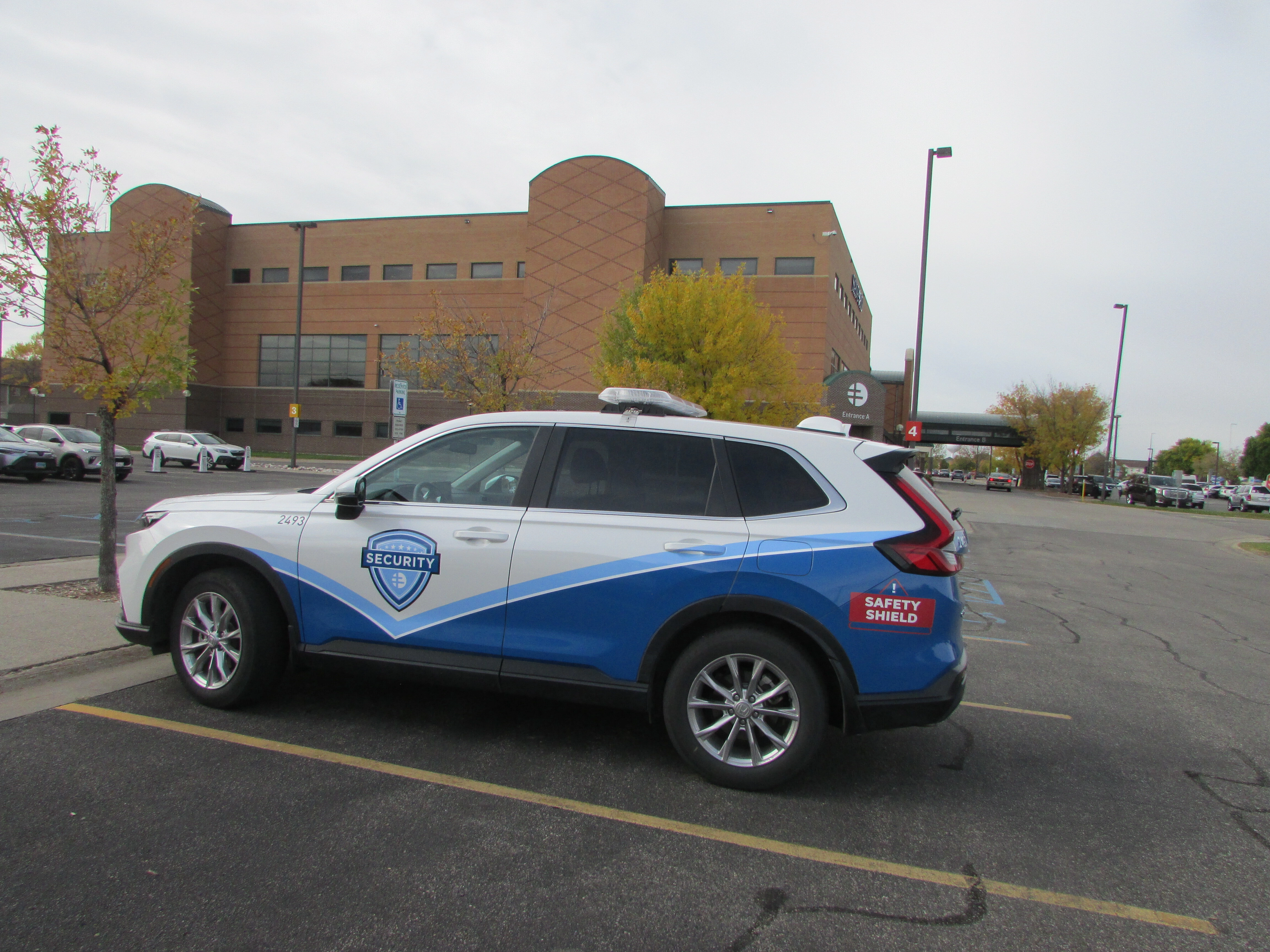 Sanford Health's Fargo Security Team is building a centralized training location where they can further utilize Axon VR to meet its monthly TASER energy weapon training goals. The team is also expanding its VR scenario library, investing in a red man suit to build no-shoot decision-making skills, and is in preliminary talks about adding body-worn cameras into their toolkit.