2026 retail and healthcare security leadership survey: 5 key takeaways
2026 retail and healthcare security leadership survey: 5 key takeaways
What we set out to learn
At Axon, we know safety and security challenges in enterprise industries do not stay contained to a single incident; they affect continuity, employee wellbeing, customer and patient experience, and the long-term resilience of an organization. As expectations rise and operating environments grow more complex, leaders are being asked to think differently about what it takes to protect people and keep operations running smoothly.
To better understand how organizations are navigating that challenge, we surveyed more than 250 security leaders across retail and healthcare in the United States. The findings show a clear shift: safety and security has moved firmly onto the strategic agenda, and investment is accelerating in response.
The findings at a glance
93% of healthcare and retail security leaders say safety and security is an essential or high priority.
82% of leaders report at least moderate operational disruption in the past 12 months.
83% of respondents favor or strongly favor increased investment in technologies and strategies to improve safety and operational efficiency.
The majority of leaders support technology solutions ranging from real-time monitoring and body-worn cameras to de-escalation training, drones and counter-UAS technologies, AI-powered tools, and more.
:format(webp))
Here are five key takeaways from the report
1. Safety and security is now a core business issue
Leaders in both sectors are treating safety and security as a top concern: nine in ten respondents say workplace safety and security is an essential or high priority, and more than four in five say safety or security challenges have caused at least moderate operational disruption in the past year.
These challenges are affecting how organizations function. At the same time, many organizations are still early in the process of fully integrating safety into their enterprise strategy, which suggests the priority is established even if the operating model is still catching up.
2. The business costs are broader than many organizations may realize
One of the clearest findings in the survey is that the impact of safety challenges extends far beyond the immediate event. Leaders report higher insurance and legal costs, increased employee turnover, and steeper hiring and recruitment costs among the most common consequences. These pressures build over time, creating a compounding toll across operations, HR, finance, legal, and more.
That is part of what is driving a broader business conversation about safety — the conversation cannot include only reactive response, but also proactive strategies to mitigate incidents and create safer workplaces.
3. Investment is accelerating, and leaders are interested in building connected safety ecosystems
Leaders are already showing confidence in finding solutions to address safety and security, with 83% favoring increased investment in technologies and strategies designed to improve both safety and operational efficiency, and nearly all reporting some degree of budget growth. Technology is the leading destination for new investment, but personnel and training remain close behind, signaling that organizations understand tools alone are not enough.
Just as important, support is broad across every solution category tested, showing that leaders are interested in investing in diverse products that can provide a more connected approach. This includes support for real-time monitoring, body-worn cameras, de-escalation training, drones and counter-UAS technologies, employee wellness initiatives, physical security infrastructure, and more. AI fits into that larger picture as well: every AI application tested in the survey received majority support, from real-time alerting and adaptive training to real-time translation and policy lookup.
Connected safety ecosystems bring together visibility, communication, preparedness, accountability, and response. Solutions like Axon Body Mini, Fusus, MetaCoach, Dedrone, and more can work together to build the integrated approach that leaders are looking for to improve awareness and reduce friction across the organization.

4. Leaders want technology that delivers real value and fits into the business
The survey makes it especially clear that leaders are looking for practical value in any solutions they adopt. Respondents associate safety and operational technologies with better productivity, stronger incident documentation and accountability, clearer visibility into risk, reduced legal and insurance exposure, and safer environments for employees.
They are also cognizant of the structures that that need to be established in order for new solutions to succeed in the workplace. Strong internal governance, employee training, and integration with existing systems rank among the top factors that increase confidence in adoption. Executive and board-level alignment matters too. In other words, success is determined by what the technology can do, but also how it must be properly implemented into the daily functions of the organization.
5. A shared commitment, shaped by different environments
Retail and healthcare leaders are aligned in treating safety and security as a serious organizational priority, but the pressures they are responding to are shaped by very different environments. In healthcare, safety is closely tied to care quality, patient trust, and the conditions that support better outcomes. Any disruption can affect the broader care environment. Meanwhile, in retail, safety challenges can quickly disrupt store operations, affect frontline employees, and shape the customer experience in real time. The context may differ, but the emphasis is universal.
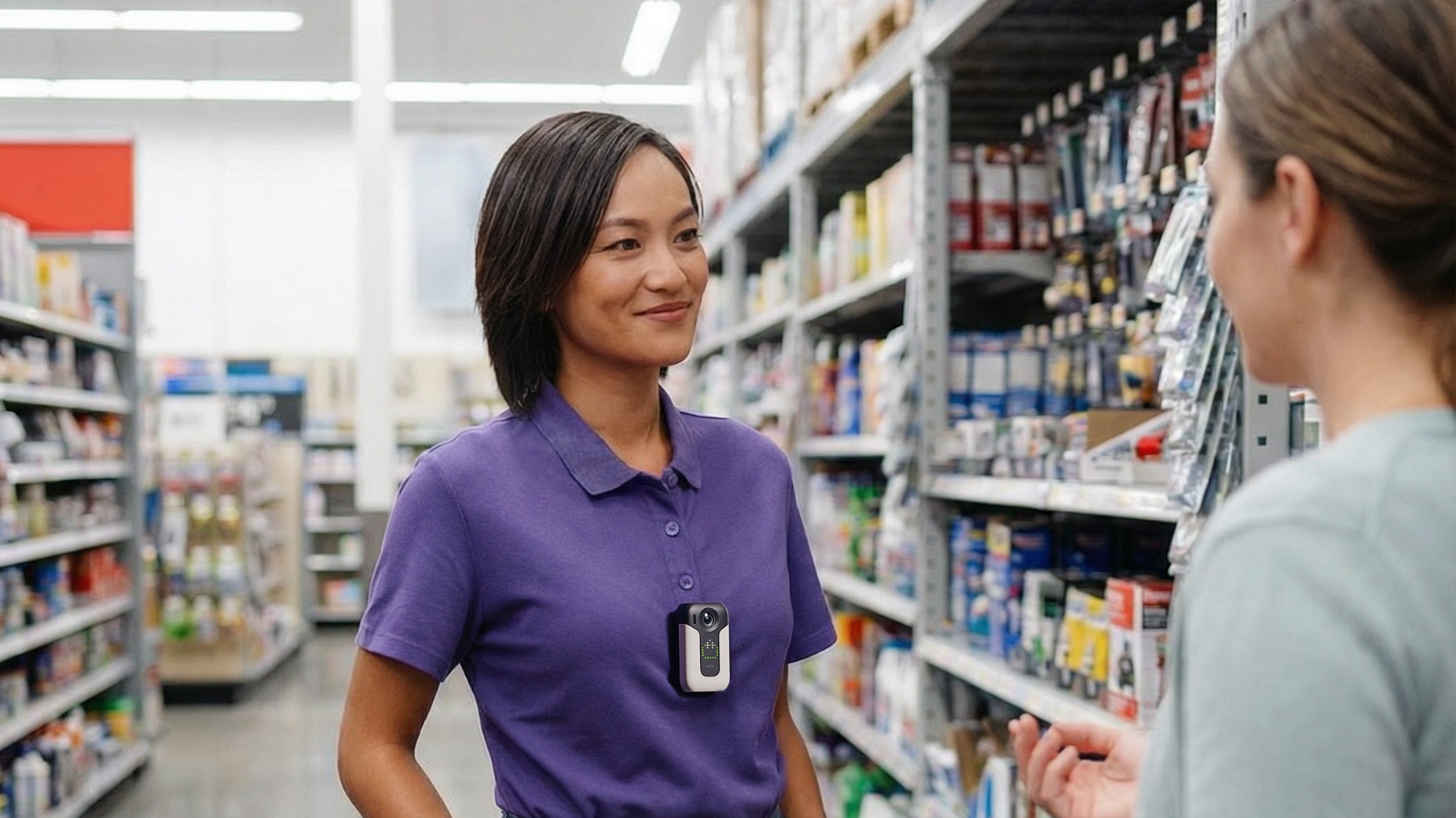
Safety and security has changed shape, and is no longer something leaders can afford to think about only after the fact. Today, it is tied to operational continuity, employee wellbeing, customer and patient experience, and the ability to build more resilient organizations over time. The leaders in this survey are responding accordingly, with stronger investment, broader adoption, and a growing recognition that the most effective strategies will combine technology, training, and clear operational discipline.
Check out the full 2026 Retail & Healthcare Security Leadership Survey for more insights.