Customer Stories
More than eyes on the street: San José’s vision for real-time public safety
When the San José Police Department launched its Real-Time Intelligence Center (RTIC) in early 2025, it didn’t take long for the results to come in—and the results to speak for themselves.
A homicide suspect identified. A man fleeing an assault scene tracked and arrested. A knife fight in a public park. A woman reported carrying a rifle. In each case, the RTIC was there—pulling video, scanning license plates, and updating patrol units in real time.
“We’re that bridge,” says Commander Todd Jennings. “We’re watching it unfold and feeding information back while officers are still headed to the scene.”
Before RTIC, San José PD utilized their intelligence unit—but it was mostly reactive. Analysts reviewed data after an incident occurred. Now, the mission is forward-facing. Real-time. Responsive.
“We turned it from a crime data unit into a real-time operation,” Jennings explains. “Our main mission is to support patrol. So, when hot calls come in, we’re pulling up video feeds, scanning license plates, using Axon Fusus to check intersection cameras—doing our part to get critical information out fast.”
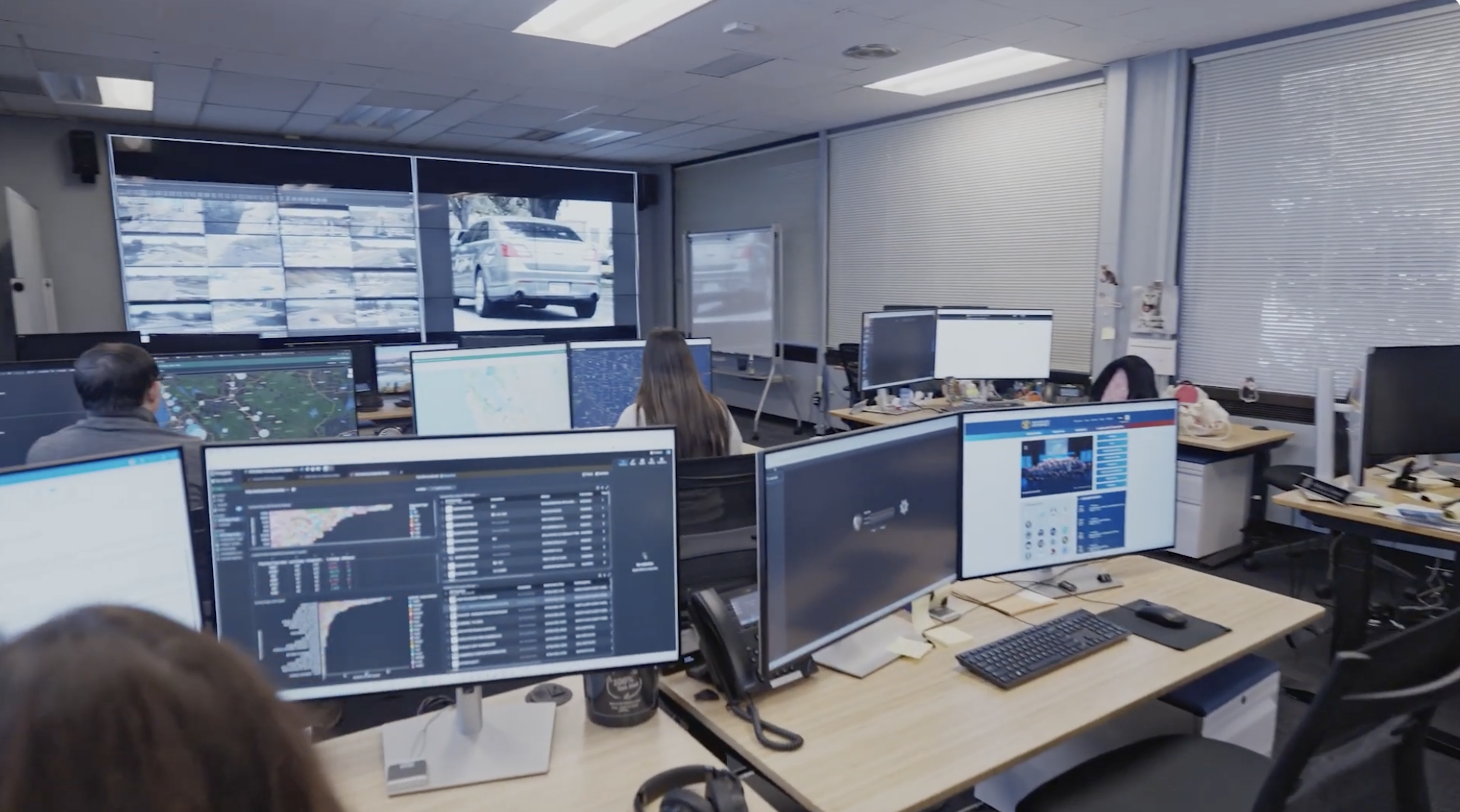
The center operates with a small but growing team—sworn officers, civilian analysts, and more on the way. That balance is by design. “To be successful, I think you have to have both,” Jennings says. “Officers have instinct, and our analysts are incredible at digging into sources—plates, databases, vehicle details. They’re just all over it.”
At first, not everyone knew what to make of the new center. But it didn’t take long to prove its value. Today, when a high-priority call comes in, the first question officers ask: “Is RTIC up?”
It is. And it is making a difference—one call at a time.
In its first week online, RTIC helped identify a homicide suspect by matching a red SUV captured on surveillance footage with a license plate reader hit from a nearby intersection. Analysts tracked the vehicle across data sources, confirmed the driver’s identity, and—by nightfall—the suspect was in custody.
In another case, analysts monitoring dispatch heard a call about an assault involving a metal rod. They quickly located the suspect using nearby cameras, guiding officers in as the incident unfolded. A weapon was recovered, and the suspect—wanted on multiple warrants—was arrested.
When a knife fight broke out near a public park, analysts provided live camera feeds and radio updates to responding officers.
Jennings recalled a sergeant who arrived solo at the scene. “While he was dealing with the suspect and injured victim the RTIC was broadcasting critical radio traffic to incoming units. Officer safety is number one....and catching the bad guy.”
The result: the scene was secured, the suspect was arrested, the weapon recovered, and two injured individuals were transported to the hospital.
But it’s not just about arrests. RTIC is helping solve cases that span weeks or months—robbery crews, fatal collisions, connected crimes. RTIC analysts and officers gathering intel from homicide, sexual assault, and the traffic investigations unit. They connect dots, surface leads, and add crucial layers of insight—often behind the scenes.
One of the biggest shifts, however, isn’t happening inside the RTIC—it’s unfolding across the community.
San José PD is investing heavily in Connect San Jose, a program that invites residents and business owners to take part in public safety by registering or integrating their security cameras.
At its most basic level, camera registration simply lets the department know where cameras are located. There’s no live access, and no footage is collected unless an incident occurs nearby. In those cases, officers can send a digital request—no door-knocking or hardware needed—and camera owners can easily respond on their own terms. It’s faster, more efficient, and designed to respect privacy.
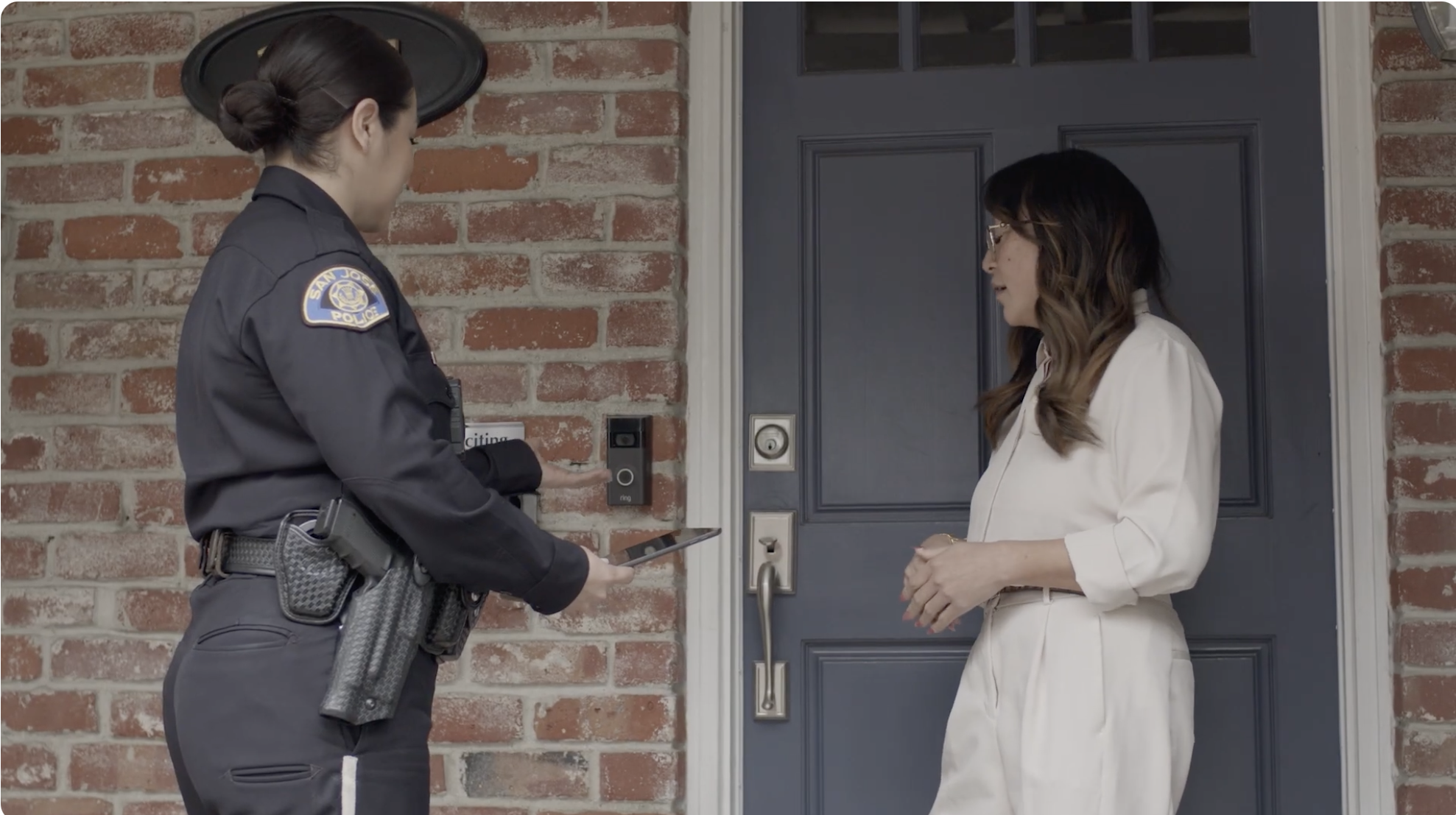
For businesses or organizations that want to go further, integration with a Fusus CORE device allows live access during emergencies. If something happens near a business’s location, the department can view the feed in real time—improving response times and helping officers arrive better prepared. Some businesses opt to share full-time access, while others choose to activate it only in specific scenarios. Participation is always voluntary and fully permission-based.
To make the program more accessible, San José PD has partnered with the Santa Clara County District Attorney’s Office, who provided a grant to help fund Fusus CORE devices for businesses. This initiative covers the cost of the CORE device, and the registration cost for one year. The business or organization works with the Axon Fusus Connect team to set preferences and permissions.
“Involvement is totally up to [a camera owner’s] comfort level,” Jennings emphasizes. “Even if they don’t integrate, just registering their cameras helps. It lets us build a map of available footage. If something happens, we geofence the area and send a request: ‘Check your footage.’ That alone can be a game-changer.”
San José is reshaping how public safety happens in real time. What once took days—reviewing video, chasing leads, building timelines—can now unfold in minutes. Officers respond faster. Investigations gain traction sooner. And the community becomes an active participant in its own safety.
“San José is the capital of Silicon Valley, so it is only fitting for the San José Police Department to utilize advancing technology to stop crime in real time,” stated San José PD Chief of Police Paul Joseph. “RTIC has been a game changer in helping identify critical information and evidence that leads to the apprehension of some of the most violent and dangerous suspects.”
With the RTIC, momentum is growing. RTIC hours are expanding. Staffing is set to grow. And autonomous drones are on the horizon—adding aerial visibility to a system already grounded in speed and precision.
“We’re going to be the ones solving these cases in real time,” Jennings says. “Not days later.”
In a city driven by innovation, San José isn’t just keeping pace—it’s setting it. With real-time intelligence, community-connected cameras, and smarter tools in the hands of officers, the department is showing modern public safety works best when it’s done with the community, not just for it.
From residential blocks to busy business corridors, the department is building a new kind of partnership—where public safety is shared, supported, and strengthened by the community itself.