:format(webp))
At a glance
Agency: Redmond Police Department (Washington)
Population served: 80,000 residents; 170,000 daytime population
Sworn / professional staff: 85 sworn; 50 professional staff
DFR units: 8 drones
Dock footprint: 3 locations × 2 docks each
Coverage area: City of Redmond, including major tech campuses
Key solutions: Axon DFR, Skydio docks and aircraft, Axon Fusus, Axon Evidence
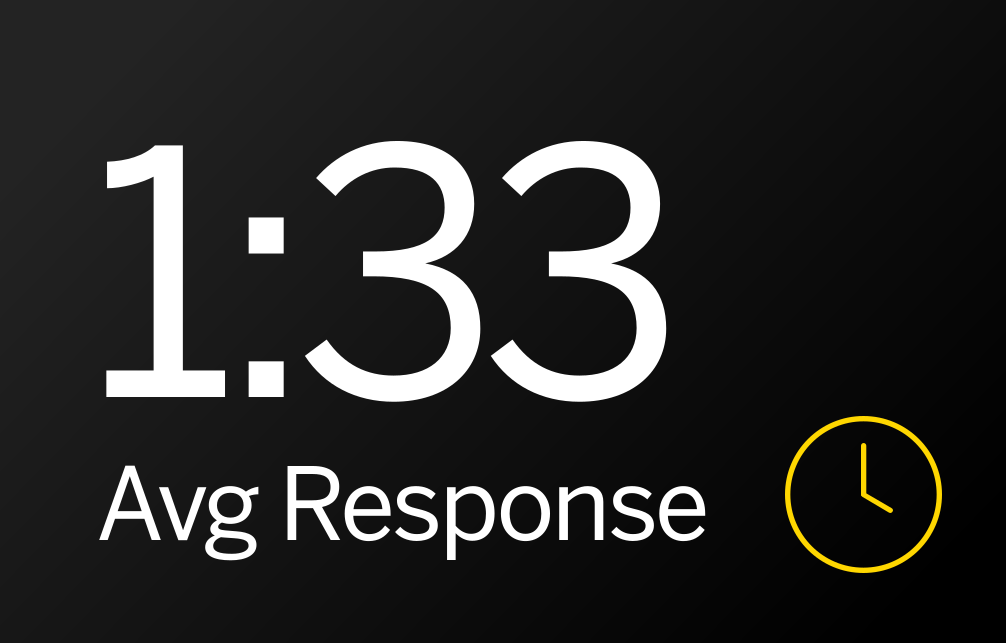
Average response time for DFR
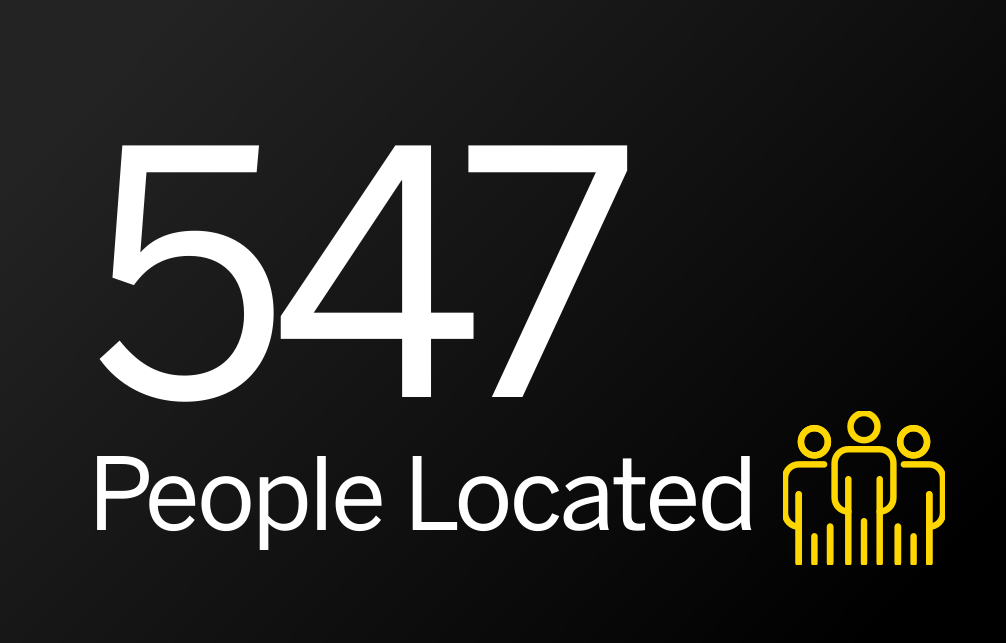
People located in 2025 with DFR
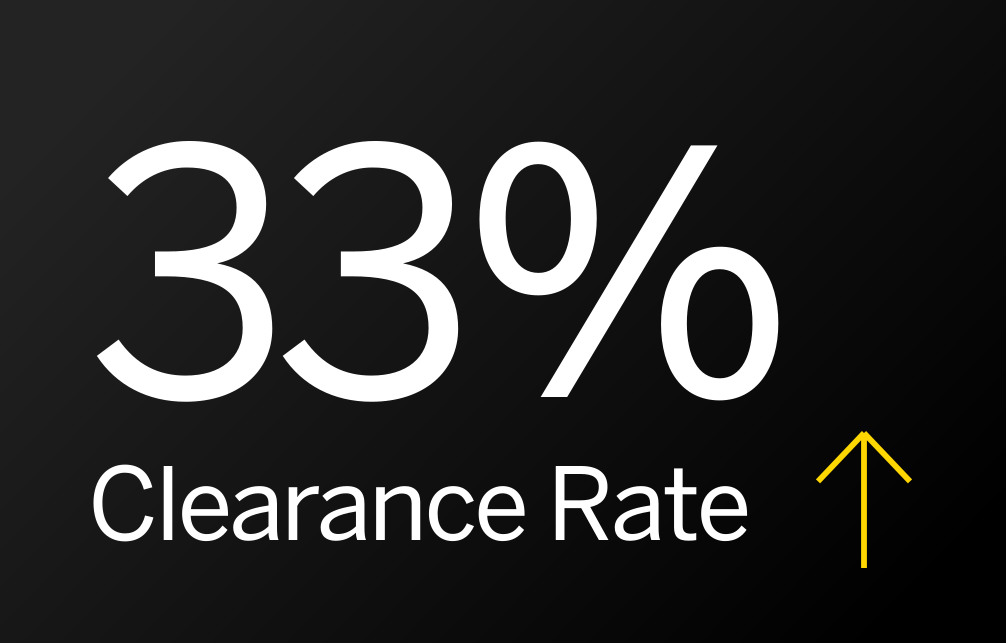
Increased clearance rates for property and retail crime
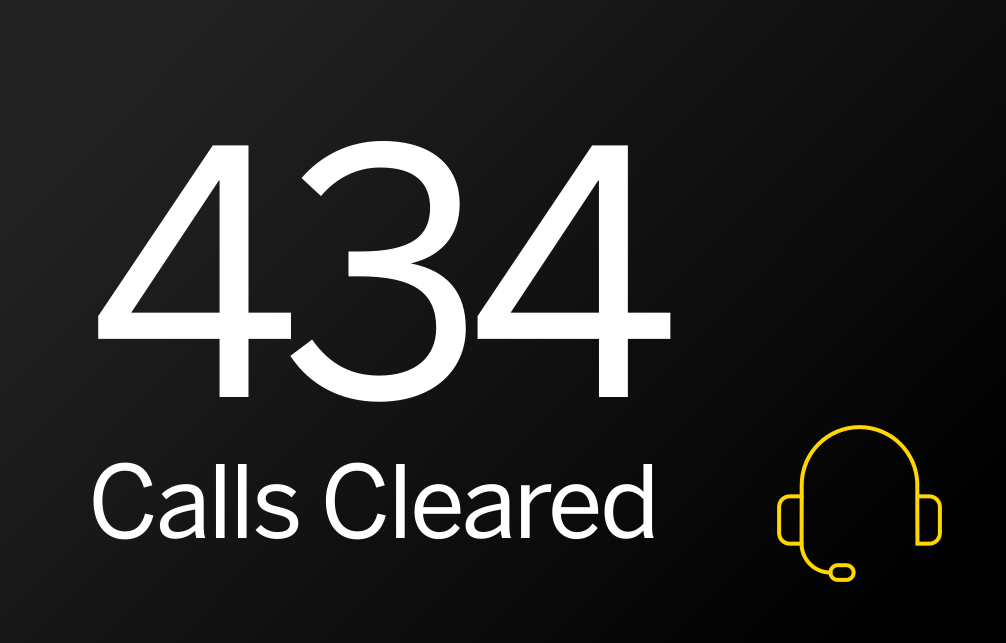
Calls cleared by DFR in 2025

Cost saving from clearing calls with DFR
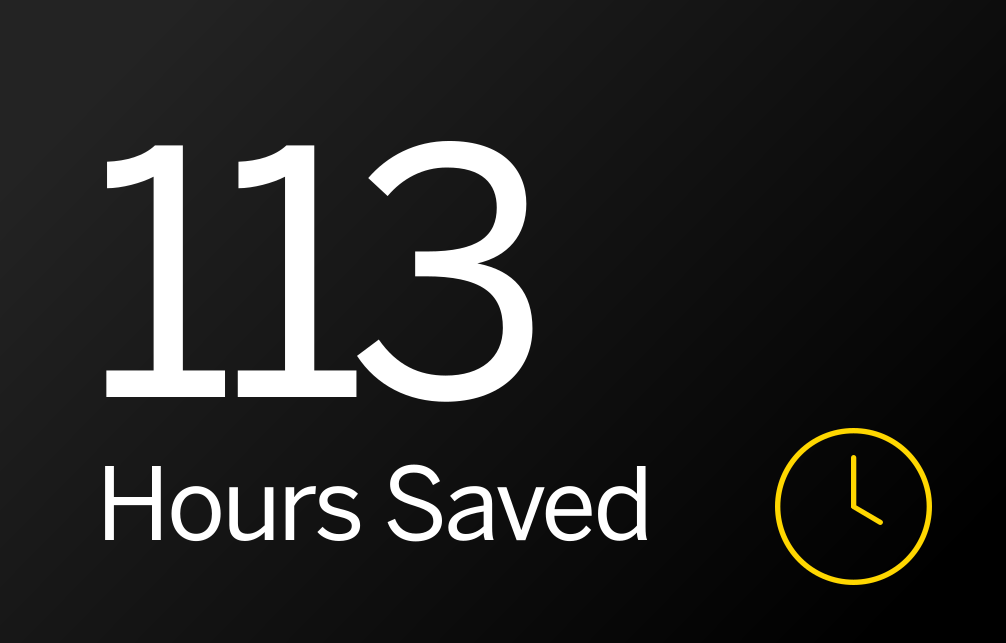
Overtime hours saved after BVLOS approval
About Redmond PD
Located about 25 miles northeast of Seattle, Redmond balances residential neighborhoods with global technology campuses. Its daytime population more than doubles due to workforce inflow. The department operates its own dispatch center and maintains full patrol and investigative services with approximately 135 total personnel.
The challenge
Redmond Police Department serves a community with two distinct operational realities: a residential population of roughly 80,000 and a daytime population that more than doubles as employees commute into the city’s technology and business campuses. With a relatively small patrol force supporting this dynamic environment, the department needed ways to improve situational awareness and make smarter decisions about how resources were deployed.
Like many agencies, officers often responded to calls with limited information beyond what a stressed 911 caller could provide. This increased the risk of escalation. Leaders at the department wanted to give officers clearer information before they arrived on scene, helping them approach calls more safely and deliberately.
At the same time, Redmond needed to improve operational efficiency without reducing service levels. Patrol officers frequently had to interrupt reports or other calls to respond to incidents that ultimately required no police action. Reducing those unnecessary responses would allow officers to focus more attention on the calls that truly required their presence. Any new technology, however, also needed to demonstrate measurable value to city leadership and the community.
The solution: Full-time, fully integrated DFR
Redmond leaders approached drone technology with a clear philosophy: it had to solve real operational problems or create measurable efficiency. As Chief Darrell Lowe explains:
My philosophy is that we don’t invest in technology just because it's the newest and shiniest thing. We invest in it because it either has to solve a problem that exists or create an efficiency within our operation. Those are two of my driving pillars when it comes to public safety tech.
With that framework in mind, Redmond launched a full-time Drone-First Response (DFR) program designed to deliver immediate situational awareness to officers in the field. Rather than deploying drones occasionally or as a limited pilot, the department built a citywide system that allows drones to arrive overhead quickly and provide real-time intelligence before officers reach the scene.
Three drone dock locations positioned across the city allow aircraft to launch rapidly and cover Redmond within minutes. Officers gain visibility into incidents earlier in the response, often before patrol units arrive. Integration with Live 911 allows pilots to begin responding even before a call is fully processed in CAD, accelerating how quickly aerial eyes arrive during calls for service. Patrol-deployed drones also supplement the dock network when additional flexibility is needed.
To maximize the value of aerial intelligence, Redmond co-located drone pilots with real-time operations analysts in a dedicated flight center, enabling faster coordination and more informed decisions during active incidents. From there, pilots communicate directly with responding officers, providing continuous updates that help officers adjust their response as new information becomes available.
Drone footage automatically uploads into Axon Evidence, making aerial video immediately available to investigators and prosecutors. By connecting drones, dispatch intelligence, and digital evidence within a unified real-time operations workflow, the department created an environment where aerial awareness guides safer responses and strengthens investigative outcomes.
From rooftop observers to BVLOS
Like many early drone programs, Redmond initially faced operational limitations that required a visual observer to maintain line of sight with the aircraft. During the early proof-of-concept phase, that meant stationing an officer on the roof of City Hall to monitor drone flights whenever the program was active. The department converted an HVAC room into a small workspace and even installed a tent and fans during the summer to make the assignment workable.
Over the course of six months, this requirement resulted in 679.25 hours of overtime paid.
That changed on November 22, 2024, when Redmond received Beyond Visual Line of Sight (BVLOS) authorization, allowing pilots to operate drones remotely without a rooftop observer. With the waiver in place, pilots could launch directly from the real-time operations center, eliminating the need to staff rooftop observers, saving the agency hundreds of overtime hours while significantly improving operational efficiency.
The shift allowed the department to focus personnel on delivering aerial intelligence rather than maintaining compliance logistics, making the DFR program more scalable and sustainable. With the program fully operational, the impact quickly became visible in how officers respond to calls for service.
How DFR changed incident response
One of the primary benefits of the DFR program is the enhanced situational awareness during responses to calls for service. Thanks to their average on-scene time of one minute and 33 seconds, DFR is the first to arrive in 80.1% of deployments. Officers receive live updates from the DFR team and real-time operations staff while en route, giving teams shared visibility that supports safer and more strategic approaches.
 One incident in particular demonstrates the value of this for the Redmond community. When a 911 call reported three teenagers wearing ski masks, dressed in dark clothing, and pointing what appeared to be assault rifles at people, DFR was dispatched immediately. The DFR unit arrived and identified that three youths were actually carrying non-lethal airsoft guns, and even noted when one of the guns was dropped in a nearby flower bed.
This dramatically changed the officers’ approach, avoiding a potentially tragic confrontation. As Jason Fisher, the Innovation, Research & Planning Manager for Redmond PD says, “The drone allows us to change the way we respond. We can de-escalate situations before officers ever arrive.”
Additional results
The city of Redmond has experienced several other benefits and return on investment thanks to the agency’s DFR program. In order to promote transparency and demonstrate the value to their community, Redmond maintains a Drone as First Responder Activity Dashboard. You can view the dashboard to see the department’s latest program metrics.
People located
547 people were located thanks to DFR in 2025. Anytime a search for an individual was required, whether they were a missing person, a victim, or a suspect, DFR was dispatched. Having aerial visibility and thermal sensors to detect heat signatures helps officers locate people much more quickly and safely.
 Officer efficiency
In 2025, 434 calls were cleared by a DFR Unit (approximately 16–17% of DFR calls). This saved officers time and ensured they were available when higher priority calls came in. In addition, it reduced unnecessary travel, vehicle wear, and the interruption of existing investigations.
If each call required about one hour of officer time on average, Redmond estimates those 434 calls represent approximately $59,579 in avoided wages and vehicle-related costs. Another benefit? By reducing the number of unnecessary responses, officers were able to respond to priority calls with a greater level of focus and energy.
Canceling unnecessary responses improves officer focus and overall call quality.
Improved clearance rates for retail crime
Like most cities, Redmond experiences property and retail crime. Since implementing the DFR program, however, the department has seen an improvement in case clearance rates. Historically, if someone robbed a retail store they could disappear.
Now, however, a DFR unit can be overhead so quickly that the suspect can be identified and followed by the DFR until human officers arrive on scene. Fisher explained: “With the drones overhead in less than two minutes, where are you going to go? Even if you get in a car or bus and try to leave town, which is pretty common, the DFR just follows the vehicle until an officer stops it.”
Since launching the program, Redmond has observed an increase in retail crime clearance rates, rising from 22% in 2023 to 29.2% in 2025 (a 32.7% improvement). While multiple factors contributed to this, DFR has certainly played a role by supporting faster identification and tracking of suspects.
Recruitment and modernization
Technology-forward operations have also strengthened recruitment and retention, attracting applicants interested in modern policing tools and career flexibility. Fisher explained, “the younger generation is excited about coming here because of the technology that's available to them in our police department, and the fact that we're going to be on the edge with new stuff.”
Conclusion & Looking Ahead
Redmond’s DFR program demonstrates how drones, when integrated into a real-time operations model, can deliver measurable improvements in safety, decision-making, and resource efficiency. The department plans to expand dock partnerships, further integrate AI-enabled capabilities, and partner with Microsoft to place docks on their security operations center.
In the coming months, the department is scaling operations in preparation for major international sporting events in nearby Seattle. With the city connected directly to the stadium district by light rail, Redmond expects an influx of visitors — and DFR will help officers maintain rapid situational awareness as activity across the region increases.