:format(webp))
At a glance
Organization: Tennessee District Attorneys General Conference
Population Served: 7,228,000 million
Conference Size: 95 counties and 32 judicial districts across Tennessee
Digital Evidence Library: 2.5 million hours of BWC footage in Tennessee
Key Solutions: Axon Justice, Brief One
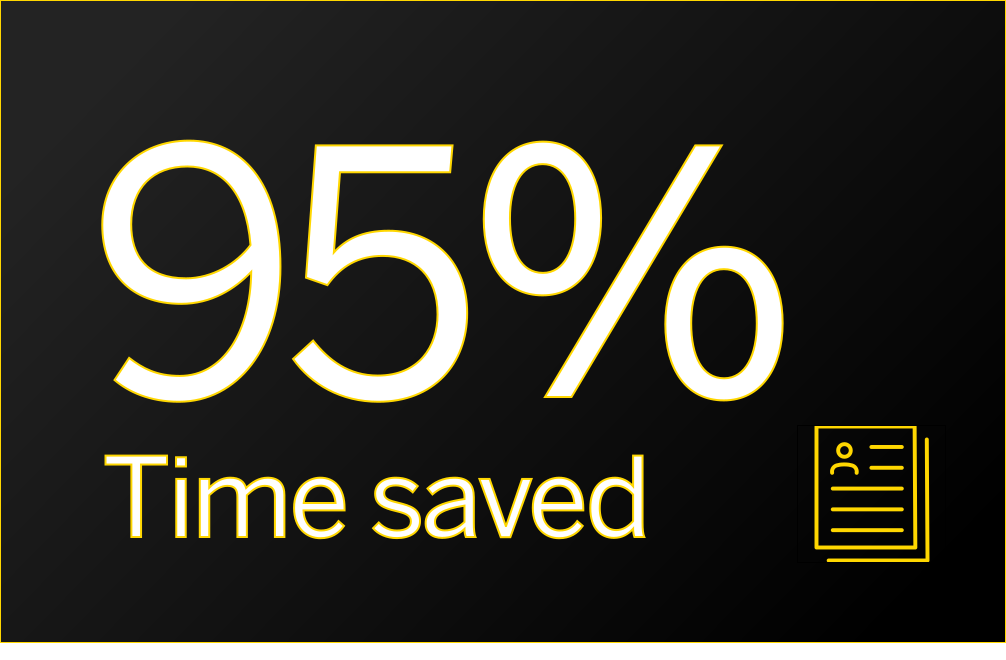
Case Preparation time

Saved $27,000 in one month
:format(webp))
Reduced burnout
A Profession at its breaking point
Prosecutors across the country are leaving their jobs at an alarming rate. These professionals are driven by a desire to help ensure the right decisions are made for victims, for their community, and for the truth. They care for this work, and they are willing to stand up in a courtroom and answer for those decisions.
So why are they leaving their profession?
The whole reason we became prosecutors was to help people. We're the people that hold the hands. We're the people that look into the eyes of the people that are hurting.
As Executive Director of the Tennessee District Attorneys General Conference, Steve Crump drives policy and initiatives for prosecutors across the state, 95 counties and 32 judicial districts. A former assistant district attorney and twice-elected district attorney, he has spent a career experiencing the rising pressures being felt by prosecutors.
Prosecutors do not quit because they stopped caring. Instead, it’s the impossible dockets, the late nights, the fear of missing something, and the consistently rising tide of preparation work that pushes good lawyers out of public service.
Crump believes that responsible Artificial Intelligence (AI) solutions, with human judgment firmly at the helm, can help. Tennessee's prosecutors have embraced Axon Justice and other AI-driven tools. This change has enabled them to spend less time on their case preparation and admin work, and more time actually helping people.
We're not changing who we are or what we do. We're changing how we do it. And by simply changing how we do it, we're saving careers.
"We're not changing who we are or what we do. We're changing how we do it. And by simply changing how we do it, we're saving careers." — Steve Crump
In this article, we will explore the ways in which Tennessee is helping their prosecutors avoid burnout.
The Challenge: an unsustainable volume of digital evidence
Crump frames the scale of the problem with a single number.
There are currently [as of April 2026], in servers across the world, 285 years' worth of Axon body camera footage just from Tennessee.
That figure, roughly 2.5 million hours of footage, is the digital evidence backlog from a single state. As Crump puts it, if every prosecutor in Tennessee did nothing but watch video, eight hours a day, they would never catch up; and if somehow they could watch it all, it would take nearly two years of their team doing nothing else. Digital evidence now touches virtually every case, and the volume grows every year.
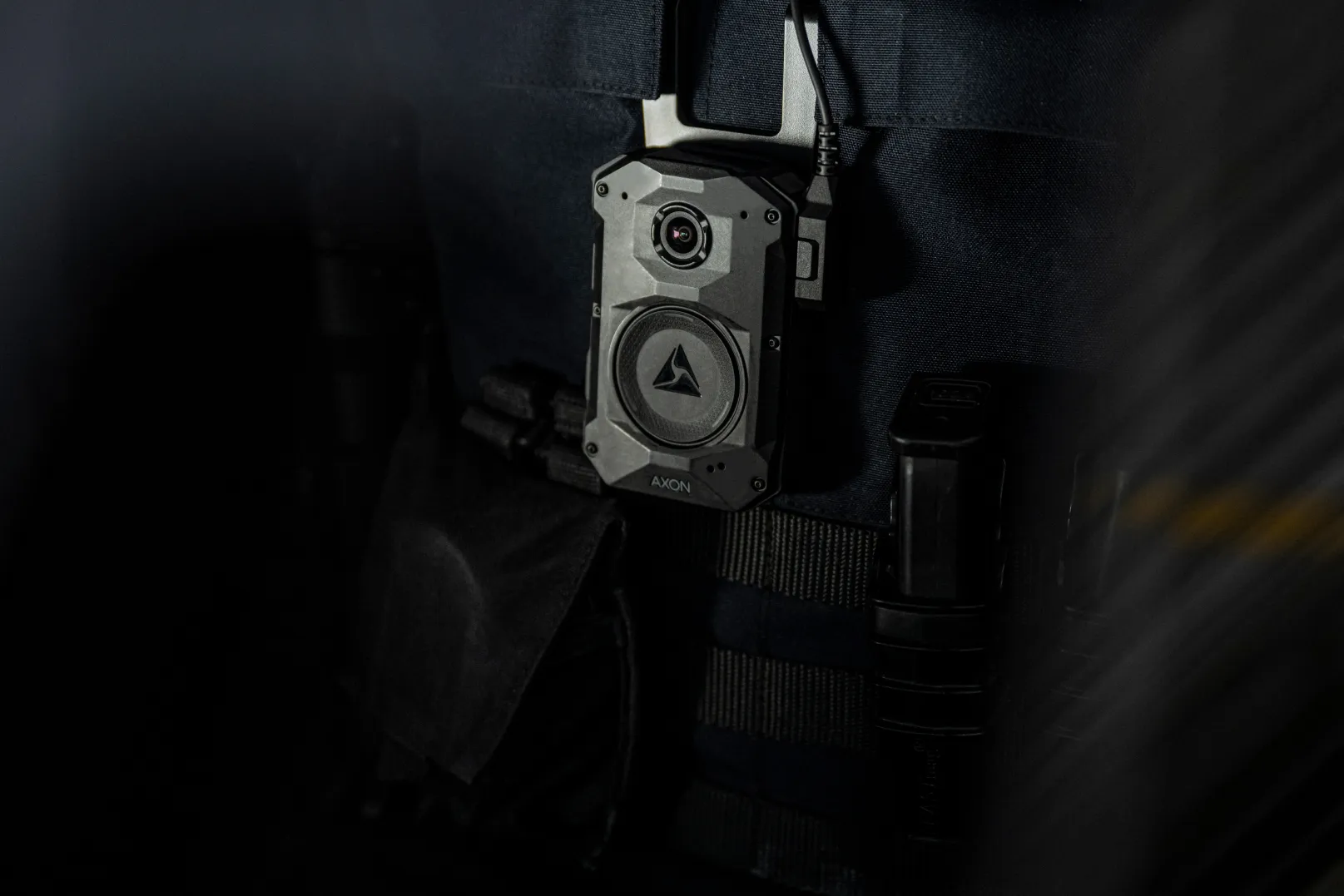 But Crump is emphatic that volume alone is not what breaks people. The deeper threat is friction, the accumulation of small, grinding, repetitive tasks that surround the actual work of justice:
The hidden burdens of every case — the hard victim call you know is coming, the exhausted officer who cannot be reached, the missed lunch, the boss frustrated by a missed deadline. The tiny frictions, not the explosive moments, are what wear prosecutors down.
Repetitive manual review — opening files one at a time, watching hours of footage all the way through, rewriting the same boilerplate again and again.
Secondary trauma — watching the same disturbing footage repeatedly, simply to find the moment that matters. Crump calls this "a silent attrition engine."
No relief from headcount — Tennessee added roughly 800 state troopers, 250 investigative agents and 170 homeland security positions in recent years, while prosecutors gained just 10 lawyers in three years, with no new positions expected and a constant stream of new crimes and enhancements.
The result is a turnover crisis that predates AI entirely. Prosecutor turnover runs an estimated 15 to 25 percent, with early-career attrition reaching 30 to 40 percent. Every departure adds to the friction for those who remain: reassigned cases, added dockets, lost institutional knowledge, and more.
People aren't leaving because they don't care. They're leaving because their job is unsustainable.
The Solution: AI as a tool, not a replacement
Crump's central argument is to use AI to reduce the friction that slows cases and leads to burnout. AI is not a robot prosecutor and was never meant to be. It is a tool, and like any powerful tool, its danger comes only from surrendering human control over it.
We take the human control of that tool, and we make it useful, and we make it safe… It's not your enemy—unless you surrender your autonomy.
Crump meets prosecutor hesitations around AI directly:
To the fear that a machine will make charging decisions: nobody is suggesting AI should do that.
To the discomfort about cloud storage: nearly all data already lives in the cloud, because no organization can build enough servers to hold 285 years of video; what matters is control systems and audit trails.
To the worry that AI hallucinates: so do young lawyers, and the profession's answer is to supervise and train them, not discard them.
To the concern that automation will de-skill attorneys: "You don't sharpen a blade by exhausting the person holding it. AI is a paralegal that never sleeps, not a prosecutor with a badge."
In Tennessee, this philosophy is backed by firm guardrails to help protect their prosecutors and community members. The office treats CJIS-level security as non-negotiable, prohibits uploading sensitive case data to public large language models, and requires human review of AI output, always, without exception.
AI manages information, not justice. Governance turns that risk into protection.
How AI transformed the prosecutorial workflow
With Axon Justice and integrated legal-research tools, Tennessee prosecutors gained a way to put AI to work exactly where the friction lives—without ceding an inch of judgment.
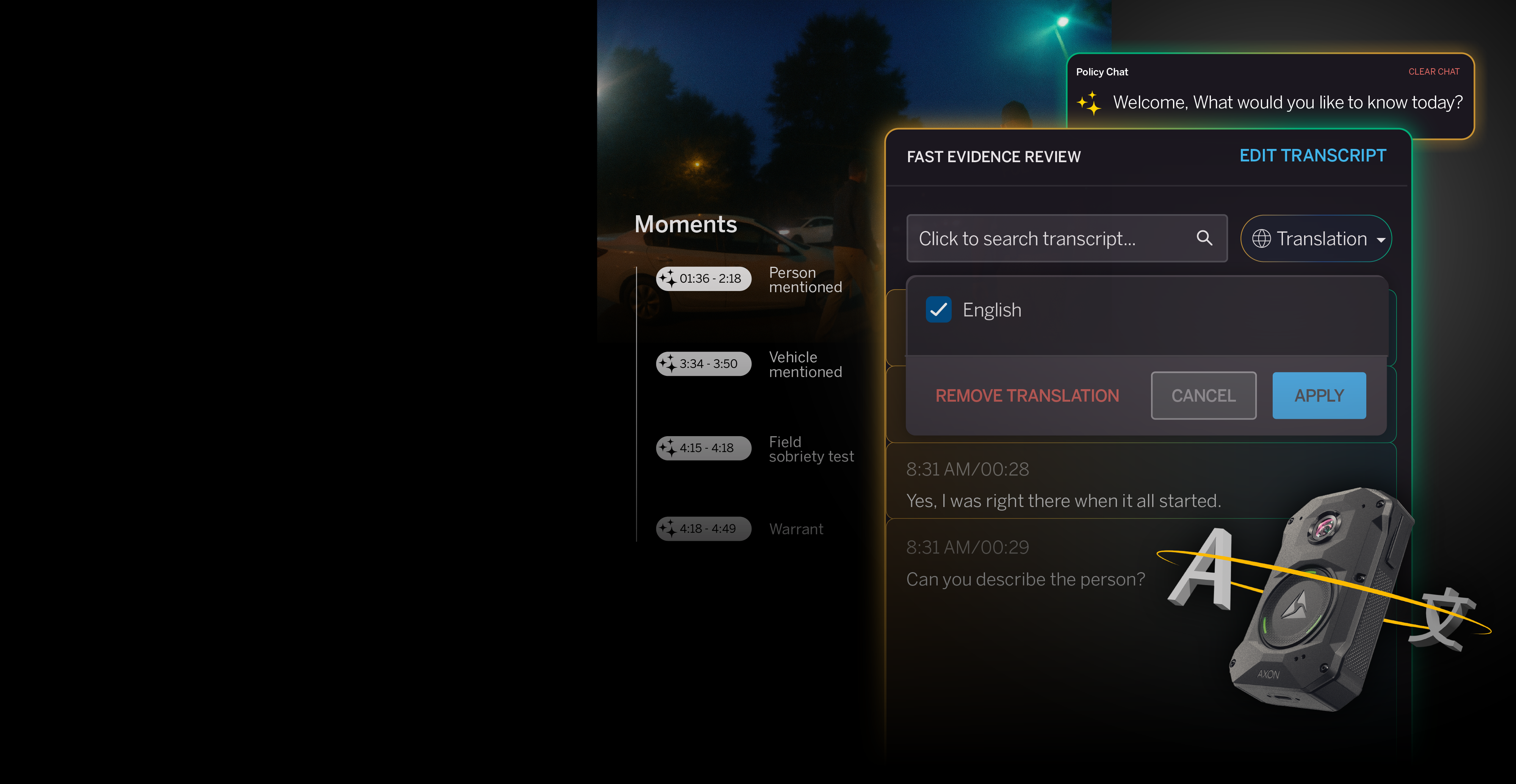
1. Rapid evidence triage with Brief One: Instead of opening files one at a time, prosecutors load all of a case's audio and video into Axon's Brief One, which surfaces key moments, summaries, and breakdowns. It does not replace review, but rather recommends where to start. In one district, a prosecutor ran roughly 600 hours of jail calls through the platform and identified about 70 different crimes discussed across them, in under an hour. Preparation that once took five hours can now take fifteen to thirty minutes.
:format(webp))
2. Transcription that saves real money and time Axon's transcription function has changed multiple fronts of the work at once. One district outside Nashville saved $27,000 in a single month on transcripts by providing AI-generated transcriptions to defense counsel and reserving certified transcripts for when they were truly needed. The tool transcribes anything loaded into it, including preliminary hearings, producing a full transcript in about ten minutes rather than waiting on a court reporter.
3. Keyword search across mountains of recordings: Instead of listening to hours of footage to find specific keywords or moments, prosecutors can leverage transcript keyword search to instantly find every instance a word is mentioned. You can search critical words like “gun,” find key names, locations, or more, and reduce hours of listening into seconds.
4. Integrated legal research and drafting: Transcripts and records can be combined with closed, secure research platforms to multiply their value. One district loaded several thousand pages of medical records from a closed homicide case and generated a treatment timeline, a witness list, and an analysis of who should be called to testify. Another district surveyed how all 50 states approach a question of law and drafted a starting-point for direct and cross examinations in roughly ten minutes. As always, these drafts and suggestions are reviewed by a human before use.
5. Institutional knowledge that outlasts turnover: Inside the conference office, AI-driven workflow tools preserve institutional knowledge so that when an employee leaves, their assignments and history transfer with a few clicks. Managers can see the status of more than a hundred active matters at a glance, greatly reducing the friction that is felt when people leave their job.
6. Reduced secondary trauma through reading, not re-watching: by relying on summaries, flags, segmented review and transcription, prosecutors can read what happened instead of repeatedly watching it. Psychologists note that reading graphic material affects the mind very differently than seeing it, meaning the technology directly reduces the repeated exposure that drives burnout and attrition.
 The Impact: sustainable careers, stronger cases
The goal, Crump insists, is not efficiency for its own sake. The goal is sustainability, keeping committed people in the work long enough to retire from it. Reducing non-core task time, studies across professional services suggest, can translate into a 10 to 15 percent improvement in retention over two to three years. Those are not marginal numbers in a profession that is bleeding talent.
The benefits show up in a number of ways:
Fewer late nights and less decision fatigue
Fewer adrenaline spikes and less chronic anxiety as systems track discovery obligations
Approaching deadlines are flagged and missing items are surfaced early
New attorneys gain confidence and learn from an always-available second chair that explains unfamiliar motions
More time for the things that matter most
Every hour AI saves us is an hour that we don't take from somebody's family. Somebody gets home to play with their kid, or go to a birthday party, or just sit across the table from their spouse.
Crucially, none of this changes the substance of justice. Friction and repetitive admin work is reduced, enabling human prosecutors to do the work they signed up for with renewed energy and focus.
Conclusion: same judgment, new reality
Tennessee's experience offers a model for any agency, large or small, prosecution or defense, staring down rising caseloads with flat resources. The choice is not between humans and machines. It is between an unsustainable status quo and a deliberate, governed use of tools that return time, energy and well-being to the people doing the work.
Crump's closing challenge is focused on leadership and heart: open your mind to what is possible, keep human review absolute, treat AI as the paralegal that never sleeps, and remember that reaching across the hall to keep a colleague in this profession is the whole point.
We can't lose who we are. We're the people that hold the hands. Same judgment, new reality, sustainability is a justice issue, and leadership means deciding, not avoiding.