Real-Time Translation
When people can’t understand each other, a simple moment can turn tense. Real-Time Translation helps officers communicate with people in more than 50 languages so they can understand each other from the start.
PRODUCT SAFEGUARDS
PRODUCT SAFEGUARDS
Preserved and Reviewable
Translated conversations are recorded for review by default and stored securely
Verified for Understanding
Each language is tested to confirm speakers can understand each other's main intent
Spoken Guidance
The camera provides instructions out loud before every conversation and flags difficult-to-translate terms
PRODUCT SAFEGUARDS
PRODUCT SAFEGUARDS
Preserved and Reviewable
Verified for Understanding
Spoken Guidance
PRODUCT SAFEGUARDS
PRODUCT SAFEGUARDS
Preserved and Reviewable
Verified for Understanding
Spoken Guidance
Built Responsibly
We believe how we build our products matters just as much as what we build. Our Responsible Innovation Framework is where that belief becomes practice.
What is Real-Time Translation?
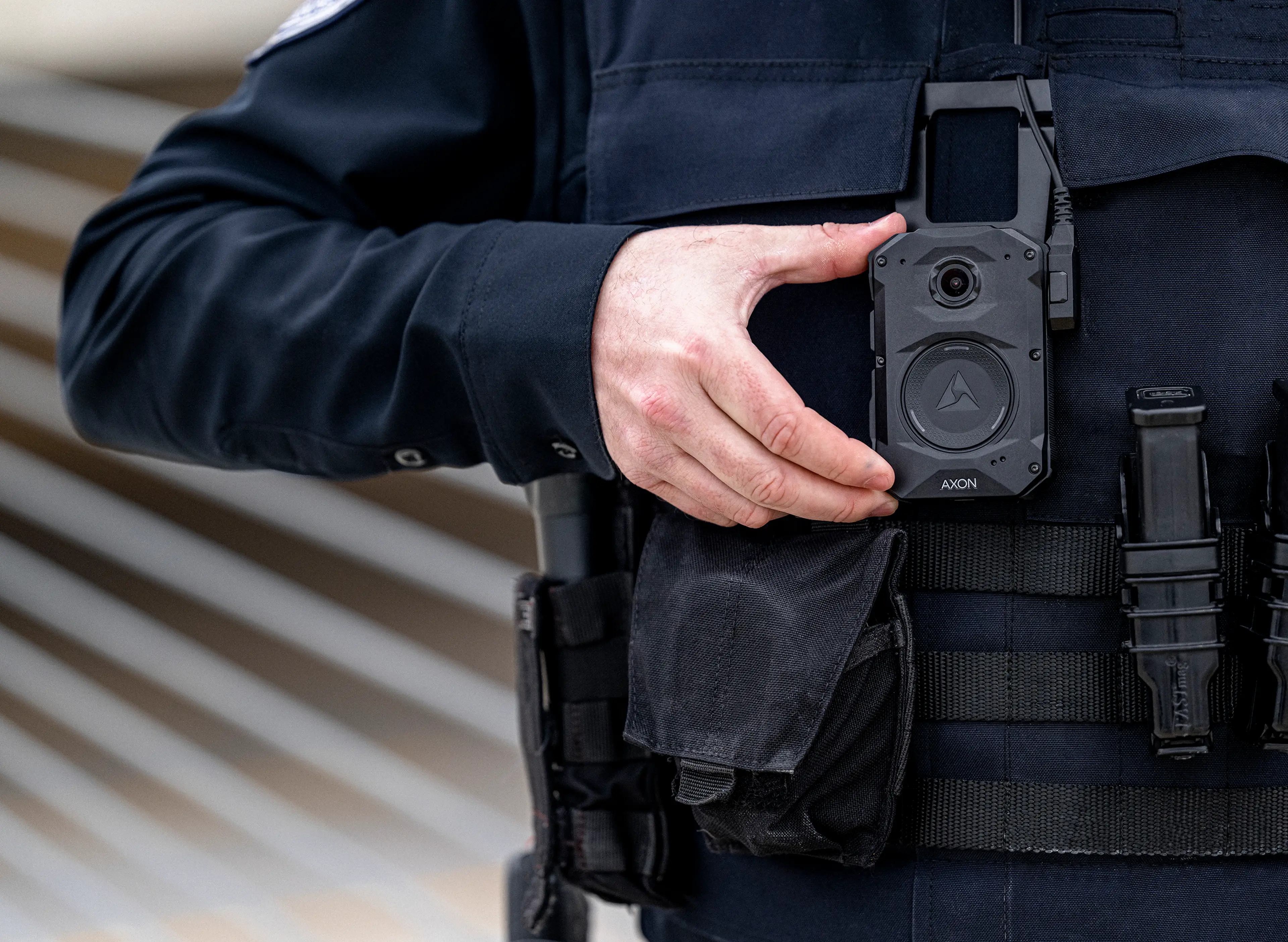
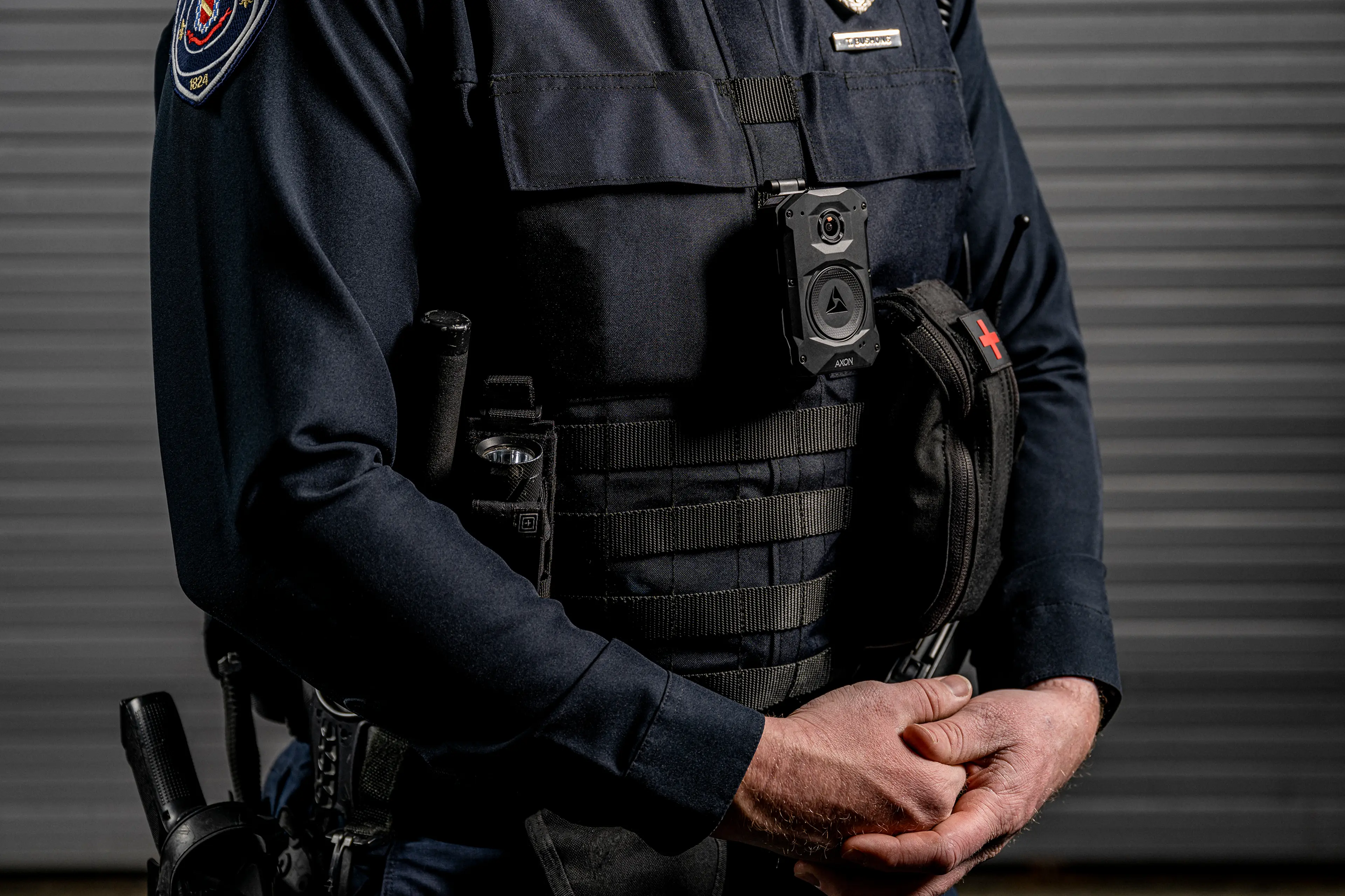
Real-Time Translation is a feature on Axon’s body-worn cameras. It allows officers and community members who speak different languages to communicate with each other by translating what each party says to the other party's language. The camera translates what each person says and speaks it out loud in the other person’s language.
Before Real-Time Translation, officers had to use phone interpreters, translation apps, or worst case, to wait for a live interpreter to be available. All of these take time, and pull the officer’s attention away from the person in front of them. In a crisis, that delay can make a hard moment even harder. Now the camera interprets and speaks the translation within seconds, so the officer and community can stay present and focused on the situation at hand.
Real-Time Translation supports more than 50 languages, with additional languages in the works. It is made for everyday moments, like traffic stops and routine help calls, though it does not replace professional interpreters.
Real-Time Translation launched in 2025, but is continuously updated based on officer and community feedback. The sections below explain the safeguards built into the camera and the tools that connect to it.

How Real-Time Translation works
This example shows how Real-Time Translation works on an Axon Body 4 camera. Each agency has its own training and policies, so how and when officers use it can differ based on local agency policy.
The scenario: An officer sees a bicyclist who appears to be injured on the side of the road. As the officer approaches, he first asks in English if the bicyclist is hurt, but the bicyclist answers in a language the officer doesn’t understand.
STEP BY STEP
How translation works:
STEP BY STEP
How translation works:
STEP BY STEP
How translation works:

An officer asks a bicyclist in English if he is hurt. The bicyclist responds in a language the officer doesn’t understand, then manages to communicate that he speaks Spanish. The officer decides to use Real-Time Translation.
Key safeguards
Real-Time Translation is used in moments where officers need to communicate clearly and communities need confidence that the technology is being used responsibly. The safeguards below are built around that goal:

Preserved and Reviewable
Using Real-Time Translation automatically starts camera audio and video recording by default to preserve a record of the interaction, so certified interpreters can later review and verify accuracy as needed. Note that all data used for Real-Time Translation remains within Axon’s secure cloud environment at all times, and no data is shared back to providers of external AI models.

Verified for Understanding
Before we support a language, we verify that both speakers can understand each other’s main intent in the vast majority of cases, for example when translating between French and English. 50+ languages currently meet that bar. If a language doesn’t pass, it isn’t in the product.

Spoken Guidance
Training matters, but so does getting it right in the moment. Real-Time Translation speaks instructions aloud before every interaction, and flags difficult-to-translate terms (e.g. medical terms or drug names) so officers know to verify what was said.
Preserved and Reviewable
WHY THIS MATTERS:
A translated conversation can matter later, so a saved recording lets people check what was really said. Strong protections keep that recording out of the wrong hands.
IMPLEMENTED SAFEGUARDS:
Recording Turns On With Real-Time Translation: When an officer starts translating, the camera automatically starts recording audio and video by default. The officer doesn’t have to remember to turn it on, so translated conversations are captured.
A Record Is Kept: The recording preserves the conversation to ensure there is a record of what happened during the interaction. A certified interpreter can then review the recording to confirm the translation was accurate, if needed.
Local Agencies Control the Data: The local police agency owns and controls recordings initiated by use of Real-Time Translation. Recordings are stored in the agency’s secure online storage (Axon Evidence), and none of the data is shared with outside AI companies or used to train their AI models.
Verified for Understanding
WHY THIS MATTERS:
While no machine translation tool is perfect, officers and community members should be able to rely on Real-Time Translation to understand each others’ main intent.
IMPLEMENTED SAFEGUARDS
Understanding Is Verified for Every Language: A language isn’t added until testing shows that users can understand the main intent of what their conversation partners said, in the vast majority of cases. Tests check two things. First, does the translation retain the meaning of what was said? Second, how closely do translated words and phrasing match what the speaker said?
Ongoing Testing and Updates: Axon regularly evaluates AI models for speech recognition, translation, and voice output to find ways to improve translations. Several times a year, Axon also re-evaluates supported languages to confirm they continue to perform as expected.

Spoken Guidance
WHY THIS MATTERS:
In a busy moment, it’s easy to miss a step, and certain words like medical terms and drug names are hard to translate precisely. The camera speaks up at the moments that matter most to help avoid misunderstandings.
IMPLEMENTED SAFEGUARDS
Instructions Spoken Every Time: Before every conversation, Real-Time Translation speaks instructions out loud, to provide guidance or instruction on how to set the language.
Tricky Word Alerts: When Real-Time Translation detects a difficult-to-translate term (for example, a drug name), it says aloud that the translation may be inaccurate and encourages officers to verify the information.
FAQs
Key terms
The following definitions explain important terminology referenced throughout this page.
Axon Assistant
Axon Assistant is an AI assistant made for law enforcement and enterprise businesses, accessible through a push-to-talk interface on a body-worn camera.
Push-to-Talk
An activation method where audio is only captured while a button is actively held down, similar to a two-way radio or walkie-talkie.
Auto-Detect
A Translation setting where the camera identifies which language is being spoken, rather than the officer setting it manually.
Real-Time Translation
The Axon Assistant capability which helps officers communicate with people who speak a different language using a push-to-talk interface on Axon body cameras.