:format(webp))
At a Glance
Organization: Cosentino’s Food Stores
Population served: Grocery shoppers and employees across Kansas and Missouri communities
Total staff: Over 4,000 people, with 5 loss prevention specialists
Coverage area: 31 grocery locations across Kansas and Missouri
Key Products: Axon Body 4, Axon Body Workforce, Auto-Transcribe, Axon Evidence, Auror
Key Results
Frontline staff experienced safer interactions
Body-worn cameras reduced physical confrontations
Transcripts helped improve report quality
Recordings enabled clear accountability and training opportunities
About Cosentino’s
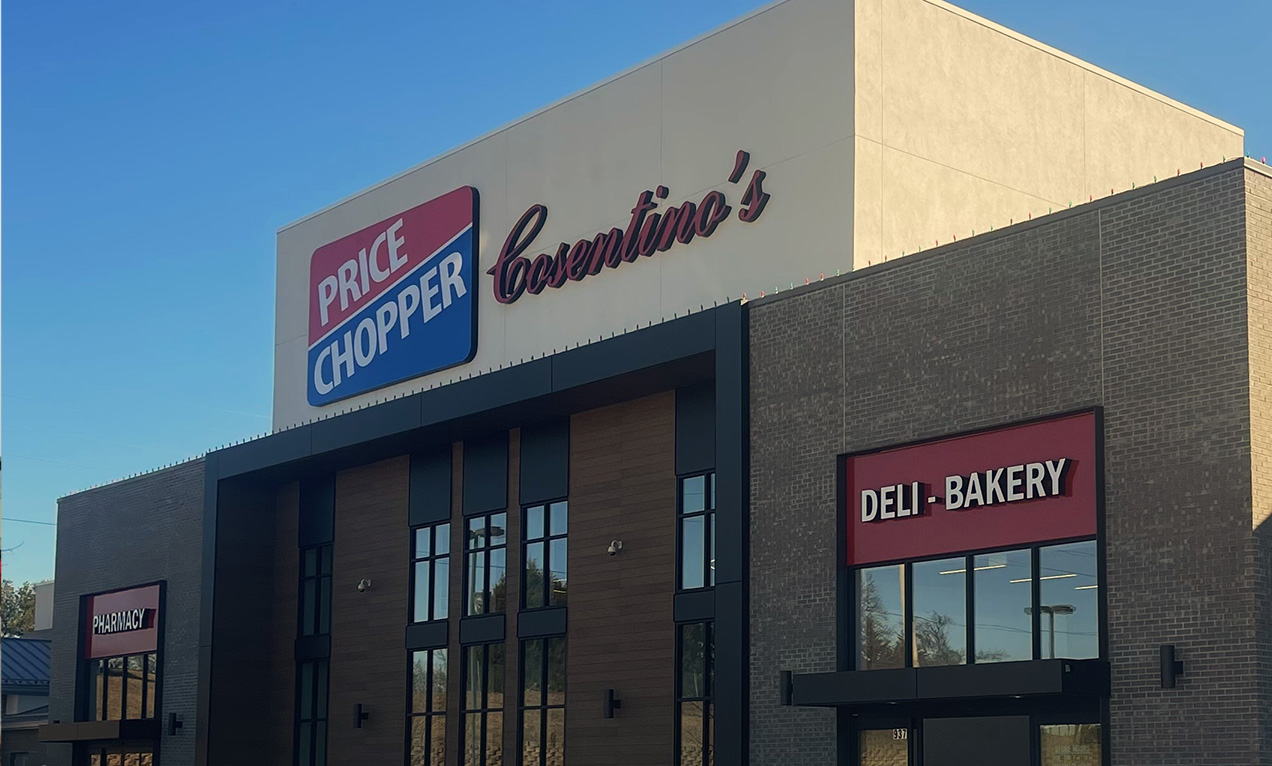
Cosentino’s is a local, family-owned grocery company that has served communities for 78 years. With 31 locations across Kansas and Missouri, the company emphasizes a people-first approach while continuing to adopt tools and practices that help its teams stay effective, safe, and responsive.
The loss prevention function plays an important role in that mission. The department supports stores that face a mix of shoplifting, trespass, difficult customer interactions, and other day-to-day safety issues common to high-traffic retail environments.
The Challenge
Cosentino’s faced a familiar retail problem: after an incident, reports were written to varying degrees of detail. Customer complaints did not always match the employee reports, leaving the team with inconsistent and incomplete information.
That gap made it harder for leadership to evaluate incidents, coach employees, or respond effectively when customers, trespassers, or other parties disputed what happened. It also meant the company had less visibility into the real conditions frontline employees faced in the field.
Cosentino’s also wanted a better way to address the larger public challenge of partial video narratives. In a world where only one side of an interaction may be shared online, leadership wanted a fuller, more balanced record that could better protect employees and preserve context.
We wanted to show the whole story, especially when it comes to protecting our employees.
The Solution
When Cosentino’s leadership recognized that several major retailers were beginning to deploy body-worn camera technology, they started evaluating whether the same approach could help support their own stores and frontline teams.
At first, there was skepticism internally about whether body-worn cameras would deliver meaningful operational value. Chris Vandiver, Director of Loss Prevention, acknowledged that he was not initially convinced the technology would make a major difference. That changed during the proof-of-concept process.
:format(webp))
The trial demonstrated that the cameras could help address several challenges at once: inconsistent reporting, disputed interactions, employee safety concerns, and the growing issue of incomplete or one-sided videos appearing online.
Cosentino’s selected Axon because the solution combined wearable cameras, audio capture, transcript support, evidence management, and future workflow potential in a single ecosystem. The team also began using Axon Evidence to store, manage, and review their digital evidence. They also leverage the retail crime intelligence platform, Auror, to manage their incidents and reports.
Results
De-escalation and safer interactions
One of the clearest benefits was behavioral change. When people learned they were being recorded, many interactions changed quickly. Despite Vandiver’s initial skepticism, he said the results of the trial spoke for themselves.
I was very, very surprised on how much of a de-escalation tool this turned out to be.
The cameras gave employees and customers a visible reminder that interactions were being recorded, and the team saw an immediate shift during encounters. In some cases, people who had been stealing or acting combative responded to the cameras by simply leaving the store without further conflict.
Stronger report quality and consistency
The body-worn cameras improved the company’s ability to document what happened during an incident. Audio paired with video gave the team a more complete record than post-event notes alone. Since every body-worn camera video is automatically uploaded to the cloud and transcribed, administrators were able to write and edit reports with greater speed and accuracy before uploading them into Auror.
Austin Webster noted that the tools provided better insight into day-to-day interactions and created a more accurate record for internal review. That consistency has value not only for incident resolution, but also for coaching and training.
Axon’s given us the ability to have a very clear view of the situation unfolding, and be able to pair that with great documentation with it.
More confidence for employees
Cosentino’s placed the cameras in the hands of frontline loss prevention specialists, the employees most likely to encounter difficult or unpredictable situations. That choice created a visible layer of protection and support.
Webster described the cameras as “a security blanket and a confidence builder for our team.” Internal feedback was positive, with employees embracing the body-worn cameras. Webster recommends the solution to other retailers because they will improve “safety, accuracy, consistency, and the culture of your company.”
Conclusion and Looking Ahead
Cosentino’s sees its role as more than a retailer. The organization wants people to feel safe shopping and working in its stores, and that has a direct effect on how it serves its communities across Kansas and Missouri.
Cosentino’s entered the Axon trial looking for better documentation and a clearer view of difficult incidents. What it found was a broader operational tool: one that helped de-escalate conflicts, strengthen employee confidence, and improve the company’s ability to protect its people.
As the team moves from a small trial toward broader deployment, leadership expects to gain more data and explore more use cases. The company’s early experience suggests that body-worn cameras can support not only safety and accountability, but also training, incident response, and a more consistent retail experience for employees and customers alike.