Customer Story Hub
How Lafayette PD used Draft One to help officers spend more time in the community
:format(webp))
At a Glance
Agency: Lafayette Police Department
Population Served: 75,000–80,000 residents
Staff: 152 sworn and 60 civilian staff
Location: Lafayette, Indiana
Featured Solutions: Draft One, Axon Body 4, Fleet 3, Fusus, Records
Key Results
Officers using Draft One save 1 hour per day on report writing
Supervisors noticed improved report quality and fewer revisions
Integrated workflows reduce technology fatigue while improving officer adoption
Fusus supports coordinated command decisions during major multi-agency operations
Draft One: Customer Testimonials | Lafayette PD
Draft One: Customer Testimonials | Lafayette PD
About the Agency
Located in west-central Indiana between Indianapolis and Chicago, Lafayette Police Department serves a growing community neighboring Purdue University. The department employs 152 sworn officers and approximately 60 civilian staff while partnering closely with neighboring agencies throughout Tippecanoe County.
A longtime Axon customer, Lafayette has progressively expanded its technology ecosystem from TASER devices in 2006 to body-worn cameras, fleet cameras, records management, AI-assisted report writing, and real-time operational awareness.
The Challenge
Administrative work is a burden for agencies across the United States, and Lafayette Police Department was no exception.
Every report, every evidence upload, every disconnected system consumed valuable time that officers could otherwise spend on responding to calls, conducting proactive patrol, or engaging with the community.
Chief Scott Galloway explained the problem of administrative burden by saying, "You come on this job wanting to make an impact. You don't come on this job wanting to type reports."
Department leadership believed technology could be part of the solution, but only if it was integrated correctly. If the system did not work well, it would create even more burden.
The last thing we want to do as administrative personnel is implement a system that creates more work.
Rather than adding another standalone application, Lafayette wanted technology that integrated into their officers’ existing workflows and technology.
The Solution
Build One Connected Ecosystem
Lafayette invested in a connected public safety platform. Today, officers work within an integrated ecosystem that connects Axon Body 4, Fleet 3, Records, Draft One, Evidence, Fusus, and AI-powered translation.
Because those systems work together, officers need only one login and can save time when searching for evidence, linking videos to Records, and completing reports.
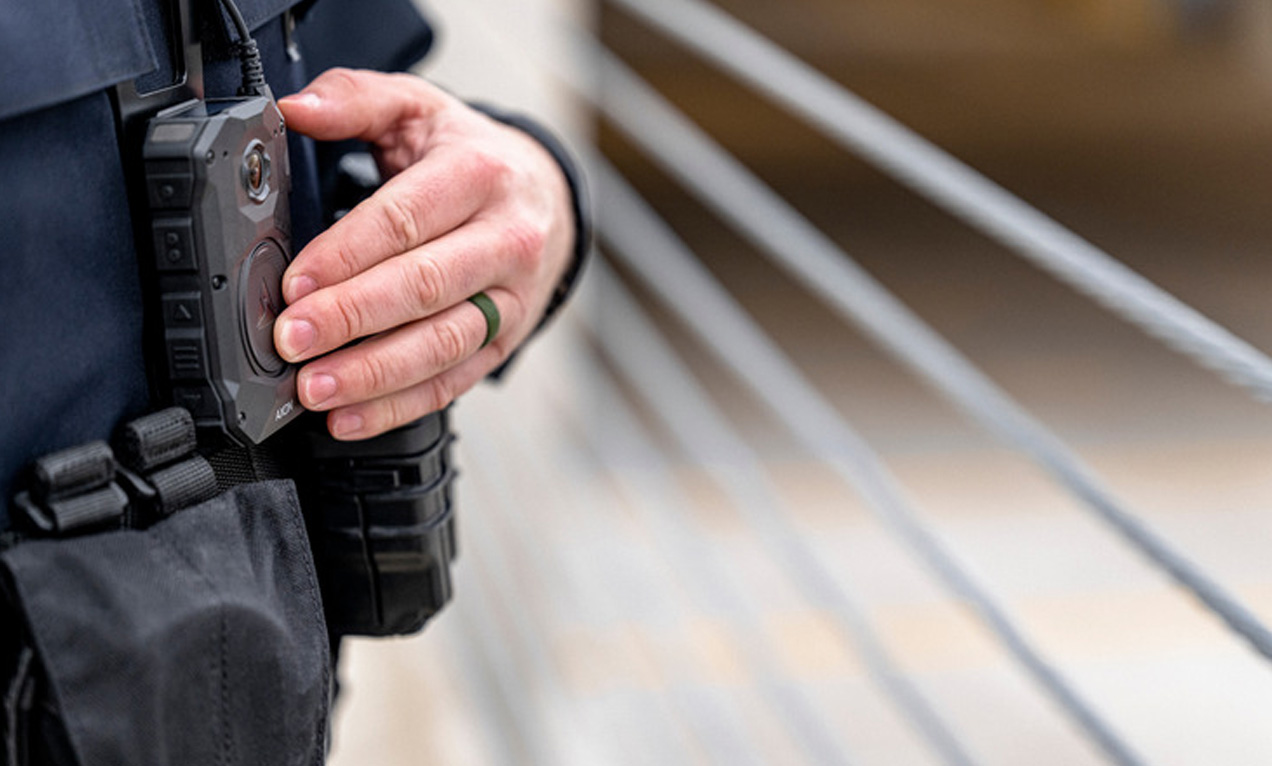
Reduce Administrative Burden with AI
Draft One has become an important part of their workflow.
Rather than beginning every report with a blank screen, officers request an AI-generated narrative based on their body-worn camera evidence. After AI generates the narrative, the officer is required to review, edit and approve the final report.
Lafayette has allowed officers to adopt Draft One naturally rather than mandating its use, which has led to strong voluntary adoption and positive feedback as officers experience the benefits firsthand.
Continue Improving Through Partnership
One reason Lafayette chose Axon was the partnership. "We've always felt like we share the vision with Axon," explained Deputy Chief Brad Bishop.
As one of Axon's longtime beta partners, Lafayette has consistently helped shape product development through operational feedback, ensuring new technology reflects real-world policing needs.
Results
More Time Where It Matters
For Officer Nathan Stoneking, Draft One immediately demonstrated its value. Routine reports that once required focused writing time now begin almost instantly.
That's probably a 25 to 30 minute long report, and you hit the narrative button and it cranks something out in a few seconds. There were a few things that we had to edit, but I would say it probably wrote 90% of that first report.
By reducing the time spent on report writing, officers gained time back to do the work they signed up for. Officer Stoneking explained, "There's a plethora of things that you can do with that extra hour or two in a 12-hour period."
Anything that we can do to lessen the administrative burden on patrol officers... it's time saved that the officer can be back on the street instead of sitting in a parking lot typing.
Whether responding to additional calls, increasing proactive patrol, following up on investigations, or engaging with community members, every minute returned to officers becomes another opportunity to make an impact.
Better Reports with Less Supervisory Review
Leadership has also seen measurable operational improvements beyond speed.
Sgt. Santerre says commanders have observed improved report quality, particularly among officers who historically struggled with written documentation. More complete reports reduce revision cycles and minimize the need for reports to be returned for correction.
In other words, higher-quality reports further reduce administrative workload for both patrol officers and supervisors.
Technology Officers Actually Want to Use
Rather than contributing to technology fatigue, Lafayette's integrated ecosystem has encouraged adoption. Everything works together, from automatic evidence association to single sign-on and connected workflows.
As Deputy Chief Brad Bishop explains, the department no longer sees the same technology fatigue that often accompanies disconnected software platforms. Instead, officers increasingly embrace new capabilities because they solve real operational problems without adding complexity.

Real-time Situational Awareness During Critical Incidents
The same philosophy extends beyond administrative work.
During a recent investigation involving simultaneous arrests across multiple locations, Lafayette used Fusus to monitor officer locations, view live vehicle camera feeds, and coordinate resources in real time.
The operation concluded successfully, giving commanders improved situational awareness throughout the incident while supporting coordinated decision-making across multiple responding agencies. The integrated system enhanced officer safety during the response, and streamlined the evidence-gathering process after the incident.
Conclusion
The Lafayette Police Department has given officers more time to focus on the work they joined law enforcement to perform.
Whether that means writing the first draft of a report in seconds instead of minutes, coordinating critical incidents through a common operational picture, or reducing administrative burden across the organization, every technology investment is measured by its ability to return time to officers and improve service to the community.
Ultimately, we are here to serve the community and this helps us with that job.