Customer Story Hub
How Lake Charles Memorial Health System modernized its security services
At a glance
Organization: Lake Charles Memorial Health System Security Services
Staff: 2,800+ employees, including 39 full-time security professionals
Coverage area: 3 hospital campuses and 50+ clinics across Southwest Louisiana
Capacity: 400+ hospital beds across multiple campuses
Key Solutions: Axon Body 4, TASER 7, Axon Virtual Reality, Axon Evidence
Key results
80% effectiveness rate for TASER 7 deployments
1,881 simulated TASER 7 cartridges fired in training
Full transition from physical media (CDs) to electronic evidence sharing via Axon Evidence
Reduced video review time via Auto-Transcribe keyword search
About the organization
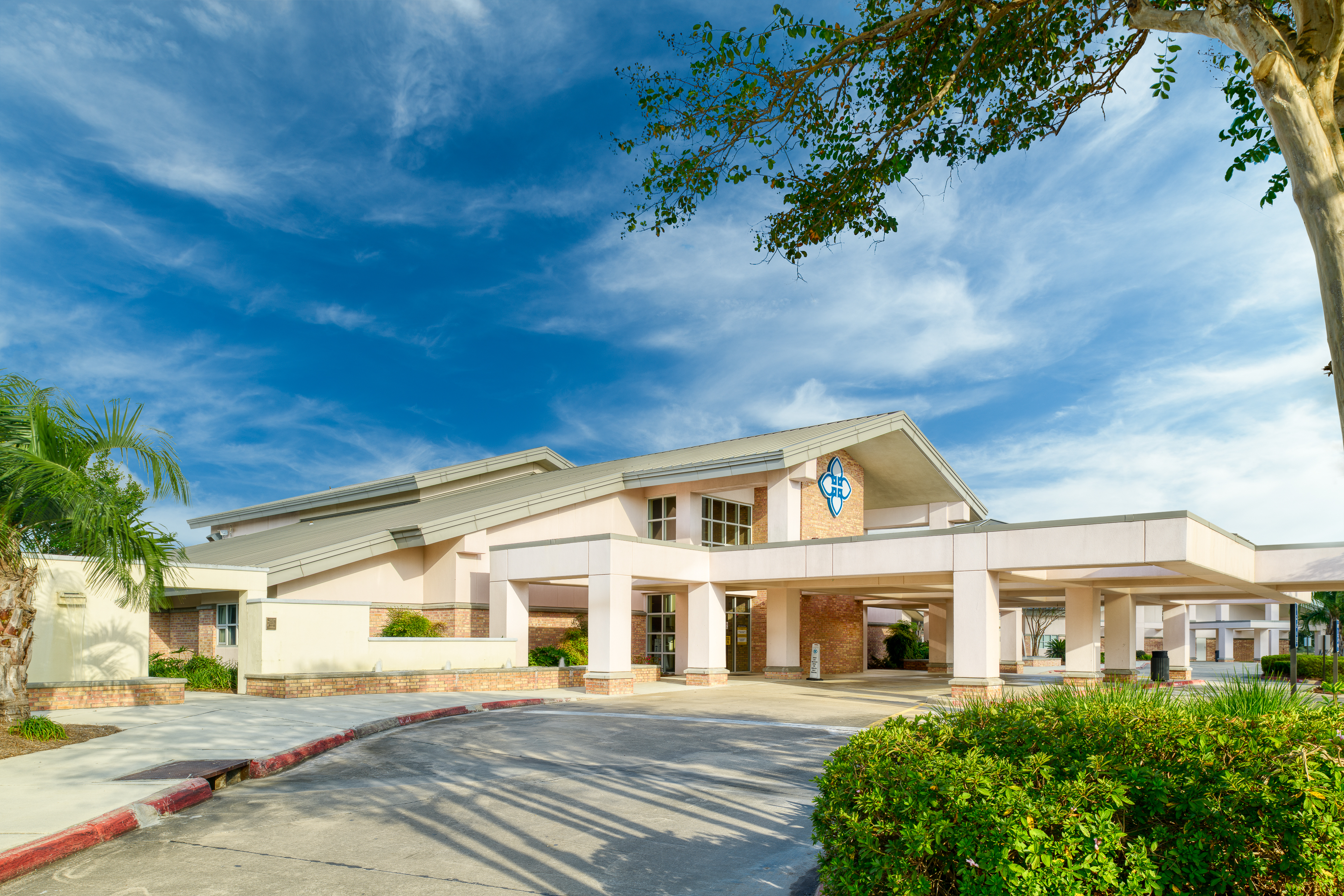
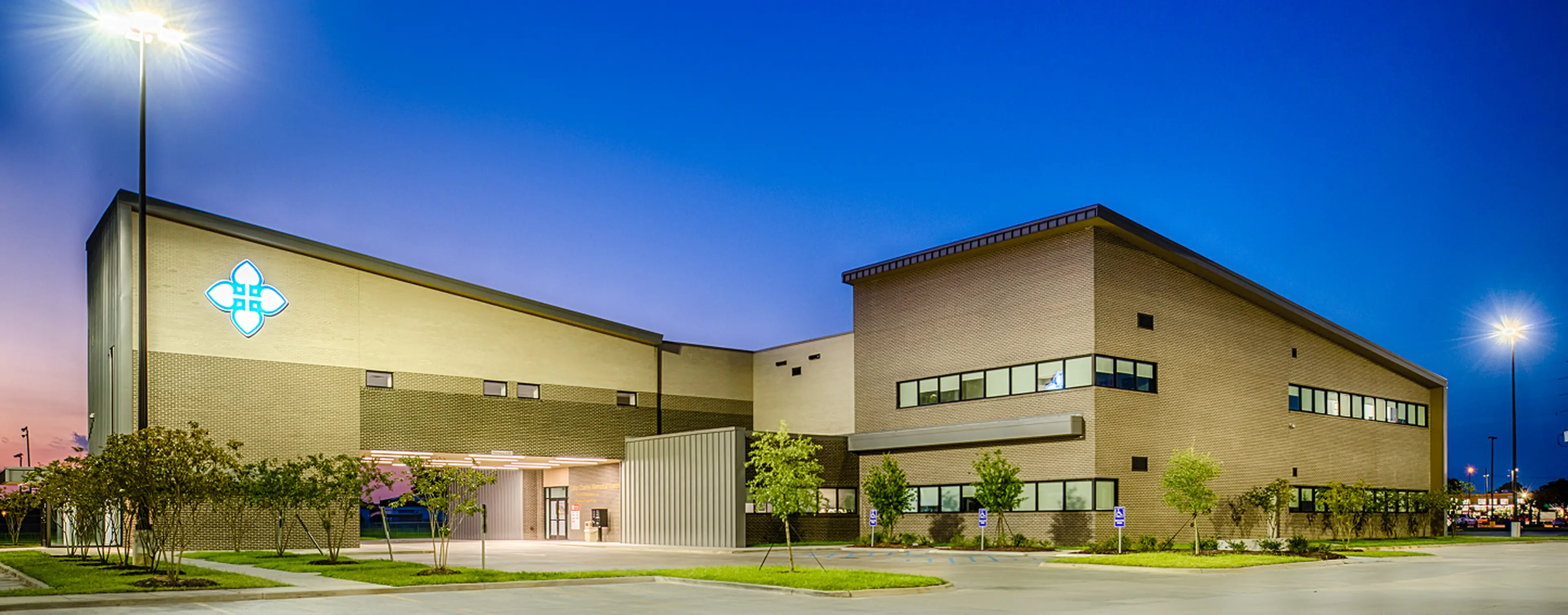
Lake Charles Memorial Health System (LCMHS) Security Services operates over 400 beds across three hospital campuses, including a primary hospital facility, a women's hospital, and a behavioral health facility. Its purview also includes more than 50 clinics. The LCMHS Security Services team includes 39 full-time officers who are responsible for protecting patients, visitors, employees, physicians, and organizational assets around the clock.
LCMHS Security Services also works closely with clinical and administrative leadership to identify risks and reduce vulnerabilities within the hospital’s secure environment. These risks regularly include workplace violence incidents, threats against staff, domestic violence cases, trespassing, theft, and behavioral health-related events.
Experience Memorial - Security Services
Experience Memorial - Security Services
The challenge
Hospital security incidents are frequently unpredictable, and officers need force options that protect both the public and themselves without unnecessary risk of injury. LCMHS Security Services needed the appropriate tools and robust training options to safely manage escalating situations and violent encounters in a healthcare environment.
The security team was relying on physical media to share evidence with outside law enforcement agencies. They routinely had to copy incident footage over to CDs or USB drives and manually distribute them to local police departments, taking up valuable time security officers could be on the floor.
The solution

Lake Charles Memorial Health System Security Services focused on improving three connected capabilities with Axon technology: force options, incident documentation, and officer training.
Due to the nature of the LCMHS security team’s work environment, they needed a less-lethal option to help de-escalate violent encounters with patients, visitors, and staff; the solution was the TASER 7. The TASER 7 expanded officer response capabilities while reducing the likelihood of serious injury during critical incidents, supporting the department's commitment to preserving life and prioritizing the safety of patients, visitors, employees, and physicians.
Every LCMHS security officer is also equipped with an Axon Body 4 camera (AB4), a decision that has notably improved transparency and evidence collection for the Security Services team. The TASER 7 and AB4 are linked, which means that the TASER 7 can automatically signal configured Axon body-worn cameras nearby to begin recording when the TASER 7 is armed or fired.
Footage from the AB4 is securely stored and can be easily reviewed in Axon Evidence, replacing the team’s earlier reliance on CDs and USBs for both internal review and external sharing.
Lastly, LCMHS Security Services selected Axon VR Training to run scenario-based exercises with officers. Virtual scenarios are tailored to focus on building skills related to workplace violence prevention and de-escalating behavioral health incidents.
This immersive training platform allows officers to improve decision-making, threat recognition, tracking, and target acquisition skills without expending TASER 7 cartridges during training scenarios.
Over the past year, the team used 1,881 simulated TASER 7 cartridges, primarily during range training.
The team has also used Axon VR Community Engagement Training as a cross-functional tool, giving medical staff the opportunity to experience high-stress scenarios through the eyes of security officers. This insight helps staff better understand security decision-making, strengthening collaboration between the two groups and contributing to a safer environment for patients, visitors, and employees.
It has been impressive to witness the evolution of TASER technology over the years. Each new version has introduced meaningful improvements in effectiveness, reliability, and officer safety, demonstrating a continued commitment to providing security professionals with enhanced tools for managing challenging situations.
The team also reported that the adoption of TASER 7 has positively shaped patterns of behavior across the health system’s campuses. Awareness of the TASER energy weapon deters resistance and escalation, with voluntary compliance becoming an increasingly common outcome.
The LCMHS Security Services’ frequent use of Axon VR training has supported these positive outcomes by increasing officer experience with deploying TASER energy weapons and strengthening their threat responses.
Increased accountability and trust
Body-worn camera footage provides LCMHS Security Services with objective evidence that has proved essential for resolving conflicting witness accounts, responding to patient and family complaints, and monitoring officer conduct.
For leadership, camera footage is a key development tool rather than a simple surveillance mechanism. They can review video recordings to identify behaviors that fall outside policy, and then address them with their team.
Body-worn cameras have ultimately supported fairer, more objective reviews at LCMHS and reinforced confidence in the professionalism of its security team.
For healthcare organizations seeking innovative solutions to improve safety and reduce workplace violence risks, Axon body-worn cameras are an investment well worth considering.
Faster evidence review and sharing
Two key solutions have driven significant time savings with their digital evidence management process. The first is Axon Auto-Transcribe.
Being able to quickly generate an accurate transcript allows for more efficient incident reporting and helps ensure important details are captured and communicated clearly
LCMHS leadership also noted that the keyword-search feature enabled by Auto-Transcribe has been one of the greatest time-savers for their security team. The capability has eliminated the need to manually comb through hundreds of videos and has been particularly helpful during investigations into specific workplace-related events or behaviors, as officers can search for keywords such as “strike” or “kick” to locate relevant footage.
The second key solution that has saved time is case sharing. Instead of spending time and money on physical storage devices, copying evidence, and delivering that evidence in person, they can share everything via Axon Evidence.
After evidence has been reviewed internally, bodycam footage, case reports, and other files can be easily and securely shared with the Lake Charles Police Department, Calcasieu Parish Sheriff's Office, and Louisiana State Police. This streamlined evidence management system has improved cross-agency collaboration, given officers their time back, and helped cut investigation timelines.
Conclusion and looking ahead
Lake Charles Memorial Health System Security Services views its Axon deployment as a long-term investment in workplace violence prevention rather than a one-time equipment upgrade. Annual security awareness training, ongoing risk assessments, and continued VR scenario training keep officers current as threats evolve.
The Security Services team is eager to adopt more Axon solutions tailored to security professionals, workplace threat management, and the evolving risks of healthcare spaces.