Customer Story Hub
How Texas Children's Hospital created a safer environment for staff and patients
:format(webp))
At a Glance
Organization: Texas Children’s Hospital
Population served: Pediatric patients and families across a large, multi-site healthcare system
Staff: More than 2,000 medical professionals
Coverage area: Houston and expanding regional network
Key Solutions: Axon Body 4, Axon Fleet 3, TASER 10, VR, Meta Coach, Draft One, Axon Assistant, Axon Body Mini (pilot)

About the Organization
Texas Children’s Hospital is one of the largest pediatric healthcare systems in the United States, serving millions of patients across hospitals, clinics, and specialty care centers. Leading in patient care, education, and research, Texas Children’s staff of more than 2,000 medical professionals create a care environment that is consistently ranked in the top 4 of US pediatric hospitals by U.S. News & World Report.
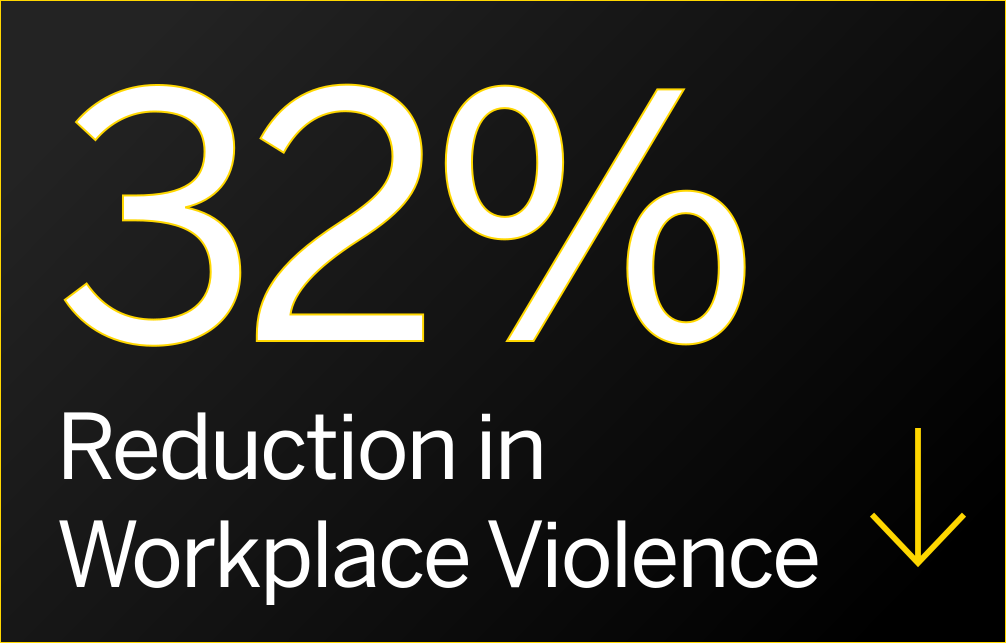
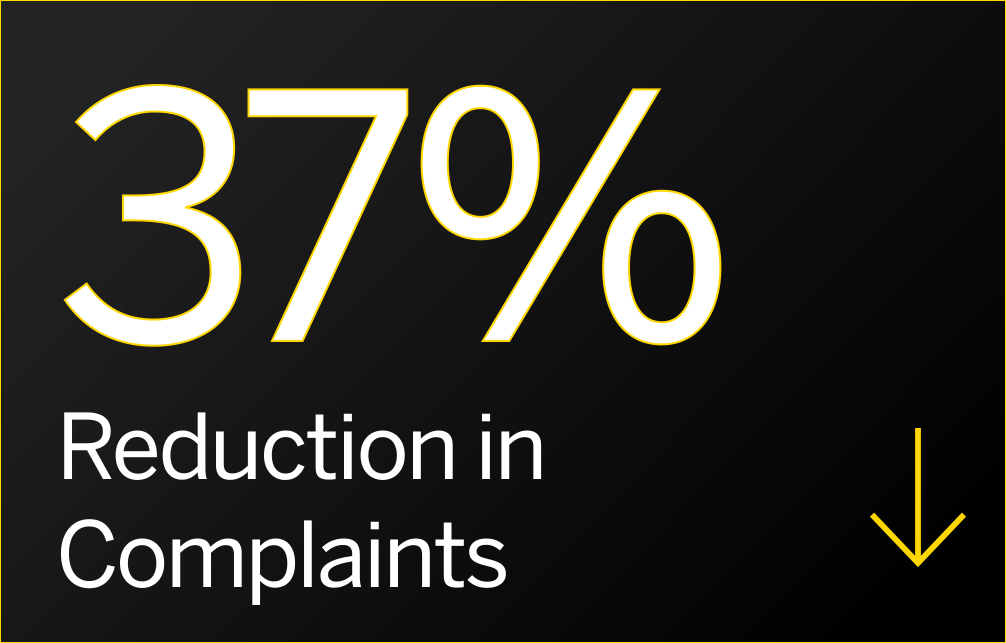
Its mission extends beyond clinical excellence to include the safety, dignity, and wellbeing of every patient, family member, and staff member. We sat down with the 2026 Axon Security Trailblazer Award winner, Chris Carr, to discover how Texas Children’s was able to reduce workplace violence events by approximately 32% and reduce patient complaints by 37%.
2026 Security Trailblazer Award Winner Christopher Carr of Texas Children's Hospital | Axon Awards
2026 Security Trailblazer Award Winner Christopher Carr of Texas Children's Hospital | Axon Awards
The Challenge
When Christopher Carr joined Texas Children’s Hospital in 2013, the organization lacked a structured approach to workplace violence prevention.
“We had to basically build a program that could grow with the enterprise,” Carr explained.
As the hospital system expanded, so did the complexity of interactions—ranging from behavioral health crises to emotionally charged family situations—and the security framework needed to scale.
Without a scalable model, the organization faced challenges in:
Standardizing response protocols
Training staff effectively
Investigating incidents consistently
Balancing safety with patient privacy and trust
The need was clear: build a program that could evolve alongside the organization while remaining aligned with healthcare values.

The Solution
Texas Children’s Hospital developed a comprehensive workplace violence prevention program built on four core principles:
1. Build a Scalable Foundation
Carr and his team established structured training, policies, and operational workflows designed to grow with the organization. Early efforts included hands-on engagement with staff through scenario-based learning and direct outreach.
Tools like Axon VR and Meta Coach have enabled staff to receive immersive training at scale.
2. Integrate Technology Thoughtfully
The introduction of body-worn cameras marked a turning point. Initially deployed within security, the technology expanded across departments through a carefully governed, privacy-first model.
3. Prioritize Privacy and Trust
When it comes to medical information, privacy is critical. Carr designed the program with strict controls to prioritize privacy and trust for their patients:
Role-based access to footage
Limited playback permissions to trained and authorized individuals
Event-based activation with clear notification language
Clear communication to patients and families so they know when they are being recorded and why
“We’re not watching it, we’re not sharing it… it just sits there unless we need it,” Carr explained.
4. Drive Cross-Functional Collaboration
Security partnered closely with clinical and operational teams, including social work, behavioral health, and family advocacy, to ensure alignment with patient-centered care. This collaboration enabled the program to extend beyond security and become an integrated part of the care environment.

Results
Reducing Workplace Violence
Texas Children’s saw a significant decline in workplace violence incidents after implementing its integrated program. As of July 2026, workplace violence incident levels have decreased by 32% from a high in May 2024. This new operational model has created a safer environment for patients and staff.
Body-worn cameras played a key role in de-escalation, often influencing behavior before situations escalated. Carr explained, “Just that red circle going, ‘Hey, you’re being recorded’ helped drive the numbers down.”
Strengthening Investigations and Accountability
Video evidence transformed how incidents were reviewed and resolved. Keeping a record of exactly what was said and how it was said has expedited the process.
For instance, one complaint was resolved due to recorded footage showing security officers acting “with compassion, empathy, and sympathy” during a patient interaction. Before the video evidence, this complaint could have required a lengthy investigation while security officers went on administrative leave. Instead, it was quickly settled thanks to the objective evidence of the incident.
This shift eliminated many “word against word” scenarios. Staff who did the right thing were quickly exonerated, while staff who not have lived up to Texas Children’s values were held accountable and/or received training.
Since adopting the BWCs, the total hours that security officers go on administrative leave has dropped significantly (with no incidents over the last six months). The hospital has saved an estimated $144,000 by reducing both paid leave hours and overtime hours to the officers who had to cover those shifts.
Consistent communication and responsible camera use also helped build trust with patients and families. Complaint rates dropped 37% since 2021, helping Texas Children's Hospital maintain the exemplary care environment they had established.

Enhancing Training and Continuous Learning
Technology not only served to assist in the moment, but also created a culture of continuous learning. Video review became a powerful training tool, enabling staff to reflect and improve. Carr explained, “It was just giving the officers the ability to go back and go, ‘Hey, could I have done that differently?’”
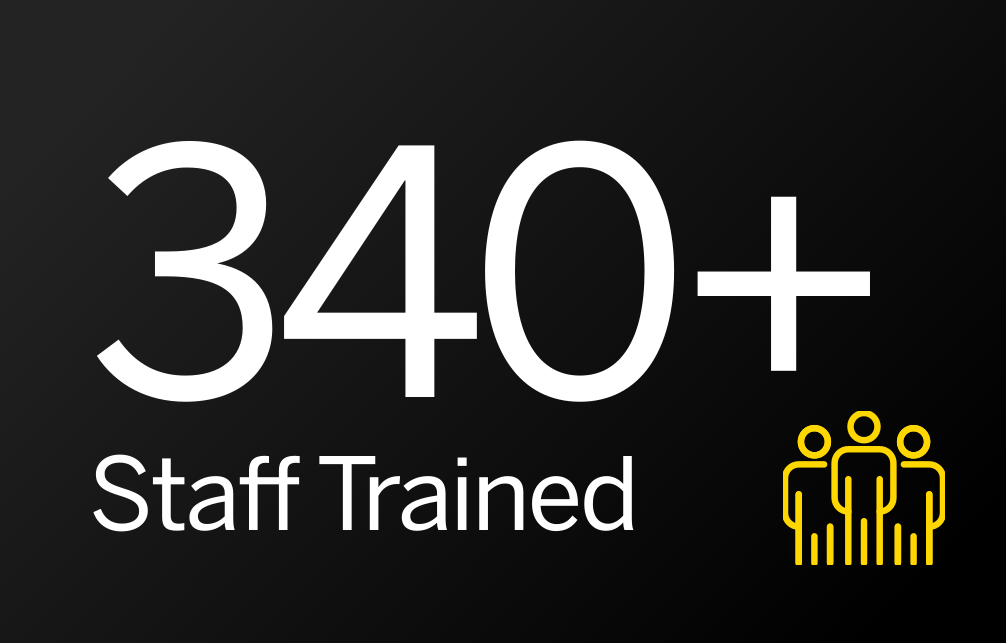
The organization also adopted VR and scenario-based training, which immersed security officers into realistic scenarios to increase their preparation for the diverse incidents they will have to respond to in a dynamic hospital environment. 340+ staff have completed required training with 100% completion of mandated modules, building de-escalation skills, and camera use confidence.
Improving Staff Confidence and Retention
The security team's confidence and morale increased with access to better tools and training.
“They knew they had the tools that will help us do what we’ve gotta do,” Carr said. The organization also saw improved retention rates, signaling stronger workforce stability. Given the challenges of hiring quality staff, the retention improvements have provided ongoing value to the organization and the patients.
Stats are great and numbers are great, but our officer retention rate is up. That’s what I personally look at: I don’t have officers getting hurt, I’ve got a good retention rate, and they’re happy. For me, that’s a win.
Conclusion and Looking Ahead
Texas Children’s Hospital has redefined what safety looks like in healthcare by moving beyond enforcement to a model rooted in empathy, collaboration, and continuous learning.
The program’s expansion into departments like social work, behavioral health, and family advocacy reflects a broader shift: safety is no longer siloed within security. Instead, it is a shared responsibility across clinical and operational teams, enabling more coordinated responses to complex situations and improving overall patient experience.
Carr believes the future of healthcare security will depend as much on human connection as technology. In a complex hospital environment, the success of safety programs is not only dependent on the technology introduced, but also how those solutions are implemented by people focused on delivering the care-first model.
As the organization continues to expand its use of new technologies and cross-functional programs, it remains grounded in a simple principle: safety and care must go hand in hand.