Resource Center
How Wollondilly Shire Council used Axon technology to protect officers and deter illegal dumping

At a Glance
Organisation: Wollondilly Shire Council
Population served: Approximately 60,000 residents across the Shire
Staff: 400 Council employees, including 16 Health and Regulatory Officers
Coverage area: 2,560 square kilometres of residential and rural land in New South Wales, Australia
Key Solutions: Axon Evidence, Axon Body 4, Axon Respond, Community Request

About the organisation
 Wollondilly Shire Council oversees a 2,560 square kilometre region on Sydney's outskirts that is home to protected wildlife and endangered fauna, including known koala habitats. Rapid residential and commercial development in recent years has made the Council's compliance oversight especially critical for land preservation.
The Council employs 400 staff, 16 of whom serve as Compliance and Regulatory Officers responsible for monitoring illegal dumping, unlawful developments, compliance with conditions of consent of approvals, excavation, earthworks and land clearing across the Shire, as well as general regulatory enforcement.
The challenge

Wollondilly was looking to solve two primary challenges. First, aggression towards the Council’s Compliance and Parking Officers was rising. Officers did not always feel safe, and they had no way to call for help or show supervisors what they were facing during after-hours calls. Community members filed complaints against staff 20 to 25 times per quarter, but it was difficult to review or determine what actually happened.
The second challenge was an illegal dumping problem that cost the Council approximately $1 million per year in collection fees. Like many councils managing vast and remote areas, Wollondilly Shire Council found its traditional approach to monitoring illegal dumping could no longer keep pace with the rate of environmental crimes in the region. Organised groups exploited surveillance gaps, travelling from inner Sydney to the Shire to dump waste along rural roads the Council had no way to monitor.
These operations dumped several hundred tonnes of waste across the Shire, including dangerous materials like asbestos. Such waste poses risks not only to the environment but also to the health of Wollondilly residents.
The Council's existing camera system could not track these criminal activities effectively, as its standard trail cameras captured nothing at night and offenders frequently stole the cameras themselves. Matthew Lindsay, Compliance Team Leader
It's been a case of waiting until something bad happens, and then sending someone out.
Fixed post cameras that were installed still required officers to drive out and manually retrieve footage, consuming hours that could otherwise go toward enforcement. Sometimes those cameras were stolen before Officers could arrive to retrieve the footage. Video that was then stored on a central server, and the storage requirements caused issues for IT.
Sharing that evidence with NSW Police, the EPA, or internal legal counsel was also a time- consuming process. Officers had to copy files to USB drives and then deliver them by hand or post.
The solution
 The Council weighed several vendors before choosing Axon. During a Christmas shutdown period, Regional Illegal Dumping Compliance Officer Matthew Koos called Axon for advice on video uploading. He reported that Axon was “happy and willing to help” despite the holiday closure, and that the company’s responsiveness was an important factor in the Council’s decision to adopt Axon technology.
It was great to know as well that the infrastructure and solution has been tried and tested, not only by other local councils but by some of the biggest law enforcement organisations in the world. There is a reason why everyone is trying to do it the same way, and I back it.
Wollondilly Shire Council issued Axon Body 4 cameras across the Compliance Team, Environmental Health Officers, and to Parking Officers who patrol school zones. Officers wear the cameras on every field deployment, activating recording for enforcement contacts and evidence gathering. Axon Respond enables Officers to live stream from their body-worn cameras and share their location with supervisors should they need virtual back-up.
Axon Evidence replaced local server storage for body-worn and trail camera footage. The platform let the Council set automated video retention policies, which discard footage with no evidentiary value and tagging the rest into cases. Officers can then easily build cases in Axon Evidence and share them with internal legal counsel, NSW Police, or the EPA through secure links.
The Council deployed third-party cameras at known dumping sites. These cameras upload detection data into Axon Evidence, helping the Compliance Team connect repeat offenders across dumping incidents and share evidence with external partners.
Axon Community Request allows Council Officers to request video footage directly from residents and business owners. Community members can upload phone or CCTV recordings via a secure link, turning local devices into valuable evidence sources.
Results

Complaints against staff dropped to zero
Aggression towards Council’s Compliance, Environmental Health and Parking Officers fell sharply once body-worn cameras were visible on their uniforms.
The aggression towards staff has just bottomed out. Once they realised they were being recorded, people just switched. It has been a godsend for my guys.
Public complaints followed the same pattern. Since rolling out the AB4 cameras, complaints have dropped from 20-25 per quarter down to zero.
Officer confidence during after-hours calls increased
Council officers responding to emergency calls after-hours, often in remote areas, can now stream live video and location back to their supervisor through Axon Respond, and trigger alerts if a situation turns dangerous.
They feel a lot more confident wearing those, because they know they are being looked after when we are not standing next to them. It has been huge.
During one inspection of a large illegal dumping site, where hundreds of tonnes of material had accumulated, the Officer on scene live-streamed video through his body-worn camera. This enabled his supervisor to quickly assess ground conditions and make operational decisions without being on-scene.
In another instance involving a high-risk site requiring police and fire crew attention, the Compliance Team Supervisor was able to monitor Officers’ camera live streams in real-time; guide the investigator’s questioning and pull his Officers when conditions became too dangerous.
Deterred Illegal Dumping at Hotspots
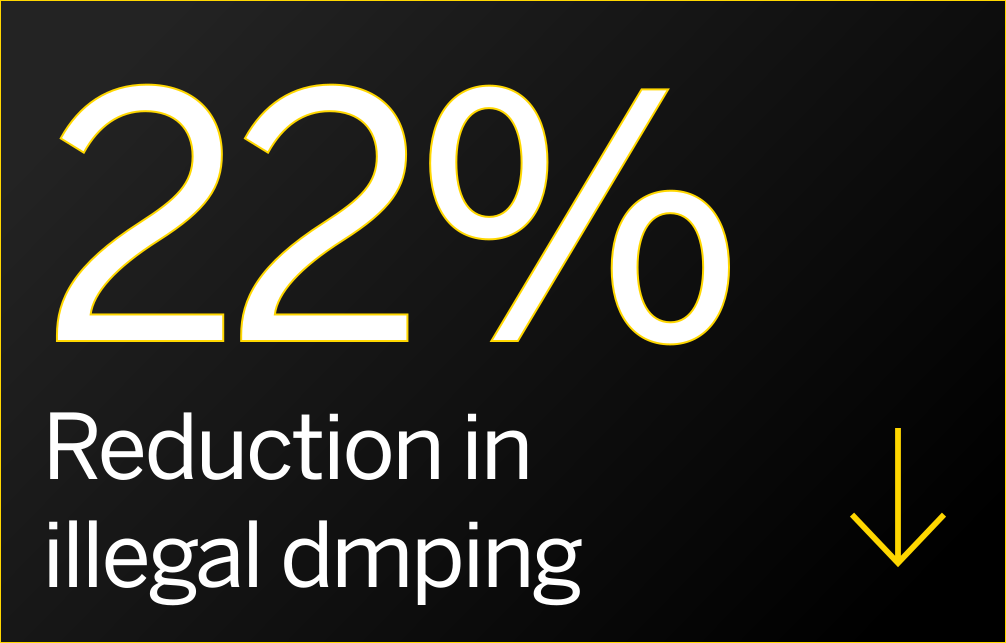
During a brief deployment of high-visibility, fixed cameras at a known dumping hotspot, the Council’s camera system recorded 3,740 vehicle detections and overall traffic count on that road fell by approximately 12%. Most importantly, they saw a 22% reduction in illegal dumping in an area with traffic cameras.
The fixed cameras enable officers to compare vehicle movements between locations and establish travel patterns. Even when dumping is not captured by the cameras directly, they can monitor if an open-top truck passes one location checkpoint full but is empty when it reaches the next or returns from a remote location.
Council officials attribute the shift in traffic to offenders recognising the surveillance and avoiding the location altogether.
Even if you do not get convictions out of it, just the deterrent factor is massive. It is potentially saving Council a significant amount of money. It might not be money coming in, but it is money not going out
The cost savings in cleanup have been a major win for Wollondilly Shire Council and the deterrent effect of the cameras has doubled as environmental protection. Every dumping crime the camera system prevents is waste that never reaches the Shire's waterways, bushlands, and koala corridors.
We want to do what is best for our residents; not just the residents, but the environment as well.
Streamlined Evidence Handling
Migrating trail camera and body-worn footage to Axon Evidence removed over 1.5 terabytes of unmanaged media from internal Council infrastructure, freeing up server capacity IT needed. Automated retention schedules now manage tagging and deletion on the platform.
Axon Community Request has surfaced crucial evidence for the Compliance Team. After a serious asbestos dumping event, the Council published a request for evidence on social media, prompting local residents to submit footage that helped identify the truck involved. In a separate investigation, Officers used Community Request to gather CCTV footage of a dog attack from properties nearby, bypassing time-consuming door-to-door visits.
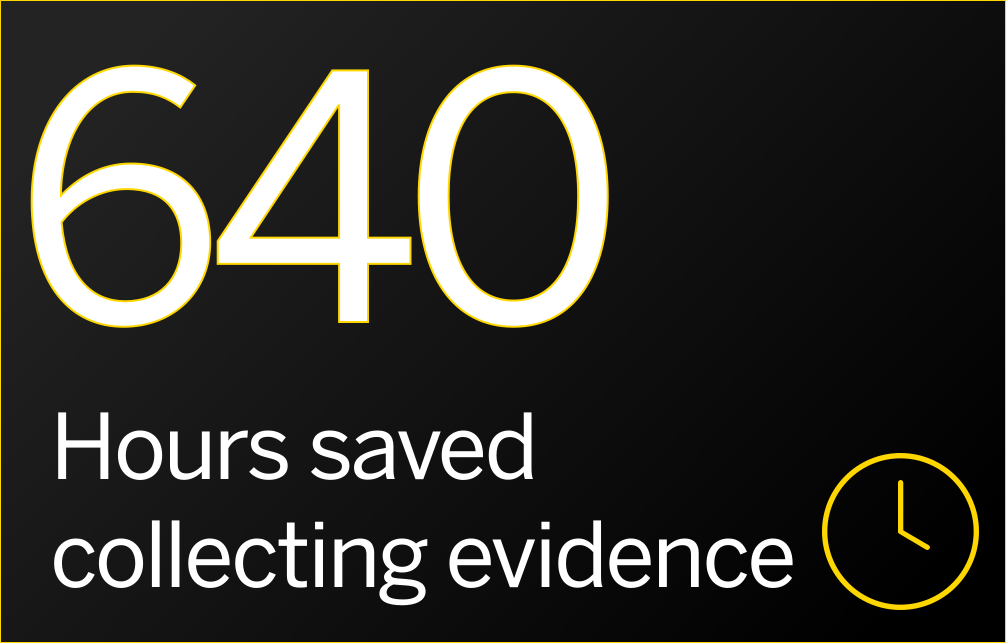
Community Request is also saving the Council significant time, with the Council estimating that they saved 640 hours driving and collecting evidence over the first 6 months.
Redaction tools built into Axon Evidence further support Council’s privacy policy. Officers routinely blur minors from school patrol clips before public release and in one case, staff redacted all non-relevant vehicles from a clip before sending a single licence plate of interest to an external agency.
Sharing evidence has become more efficient as well. Where officers previously relied on physical USB drives and manual delivery of case files, evidence can now be shared instantly via secure links.
It has been so much easier now to share evidence compared to the way it was done before.
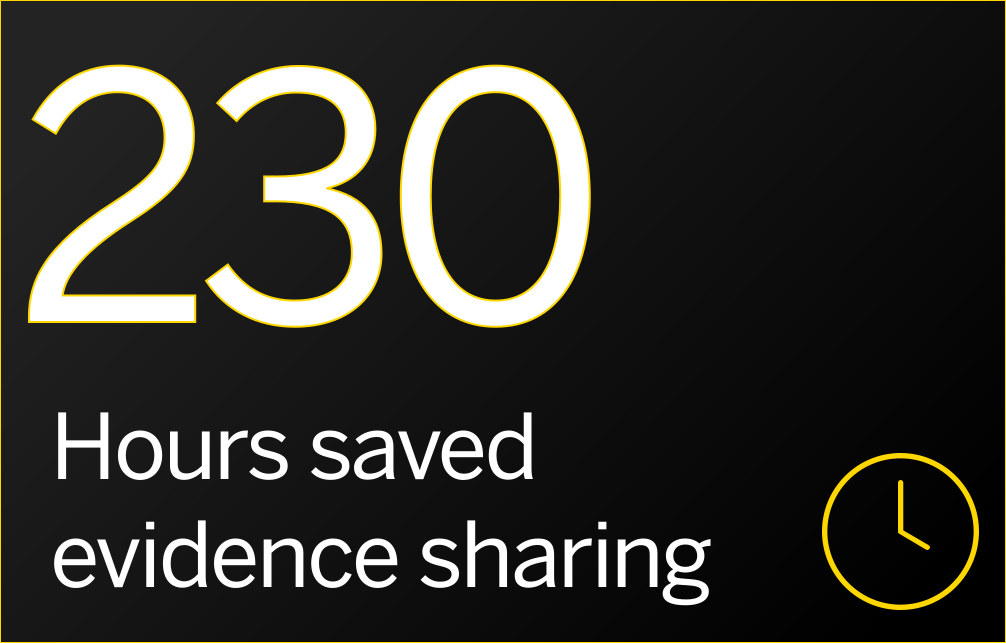
The ability to organise digital case files and maintain a clear chain of custody has also improved the Council’s relationship with partner organisations such as NSW Police and the EPA. Since implementing case sharing 6 months ago, the Council has saved about 230 hours sharing evidence.
Conclusion and looking ahead
 Wollondilly Shire Council has replaced a post-facto cleanup strategy with an integrated, technology-driven framework that enables proactive deterrence to combat illegal dumping. Initial camera deployments have already reduced illegal dumping in a known hotspot by 22%; evidence that the Council’s efforts are having a deterrent effect on criminal behaviour.
Field officers operate with greater safety and accountability thanks to the AB4, and complaints against them have to date disappeared altogether. Finally, case files move to partner agencies more efficiently and with greater security, getting shared in minutes instead of days.
Building on these early wins, Council is building the case to expand connected camera coverage across the Shire. The Compliance Team is currently awaiting the Australia Deployment of “Axon Outpost” and “Lightpost” cameras, with an evaluation and future procurement resulting in Council being the first in the Australian Local Government sector to utilise these cameras, resulting in extended monitoring of additional roads and high-risk hotspots.