Customer Story Hub
How a 3-year research study changed the way Leon County Sheriff approaches de-escalation
:format(webp))
At a Glance
Agency: Leon County Sheriff’s Office
Population served: Approximately 300,000 residents
Coverage area: 702 square miles, including urban Tallahassee
Sworn / professional staff: About 400 sworn personnel and 800 total employees
Research partner: Florida State University College of Criminology and Criminal Justice
Key solutions: Axon Body 4, Evidence, Standards, TASER 10, TREND, Axon VR
About the Agency
Leon County Sheriff’s Office (LCSO) operates across 702 square miles in Florida and employs approximately 800 staff, including 400 sworn personnel. The agency’s wide scope includes the bustling city of Tallahassee and its own detention facility.
Beyond providing traditional public safety services, LCSO is heavily involved in law enforcement field research. In 2023, the agency created the Dissecting De-escalation Project with the goal of reviewing its internal data and identifying best practices for law enforcement. The project grew into a multi-year collaboration with Florida State University College of Criminology and Criminal Justice.
LCSO wanted to ensure the study had both real-world law enforcement data and academic credibility. It was important to ensure the project could withstand scrutiny and produce findings that practitioners could trust.
We have the data and they have the know-how.
The Challenge
De-escalation is an essential aspect of modern law enforcement training and policy. However, for LSCO to understand the effectiveness of de-escalation tactics, more data was needed. Most law enforcement agencies only document de-escalation efforts in incidents that ended in some type of use of force, while the countless examples where police de-escalated through communication are rarely recorded.
This data gap, LCSO Captain James Pittman explained, made it appear as if de-escalation only happened when an encounter still ended in a use of force.
Every single de-escalation that we used to measure was a de-escalation that led to a use of force.
Without detailed evidence connecting deputy actions to positive incident outcomes, agencies had limited ability to determine what de-escalation was effective, how those techniques interacted with different situations, and how training translated into behavior in the field.
The Solution
A detailed system for tracking actions and outcomes
Leon County Sheriff's Office partnered with Florida State University (FSU) to design a three-phase research effort grounded in real-world deputy interactions.
In Phase 1, LCSO established basic tracking codes deputies could use to document de-escalation efforts and if they were successful. As codes were recorded, the agency established a data baseline. Phase 2 scaled that effort to more than 109,000 interactions across over 53,000 law enforcement incidents.
In Phase 3, detailed second-by-second coding was applied to Axon Body 4 footage, which captured communication, behavior, and decision-making in real time. Rather than relying on after-the-fact reports or memory, FSU researchers used body-worn camera video to study high-stress encounters.
What specific de-escalation techniques work? Who do they work on? Where do they work? What kind of training did the deputy have and when? These are the granular details of this study that you could not get before there were body-worn cameras.
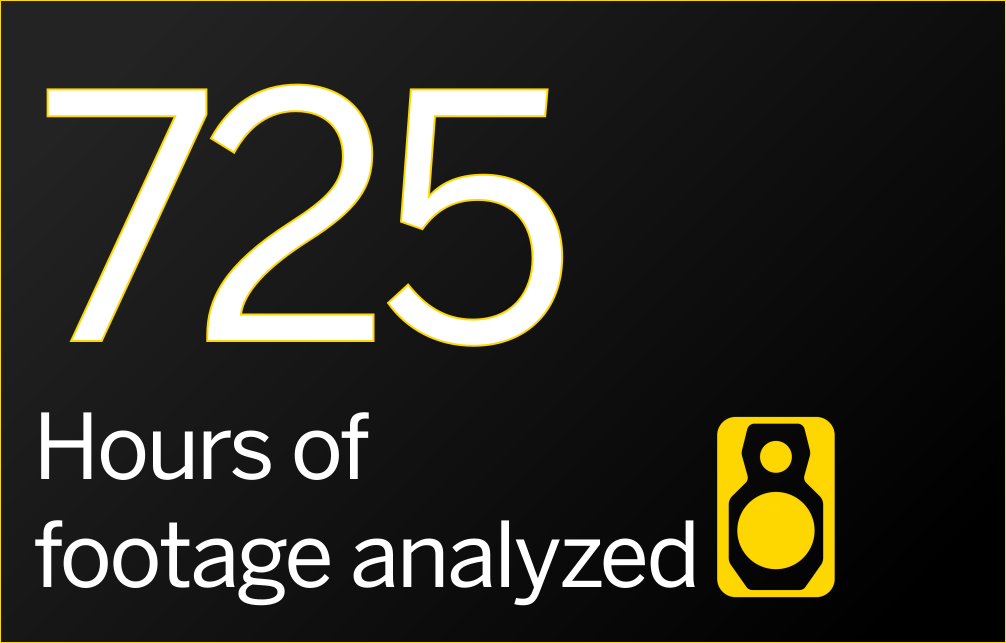
Researchers reviewed an estimated 725 hours of body-camera footage, and coded roughly 1,200 substantive interactions to the second. With Axon Evidence, researchers could seamlessly review footage and code it in a CJIS-secure environment.
A secure, long-term solution for data collection and storage
Leon County Sheriff's Office used Axon Standards and TREND (TASER Research Evaluation and Data) to build a sustainable model for de-escalation tracking, one that would last beyond the Dissecting De-escalation research initiative. Axon Standards allows LCSO to collect structured information directly from the field and feed that information into dashboards that supervisors, researchers, and training personnel can use over time. TREND provides agencies with detailed data from use-of-force and show-of-force incidents, helping agencies assess program effectiveness, monitor injury rates, and uncover actionable insights to improve training and accountability.
As part of a randomized control trial design, Leon County Sheriff's Office also developed a 12-hour de-escalation training course that was delivered to deputies across three, four-hour sessions. These sessions were spaced across several days to give deputies time to absorb concepts and apply them in subsequent sessions.
Results
A secure, long-term solution for data collection and storage
Agency-wide data revealed that the vast majority of law enforcement encounters are non-volatile and conclude without any use of force. Of 109,152 documented interactions, 97.26% fell into the calm/cooperative category, while 2.69% were classified as agitated/uncooperative. Only 0.05% of all encounters resulted in a reportable use of force.
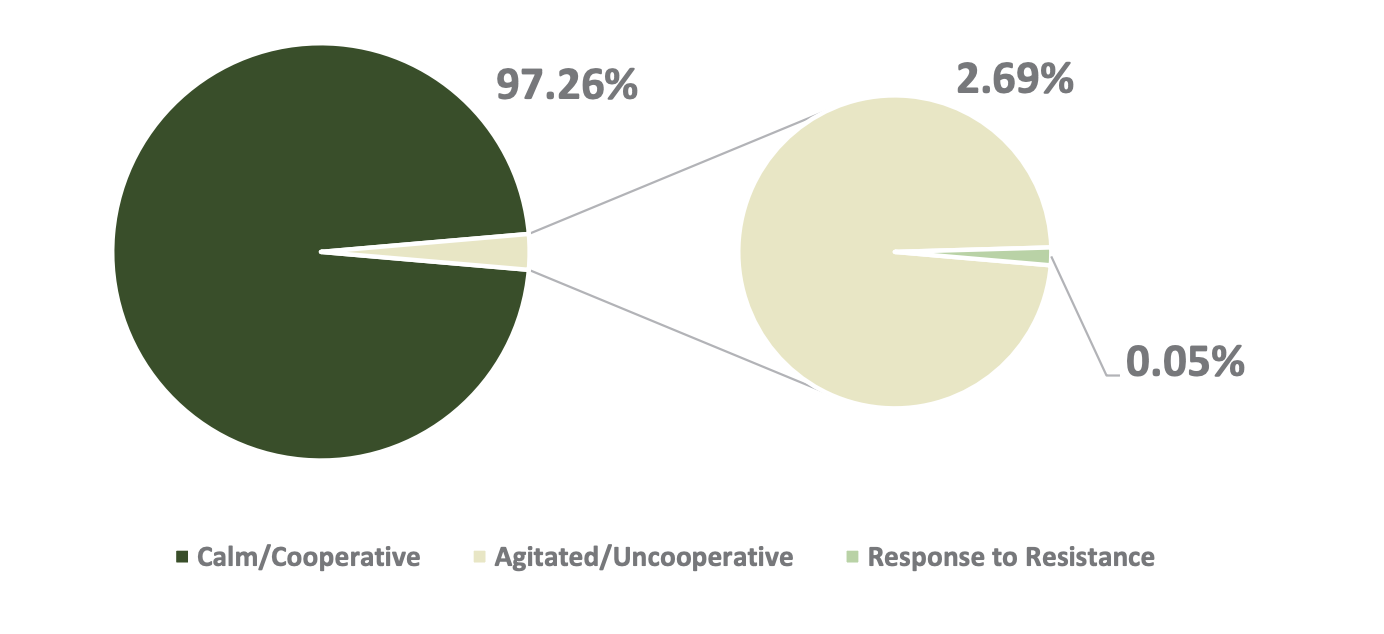 These numbers highlight the relative infrequency of use-of-force interactions and provide a more holistic picture of the work LCSO deputies carry out every day.
Increased use of de-escalation techniques was associated with better outcomes
Through their analysis of Axon Body 4 footage, FSU researchers found a measurable relationship between the number of de-escalation techniques used by deputies and whether an interaction resulted in use of force.
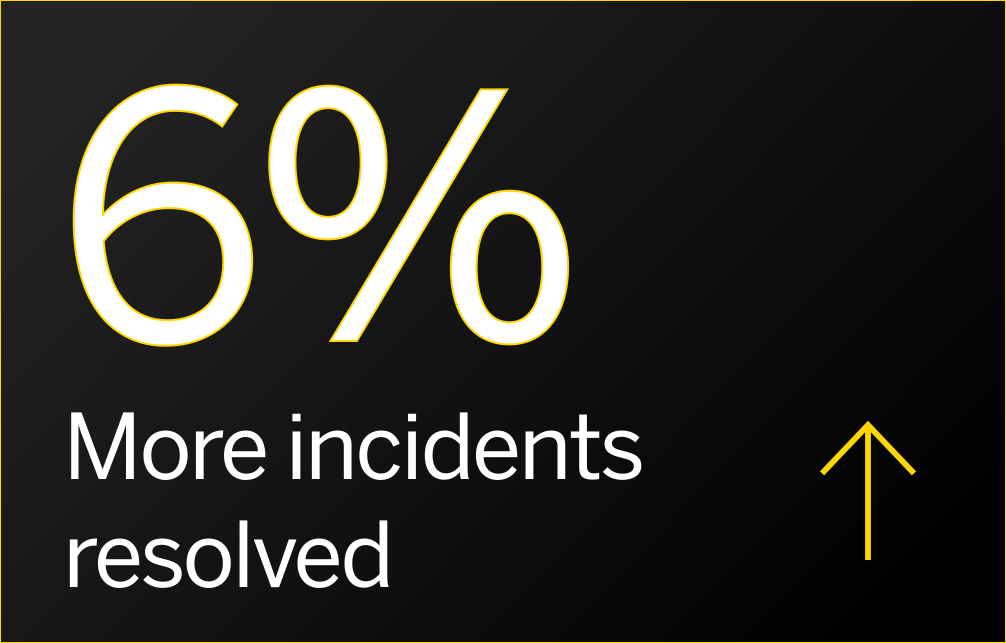
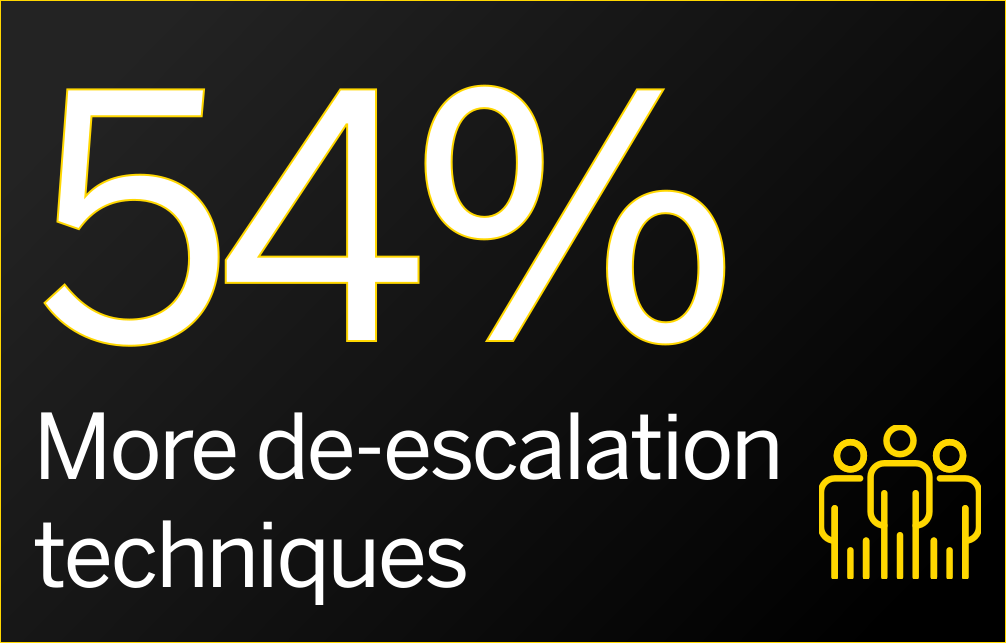
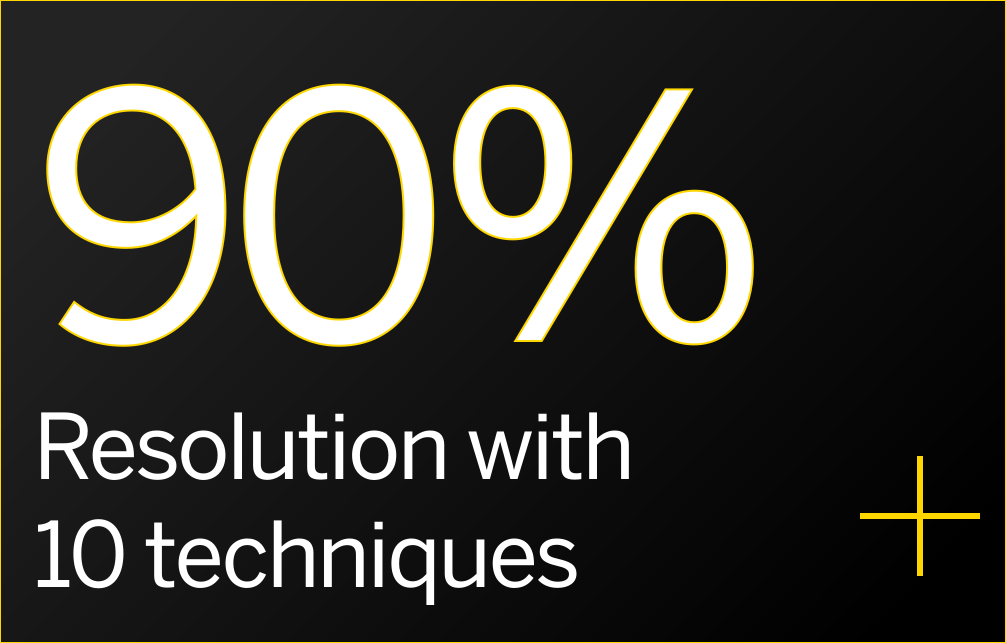
They calculated that for every additional de-escalation technique employed, the odds of ending an interaction with limited resistance increases by 6.21%. The predicted probability of resolving an incident without force reached 84.83% when five techniques were used, and exceeded 90% with 10 or more techniques.
De-escalation techniques vary in effectiveness
Rather than treating de-escalation as one undifferentiated category, FSU researchers analyzed individual de-escalation techniques utilized by LCSO deputies.
Exhibiting empathy and offering assistance were among the techniques with the most consistent positive relationships with no-force outcomes. Providing explanations, warning about immediate consequences and promoting teamwork also showed positive relationships in some models. These findings give law enforcement agencies something more actionable than a generic instruction to “de-escalate,” and suggest that training can be customized to support behaviors that actually work in the field.
The full report explains that the positive association between certain deescalation techniques and better outcomes were not consistent across every statistical model. For this reason, their research does not prescribe a rigid set of rules for officers. Instead, successful de-escalation is the cumulative effect of multiple behaviors adapted to the person and situation.
A training program built on data
Deputies who completed LCSO’s 12-hour de-escalation course increased their average use of de-escalation techniques from 4.01 to 5.58 per interaction, while the control group increased from 3.51 to a mere 3.62.
A post-training survey reinforced this shift: 76% of respondents said the course improved their ability to de-escalate volatile encounters, 47% reported noticing positive changes in their interactions with citizens, and 71% said they had occasionally used techniques learned in the course in the weeks afterward.
 These positive results led Leon County Sheriff's Office to roll-out their de-escalation training course across the agency. To enhance training further, LCSO also incorporated scenario-based learning and Axon VR into its training approach. The VR platform’s Community Engagement Training and Verbal Skills training, for instance, can help develop empathy and decision-making skills through immersion and repetition.
Axon VR has also helped increase confidence for officers when it comes to using the TASER 10.
You get so many more trigger pulls with Axon VR. After a day, officers have 100 more trigger pulls than they would otherwise, and it just increases their confidence in using a TASER.
Use policy to establish expectations, not to script every encounter
The Dissecting De-escalation project found that overly-rigid policies can backfire by limiting officer actions during unpredictable situations. LCSO subsequently rewrote its internal policy to allow for flexibility while centering clear values: de-escalation is a priority, deputies should avoid unnecessary force when circumstances allow, and deputies should be equipped through training to exercise sound judgment.
Other agencies can build off this framework by using policy to establish expectations and boundaries then training to build officer judgment and skills.
De-escalation is a personality-based soft skill that absolutely can be trained.
Conclusion and Looking Ahead
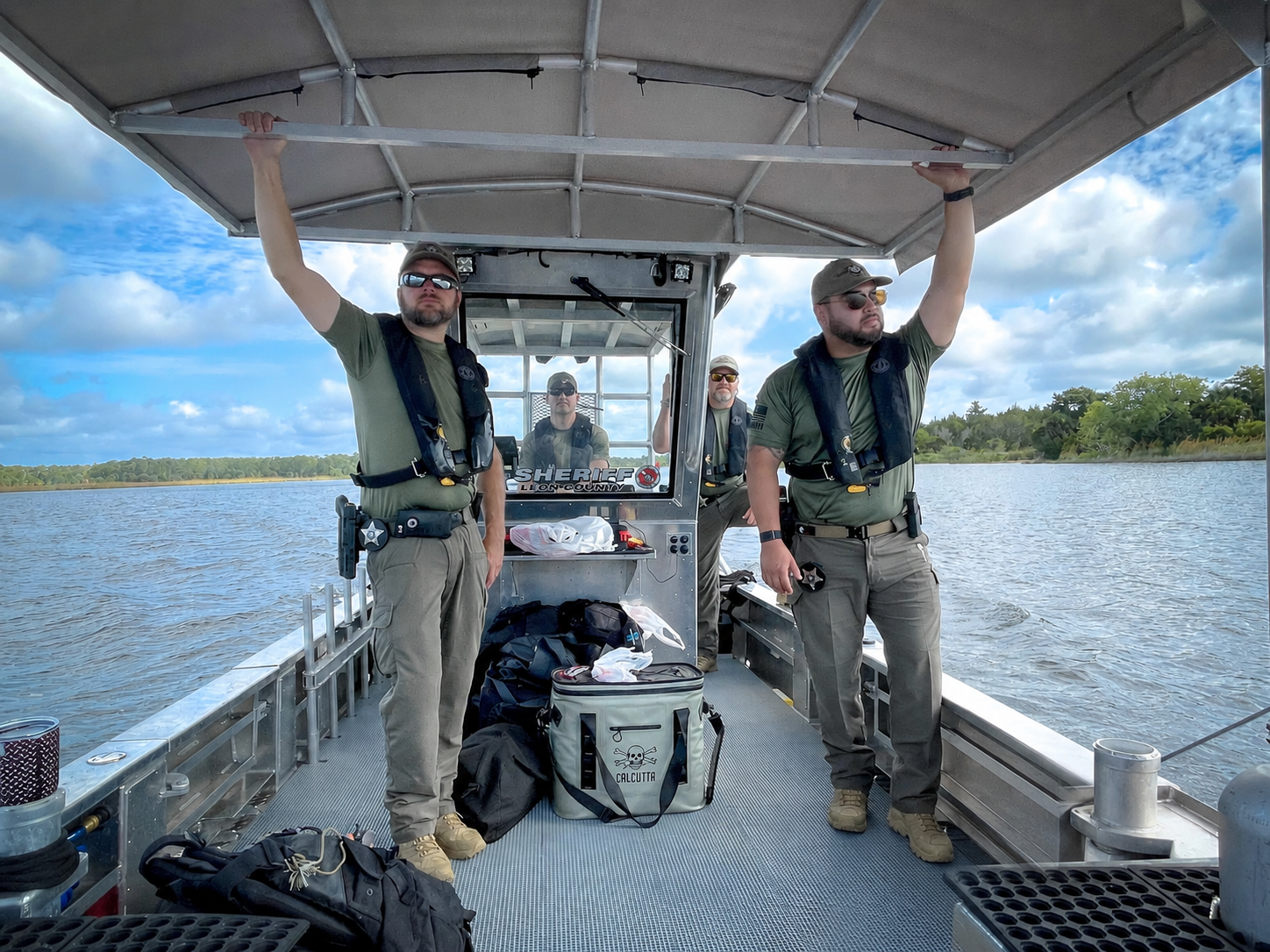 De-escalation is widely discussed but rarely measured. Leon County Sheriff's Office set out to change that by probing what actually works in the field.
The Dissecting De-escalation project offers a framework for other law enforcement agencies to examine their own de-escalation training, tactics, and effectiveness. The findings also demonstrate that the more de-escalation techniques used, the better the outcomes. Training has the power to change deputy behavior and approaches including empathy, providing assistance, and offering explanations have the strongest ties to successful incident resolution.
LCSO is continuing its work and continues to refine its de-escalation tracking through Axon Standards and TREND, turning that data into ongoing input for training curriculum, decision-making, and agency-wide improvement.
Read the full research paper
Dissecting De-escalation: A Collaborative Research Initiative
Leon County Sheriff’s Office and Florida State University College of Criminology and Criminal Justice