Customer Story Hub
Sparks Police Department: A regional real-time information center powered by Fusus
:format(webp))
At a Glance
Agency: Sparks Regional Police Department
Population served: About 120,000
Sworn / professional staff: 117 sworn officers and 76 civilian personnel
Coverage area: City of Sparks and regional mutual-aid area with Reno PD
Key Solutions: Fusus, Axon Evidence, Community Connect, Skydio drones, Axon DFR, Integrations with Live911, RapidSOS, ShotSpotter, CAD Call-for-Service
Key Results
10% of calls cleared with the RTIC, reducing unnecessary officer responses
Dozens of hours saved weekly via improved video and evidence handling
Reduced time spent on traffic investigations by hundreds of hours thanks to the Fusus camera system
Strengthened coordination with Reno PD through shared camera access
Expanded community camera participation from 6 to 204 registered cameras
About the Agency
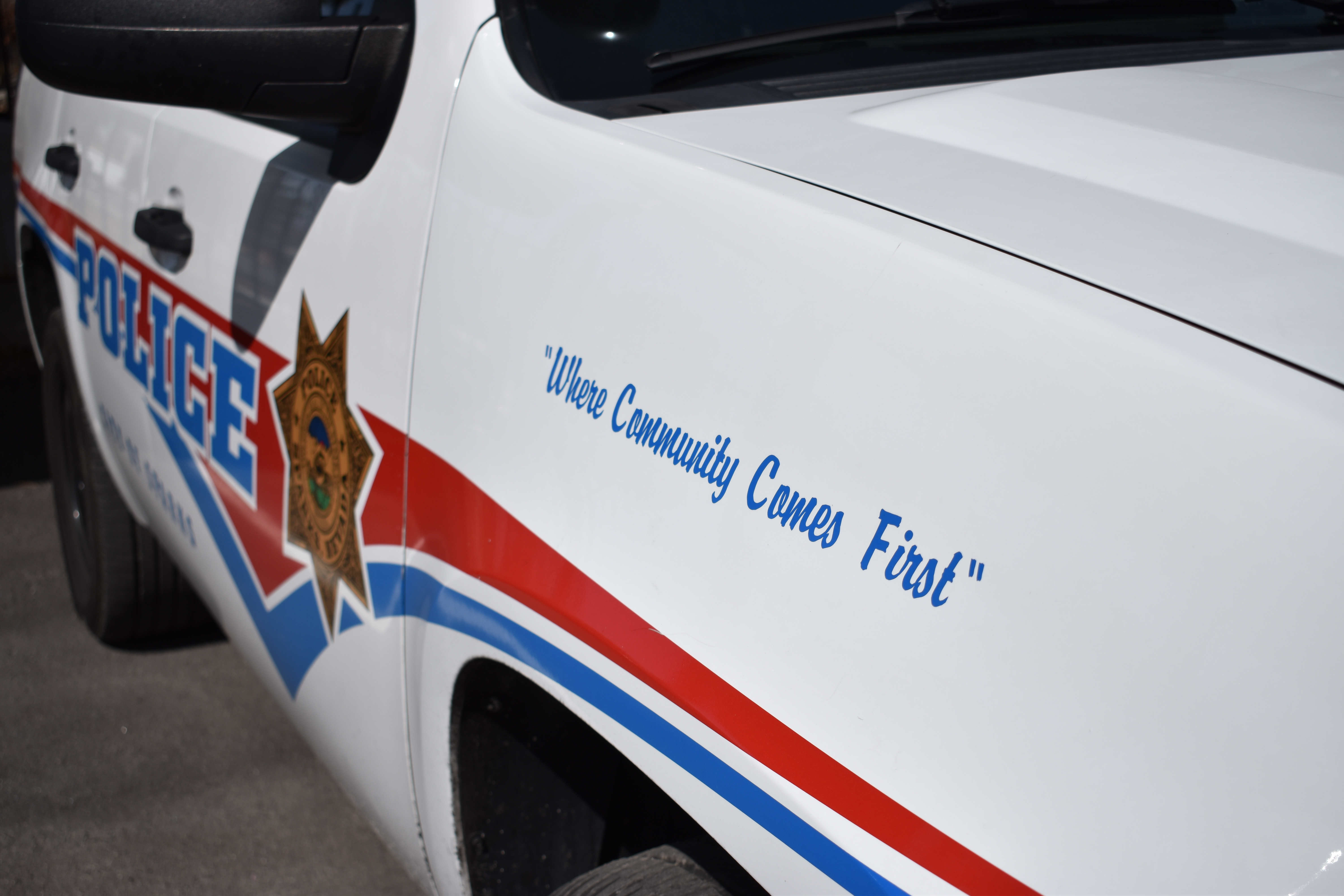
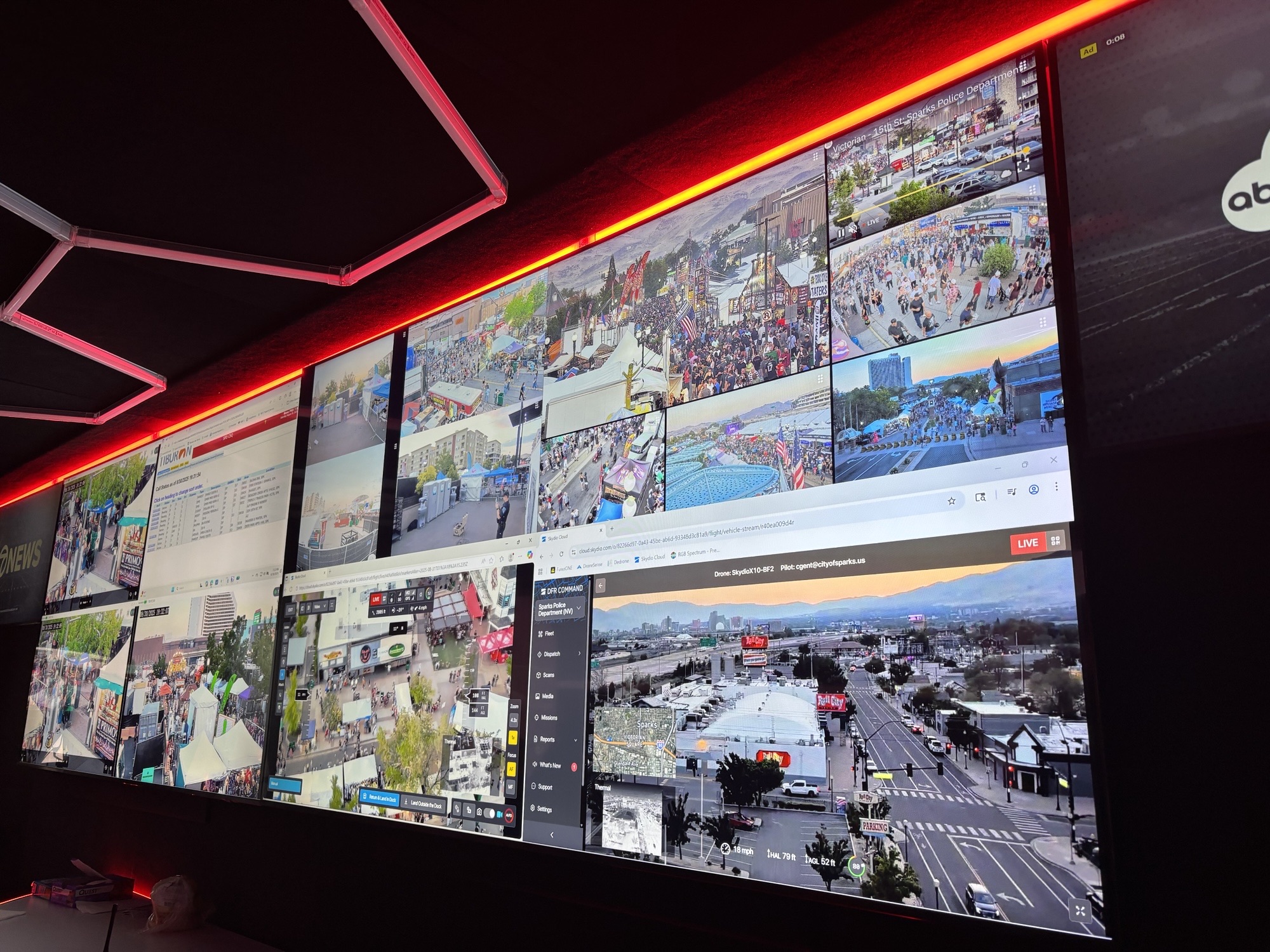
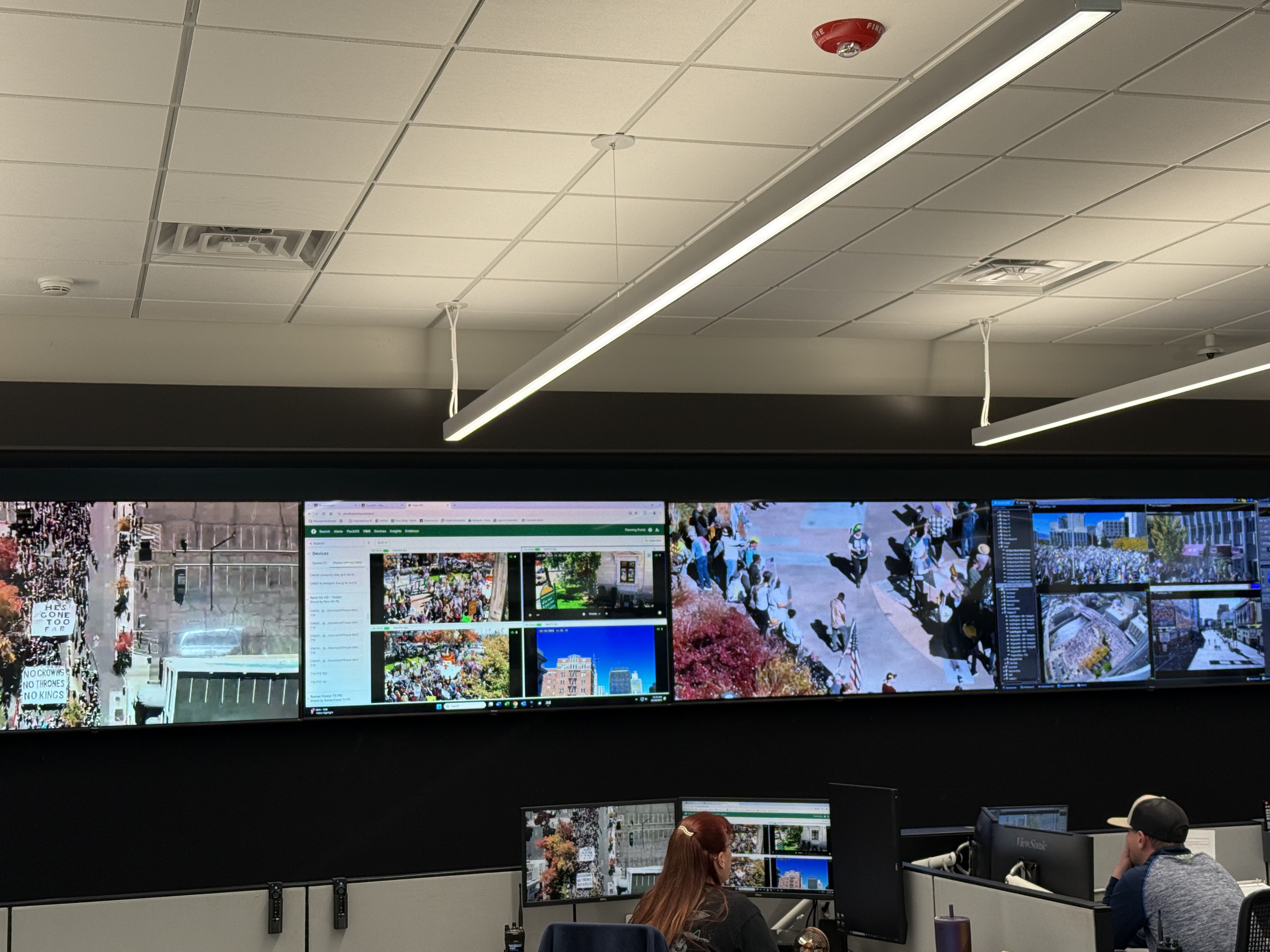
Sparks, Nevada, is using Fusus to bring together the systems that matter most in a real-time policing environment. The department’s Real-Time Information Center (RTIC) gives operators and analysts one place to monitor live calls, review camera views, support drones, and push evidence into the right workflow.
The result is faster decision-making and less wasted time. Low-priority calls can be verified and cleared without dispatching an officer, while traffic, patrol, and investigative staff get support without leaving the field. With these tools, their team can keep the right information in front of the right person as early as possible.
The Challenge
Before consolidation, critical information lived across too many systems. Operators and investigators had to move between Computer-Aided Dispatch (CAD), cameras, drones, and evidence workflows while still trying to respond quickly to unfolding events.
The department also needed a better way to reduce unnecessary dispatches, support officers in the field, and make camera and video requests more efficient. In a busy public-safety environment, every extra click and minute mattered.
Time is money in policing
The Solution
Sparks centered its RTIC around Fusus. The platform helps the department view CAD events in real time, access live camera feeds, support drone operations, and move video into evidence without unnecessary friction.
It also consolidates a wide variety of data sources into a single pane of glass. Axon body-worn cameras, drones, CCTV cameras, ShotSpotter, Live911, RapidSOS, CAD info and more are all available in a single interface. These integrations reduce duplication, improve awareness, and give staff a faster path from observation to action.
Sparks has invested in a number of other Axon solutions, including TASER 10, Drone as First Responder (DFR), Axon Evidence, Draft One, and Standards. This unified approach has helped the department reduce friction between systems and improve coordination across units and partner agencies.
Results
Faster call clearance
One of the clearest benefits has been the ability to clear calls without sending an officer. When a lower-priority call appears in CAD, the operator can check the live camera view inside Fusus and confirm whether the scene still needs an in-person response. Approximately 10% of calls are cleared using RTIC's technology.
This keeps officers available for higher-priority incidents and improves overall response readiness and response time.
One of the biggest wins is having the CAD integrated into Fusus, so we can see the 911 call in real time. When lower priority calls come in, we can clear them virtually so officers don't have to respond, and then they're available for higher priority calls.
Better traffic and crash support
Traffic work has been one of the department’s strongest use cases. When a crash is reported, staff can review intersection cameras, check signal timing, and help establish what happened before officers arrive on scene.
That reduces the chance of a dispute turning into a “he said, she said” situation. It also improves safety, because investigators and patrol staff can gather much of the needed context from the center rather than standing in traffic longer than necessary. The RTIC supports 5-10 traffic incidents per week, and officers have saved hundreds of hours during investigations from tracking down and playing the videos.
In-field support for officers
The RTIC has helped support safer decision-making in the field. Operators can handle camera review, live monitoring, and radio coordination from the center instead of asking officers to do it themselves on the street. Staff can also review incidents as they happen, quickly do research, and report that information to the officer in the field.
In one foot-pursuit-related incident, a TASER notification alerted the center to the event. The suspect remained uncooperative, so the operator asked an officer to get a clean face view, clipped the image from Fusus, and sent it to analysts for identification support.
The analyst identified the suspect in less than 30 seconds using 3rd party tools (not Axon technology). That kind of speed changes the tempo of a response and shows how closely live video, body-cam awareness, and investigative support can work together in a modern Real-Time Information Center.
Quicker video collection and evidence handling
Sparks Police Department receives video requests daily, especially for crashes and post-incident reviews. Fusus helps the department move footage directly into Axon Evidence, which saves time for both the operator and the requesting investigator.
Because of this improved workflow, Sgt. Wilson said the department is saving dozens of hours per week by avoiding unnecessary back-and-forth between the field and the office.
Regional and community expansion
Sparks has built out their Fusus camera network through the Community Connect program. The department found that participation increased when it focused less on the technology itself and more on the benefits for residents and businesses. Instead of asking people to "share their cameras," Sparks explained how registration in the program could reduce disruptions after a crime.
In order to grow their network, they have used a combination of social media and personalized outreach to local businesses. Each new camera integrated into the network provides additional looks at key moments, and the department plans to continue growing the Sparks Community Connect program moving forward.
Today, the department has 660 integrated cameras and 244 registered cameras. The department also shares network access with the Reno PD Community Connect program through an interlocal MOU, adding more cameras and helping both agencies support events that cross jurisdictional boundaries. 
Conclusion and Looking Ahead
Sparks is building a practical, scalable model for regional real-time policing. Fusus gives the department a central operating view today, and creates a clear path for integrating more cameras and data sources as technology evolves.
As the RTIC grows, Sparks PD will be guided by key goals like integrating more of what already exists, reducing wasted time, and helping staff make better decisions faster.