Automatic License Plate Recognition (ALPR)
A camera system that reads license plates and vehicle details to help officers find vehicles connected to crimes. Axon ALPR is built to help agencies balance public safety with privacy. Every search, alert, and access event is logged and can be reviewed.
PRODUCT SAFEGUARDS
PRODUCT SAFEGUARDS
Recorded Audit Log
Every search and access event is logged and reviewable
Human In The Loop
A person verifies every hotlist alert. People make every decision
Protected Data
All data is encrypted, protected, and never shared by default
PRODUCT SAFEGUARDS
PRODUCT SAFEGUARDS
Recorded Audit Log
Human In The Loop
Protected Data
PRODUCT SAFEGUARDS
PRODUCT SAFEGUARDS
Recorded Audit Log
Human In The Loop
Protected Data
Built Responsibly
We believe how we build our products matters just as much as what we build. Our Responsible Innovation Framework is where that belief becomes practice.
What is ALPR
Automatic license plate recognition (ALPR) is camera technology that reads vehicle license plates and details like color, make, and body type. Agencies use it to find vehicles they are looking for, such as stolen vehicles or vehicles connected to an AMBER Alert. It does not identify people, and every search, alert and access event is logged and reviewable.
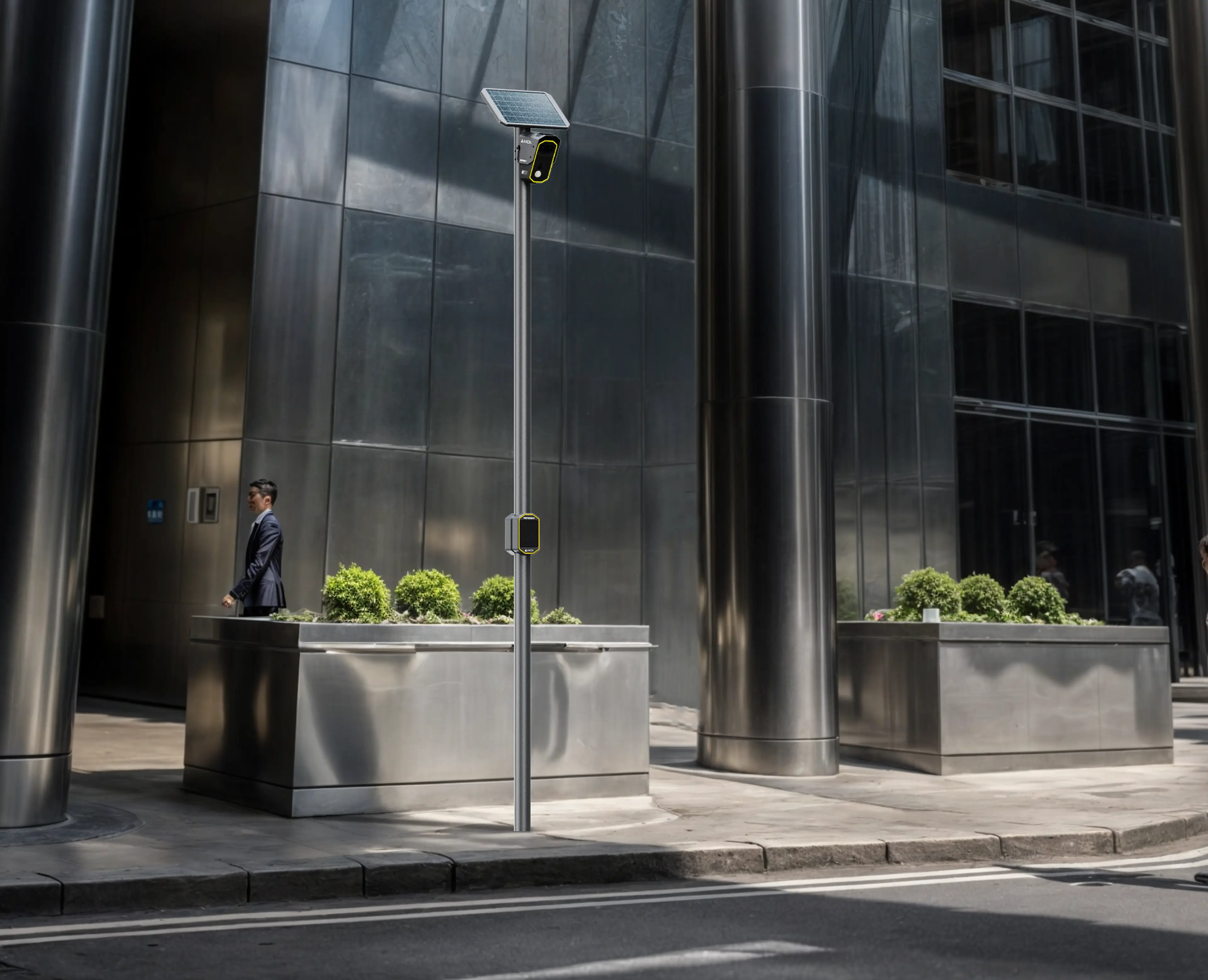
Not every camera is an ALPR camera. Agencies choose where to place fixed ALPR cameras and mount them on poles only with the site owner's approval, such as a city, utility, or state transportation department. They can also equip patrol vehicles with mobile cameras that read plates as the officer drives. The same safeguards apply either way.
ALPR helps investigators find vehicle leads faster, which means less time communities spend waiting for answers. Agencies own their data outright, and investigators and officers stay in charge - reviewing every alert, confirming every match, and deciding what to do next.
Axon ALPR was designed with community input and continuously evaluated to ensure responsible use. The sections below outline the safeguards built into Axon ALPR and the community feedback behind each one.
How does Axon ALPR work?
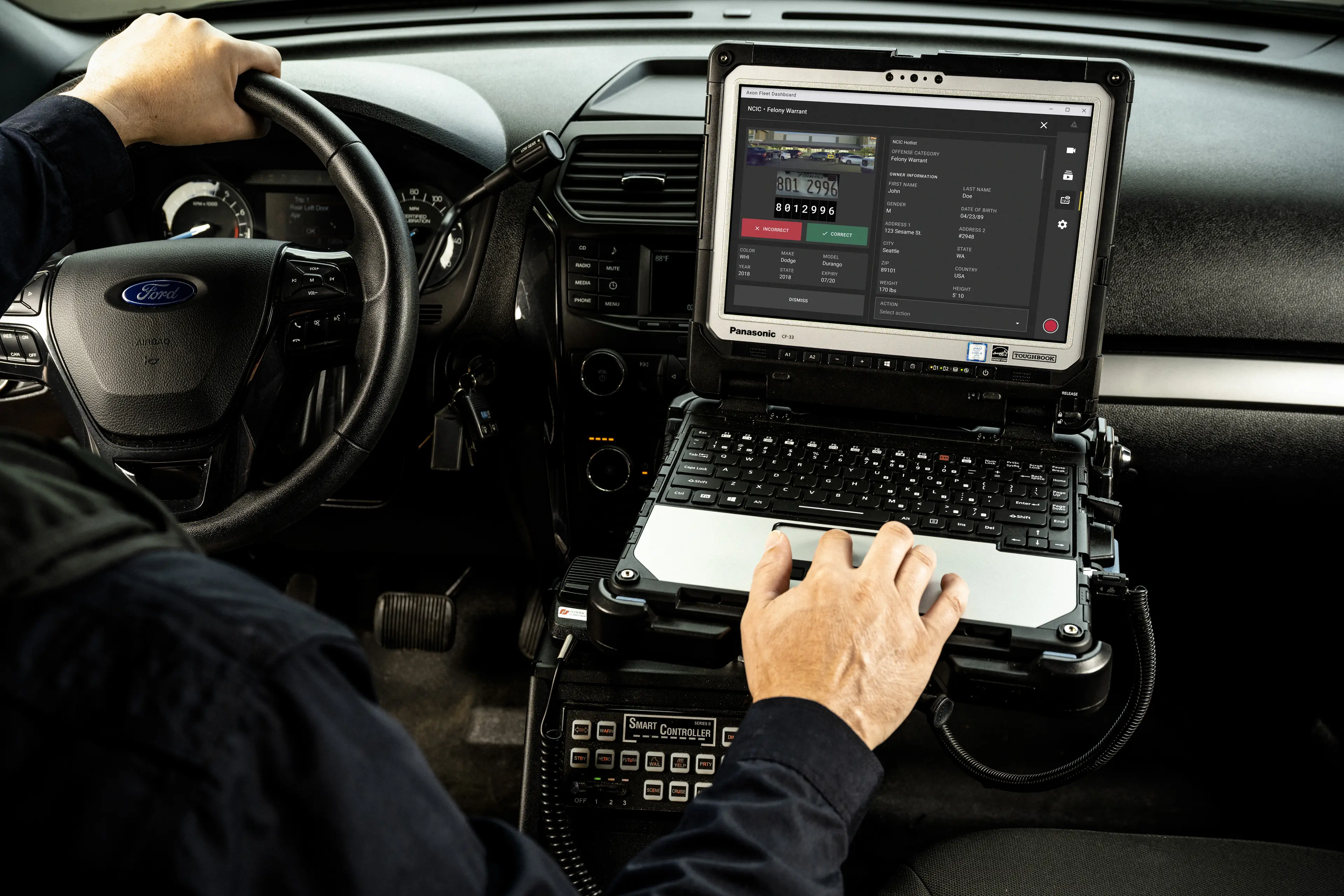
Agencies use Axon ALPR in two ways. A hotlist alert tells officers when a camera reads a plate on a list the agency is looking for. A search allows investigators to look through vehicle images for ones that fit a description. To run a search, the user must have permission from the agency’s administrator, give a reason for the search and choose the type of crime it relates to. The example below shows a search, and the safeguards that follow cover both.
How an ALPR search is used in a real investigation: A 911 caller reports a carjacking and describes the vehicle, but no one has a plate number. With no plate number to watch for, investigators search recent vehicle images that match the description, like color, make, and body type.
STEP BY STEP
How Axon ALPR works:
STEP BY STEP
How Axon ALPR works:
STEP BY STEP
How Axon ALPR works:

With only a description to go on, analysts at the agency’s real-time crime center search plate images from its fixed cameras on streetlights and poles and its mobile cameras on patrol cars. They can also search images from a few nearby suburbs, but only when those agencies agreed to share in advance and allowed searches for this kind of crime.
Searches only cover recent data. Each department sets how long to keep plate images, for example 7 or 30 days, based on local laws and policy. After that, images not tied to a case are deleted automatically when the agency’s retention period ends, and searches only cover data within the agency’s retention period.
A carjacking is serious enough to justify a search. Before it starts, the analyst must enter a reason and offense category, which creates a clear record tied to a real incident. Because this is happening now, analysts only search images from the last hour or two.
Key safeguards
The key themes from our community research on ALPR heavily inform how we design, develop, and roll out this technology. Axon ALPR includes three core safeguards: a recorded audit log, human-directed decisions and protected data. Each was shaped by community research on ALPR and evaluated against Axon's ethics and inclusion standards.
Recorded Audit Log
Every search, hotlist alert, and access event is recorded in an audit log that captures who accessed data, when, and for what purpose. Axon ALPR preserves a strict chain of custody and offers an opt-in transparency portal for agencies to share policies and usage data directly with the community.

Human In The Loop
Investigators must verify every hotlist alert before taking action. Axon ALPR enforces strict guardrails, including mandatory search reasons, administrator-gated hotlists, and role-based access controls.

Protected Data
Built for local ownership. Agencies stay in control of their encrypted, secured data at every step. They decide who can access it and how long it is kept, based on local and state laws and department policy. When that time is up, the data is deleted automatically and can no longer be searched.
Recorded Audit Log
WHAT WE HEARD FROM THE COMMUNITY:
Accountability should be built into Axon ALPR from the start, not added after the fact. Every search and access event should be traceable and reviewable, with clear records of why data was accessed and by whom. A public-facing transparency portal should exist written in plain language, showing how Axon ALPR is being used in their community, with pathways to report concerns or contest misuse.
IMPLEMENTED SAFEGUARDS:
Recorded Audit Log: Every search and investigative action is recorded in a log no one can change. It shows the reason for the search, who ran it, when, and what they did next. Administrator changes are logged too, including decisions to share data with other agencies and how that access was used. Learn more here.
Public Transparency Portal: Each agency decides, as a local policy choice, whether to turn on a public transparency portal. Agencies can utilize these to inform their communities on how they use plate data, including how long they keep it, program details, and which agencies they share with.
Audit Reports: Agencies have four built-in reports on how ALPR is used. They cover activity inside the agency, activity across partner agencies, data sharing, and hotlist changes. Supervisors and oversight groups can run any report at any time, and all administrators get last month’s reports by email on the first of each month. Learn more here.

Human In The Loop
WHAT WE HEARD FROM THE COMMUNITY:
This technology should help solve crimes without replacing human judgment. Every search requires a documented reason, so accountability is built-in from the start. There should be greater transparency around how vehicle data is collected, stored, and used, along with clear ways for the public to stay informed.
IMPLEMENTED SAFEGUARDS:
People Confirm Every Alert: When a camera matches a vehicle to a hotlist, a person must validate the plate number is correct, the state matches and the alert is still valid before any action is taken.
Every Search Requires a Reason: Before any search runs, the user must give a reason and offense category. Both are logged and cannot be changed, creating a record of why the search happened.
Controlled Access: Each agency decides who can search, who can view records, and who can create or modify hotlists. Those decisions stay within local control. Learn more here.
Axon ALPR Finds Vehicles, Not People: Axon ALPR is built to help locate vehicles connected to crimes. It does not identify drivers, predict behavior, or assign risk scores. Those fixed limits are built into the system.
Incorrect Match: If the plate was misread, the state doesn't match or the alert is no longer valid, no action is taken, and that outcome is recorded in the audit log.

Protected Data
WHAT WE HEARD FROM THE COMMUNITY:
Communities expressed concerns about who can access vehicle data, how long it is kept, and whether it could be shared beyond its intended purpose, including with immigration or civil enforcement entities. They called for strong local control, clear limits on how long data is retained, and protections against data being used for purposes it was never intended for.
IMPLEMENTED SAFEGUARDS:
No Sharing Without Authorization: Data is never shared by default. If an agency chooses to share with another agency, the sharing is explicit, invite-only, and can be turned off at any time. Axon does not access agency data except for support requests, which are time-limited, logged, and ended once resolved. Learn more here.
Local Ownership, Local Control: Agencies own their data outright. They decide who can access it, how it is used, and when it is deleted.
Automatic Deletion: Agencies decide how long to keep data, based on local and state laws and department policy, for example 7 or 30 days. When that time is up, the data is deleted automatically and can no longer be searched.
CJIS-Certified Security: All vehicle detection data is encrypted and stored in cloud systems that meet the FBI’s Criminal Justice Information Services Security Policy, the same standard used for criminal justice records across the country. Learn more here.

FAQs
Key terms
The following definitions explain important terminology referenced throughout this page.
ALPR / ANPR
Automatic License Plate Recognition, called Automatic Number Plate Recognition in the UK. The technology reads vehicle license plates from camera images and compares them against a hotlist the agency creates and controls. The Axon ALPR system reads plates and vehicle details, not people, and every search, alert, and access event is logged and reviewable.
Vehicle attributes
Descriptive details a camera captures alongside the plate, such as color, make, and body type. In Axon ALPR, vehicle attributes help investigators confirm or rule out a potential match, Axon ALPR does not capture facial images or identify people.
Hotlist
A list of license plates an agency is actively looking for, such as stolen vehicles or vehicles connected to an active investigation. In Axon ALPR, a plate is only added to the hotlist after an investigator has researched it and is confident it’s connected to a real case, and administrators control who has permission to create or modify it.
Hit
A plate read that matches an agency’s hotlist. In Axon ALPR, a person must verify every hit, confirming the plate number, state, and that the alert is still valid, before any action is taken.
Audit log
A record of every search and every time someone accesses the system, showing who did it, when, and why. In Axon ALPR, the audit log is built in from the start, and no one can change it. Agencies own it, and supervisors and oversight groups can pull a full report at any time to check that every search had a legitimate reason.
Retention period
The length of time an agency keeps plate read data before it’s automatically deleted. In Axon ALPR, agencies set their own retention period based on local policies and laws, and data not tied to an active case is automatically deleted once that period ends.
CJIS
The FBI’s Criminal Justice Information Services Security Policy, a federal security standard for handling criminal justice data. In Axon ALPR, all vehicle detection data is encrypted and stored in cloud infrastructure that meets CJIS security requirements, the same standard applied to criminal justice records across the country.


