Pulse graphs
Pulse graphs describe the electrical output of the TASER 10, including details such as time of trigger pull, which cartridge was deployed, and when energy transmission started and stopped. This information can be of great use during detailed investigations. Pulse graphs are an advanced topic. Do not hesitate to contact Axon for help with understanding and interpreting these.
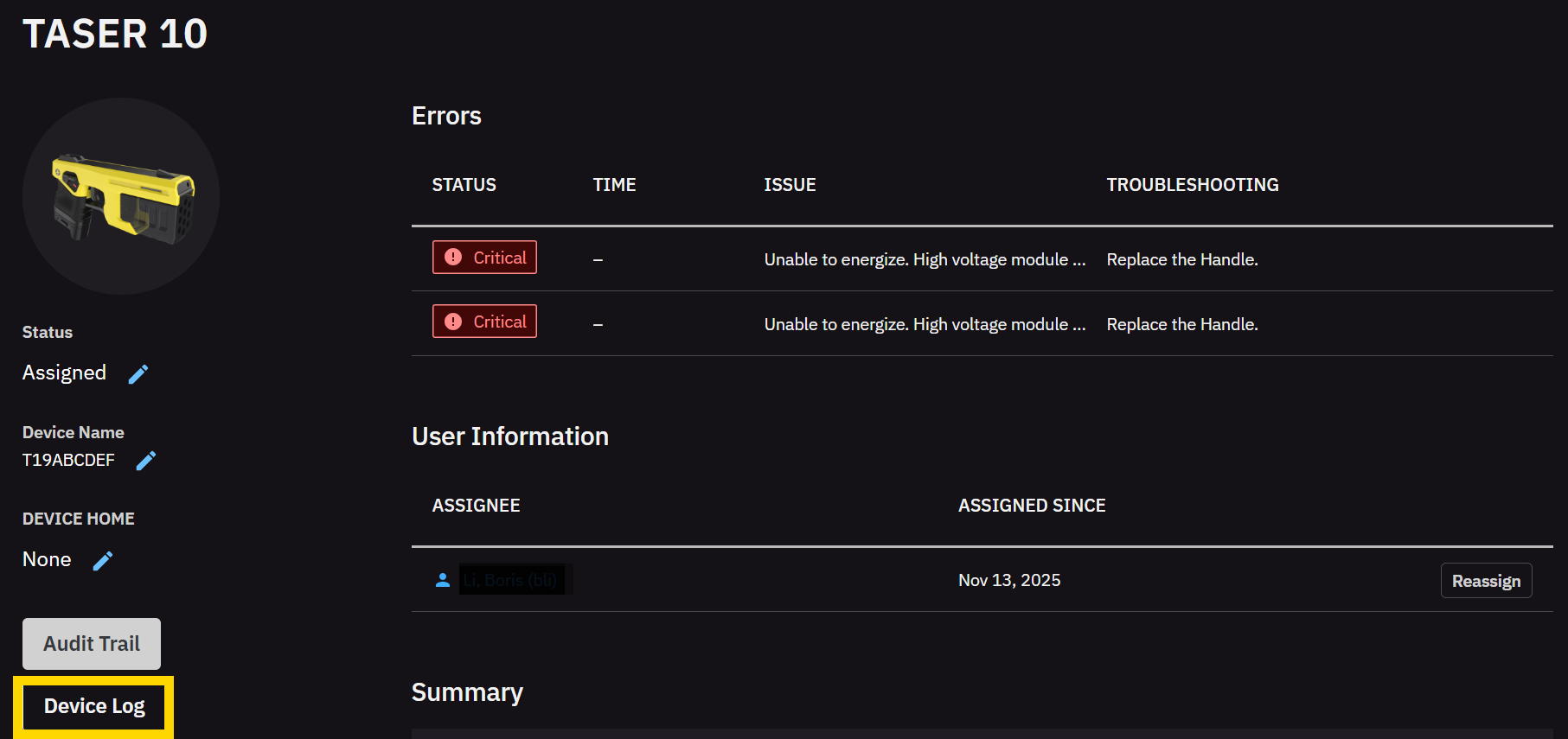
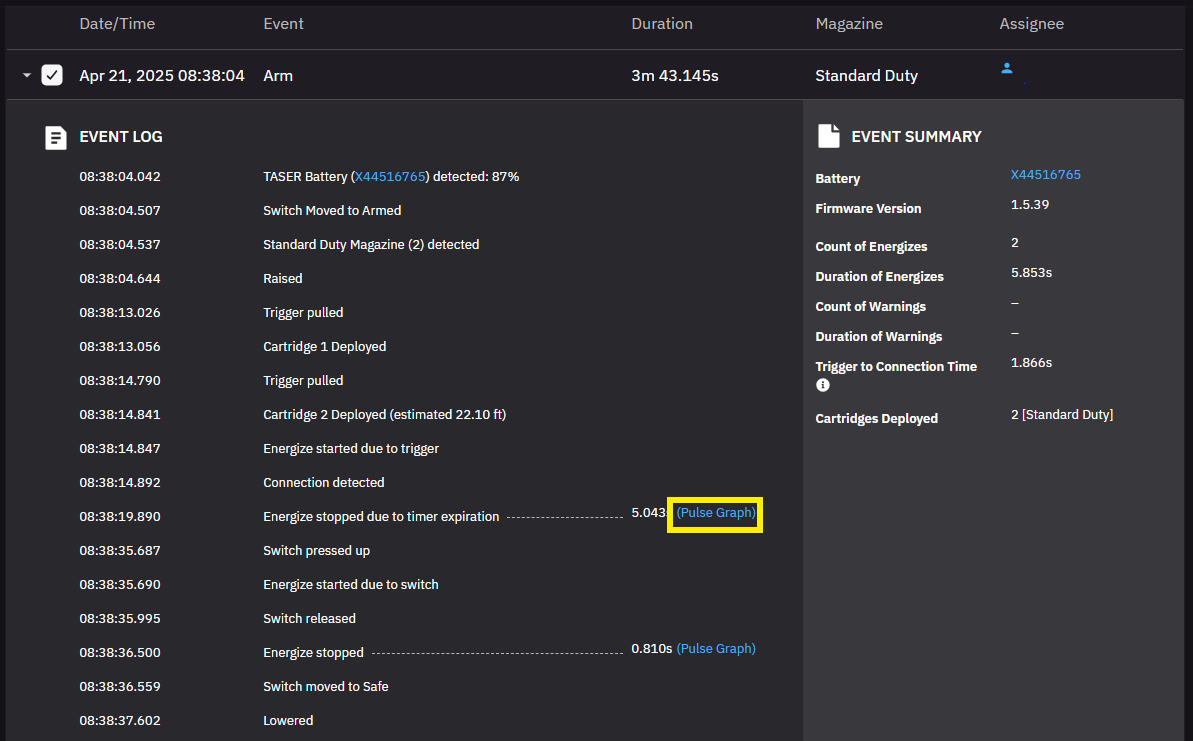
To view a pulse graph, select Device Log on the item's profile page and then Pulse Graph.
A pulse graph has four sections:
- Summary
- Timeline
- Graphs
- Definitions
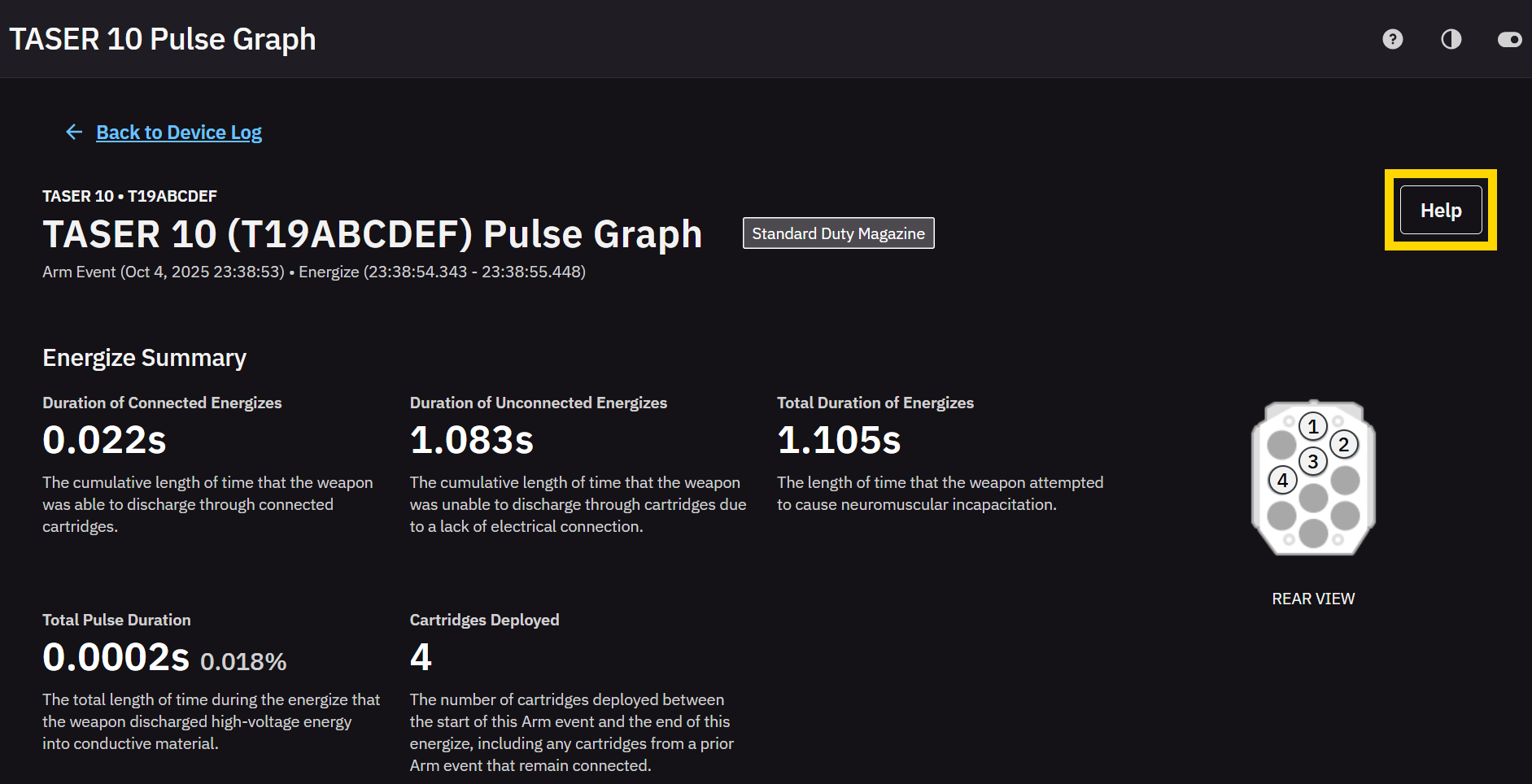
The purpose of each section is described on the page. Select Help at the top right corner of a pulse graph to view definitions.
Definitions
Energize Summary
- Pulse – A pulse is a very short burst of electricity. The weapon discharges a series of pulses to incapacitate a subject over a period of time. The duration of each pulse can vary as the weapon modifies its output to maximize the potential for incapacitation.
- Total Duration of Energizes – The length of time that the weapon attempted to cause neuromuscular incapacitation. It begins when the energize timer starts and ends when it expires. An energize timer starts when the operator pulls the trigger or presses the switch up and electrical discharge is possible. Specifically, those scenarios are when: the second cartridge is deployed or the trigger is pulled or switch pressed up while two or more cartridges are deployed. The length of an energize timer is 5 seconds, +/- 0.250s. The energize timer can be reset by pulling the trigger or pressing the switch up during the energize. The energize can be extended indefinitely by holding the trigger or switch up past the end of the energize timer. The ability to reset or extend the energize timer is controlled by the TASER 10 agency setting, Automatic Shut Down.
- Duration of Connected Energizes – The cumulative length of time that the weapon was able to discharge through connected cartridges. This is the duration of time during which the device is attempting to cause neuromuscular incapacitation with at least 2 cartridges connected to conductive material.
- Duration of Non-Connected Energizes – The cumulative length of time that the weapon was unable to discharge through cartridges due to a lack of electrical connection. This is the duration of time during which the device is attempting to cause neuromuscular incapacitation while lacking a cartridge connection with conductive material.
- Total Pulse Duration – The total length of time during the energize that the weapon discharged high-voltage energy into conductive material. It is the sum of the durations of each pulse. Note, the maximum possible duration of each pulse is used in the calculation making the Total Pulse Duration the maximum possible duration. The actual value is smaller.
- Cartridges Deployed – Cartridges deployed between the start of this Arm event and the end of this energize and any cartridges from a prior Arm event that remain connected. Cartridges are numbered by the order in which they are deployed.
Energize Timeline
- Cartridges Connected – The list of cartridges into which energy may be discharged. Two or more cartridges must complete an electrical circuit to be capable of discharging electricity for the purpose of incapacitation.
- Start Time & End Time – The start and end time when a given set of cartridges were connected, relative to the Energize Start.
- Duration– The total duration a set of cartridges were connected.
Pulse Graphs
- Charge – The rate of electrical flow for a given pulse. The weapon monitors the impedance of its connections and dynamically adjusts charge to maximize the probability it is effective.
- Impedance – A measurement of electrical resistance in an electrical circuit, calculated by the weapon when energized. The impedance value can help identify the material receiving the energy.
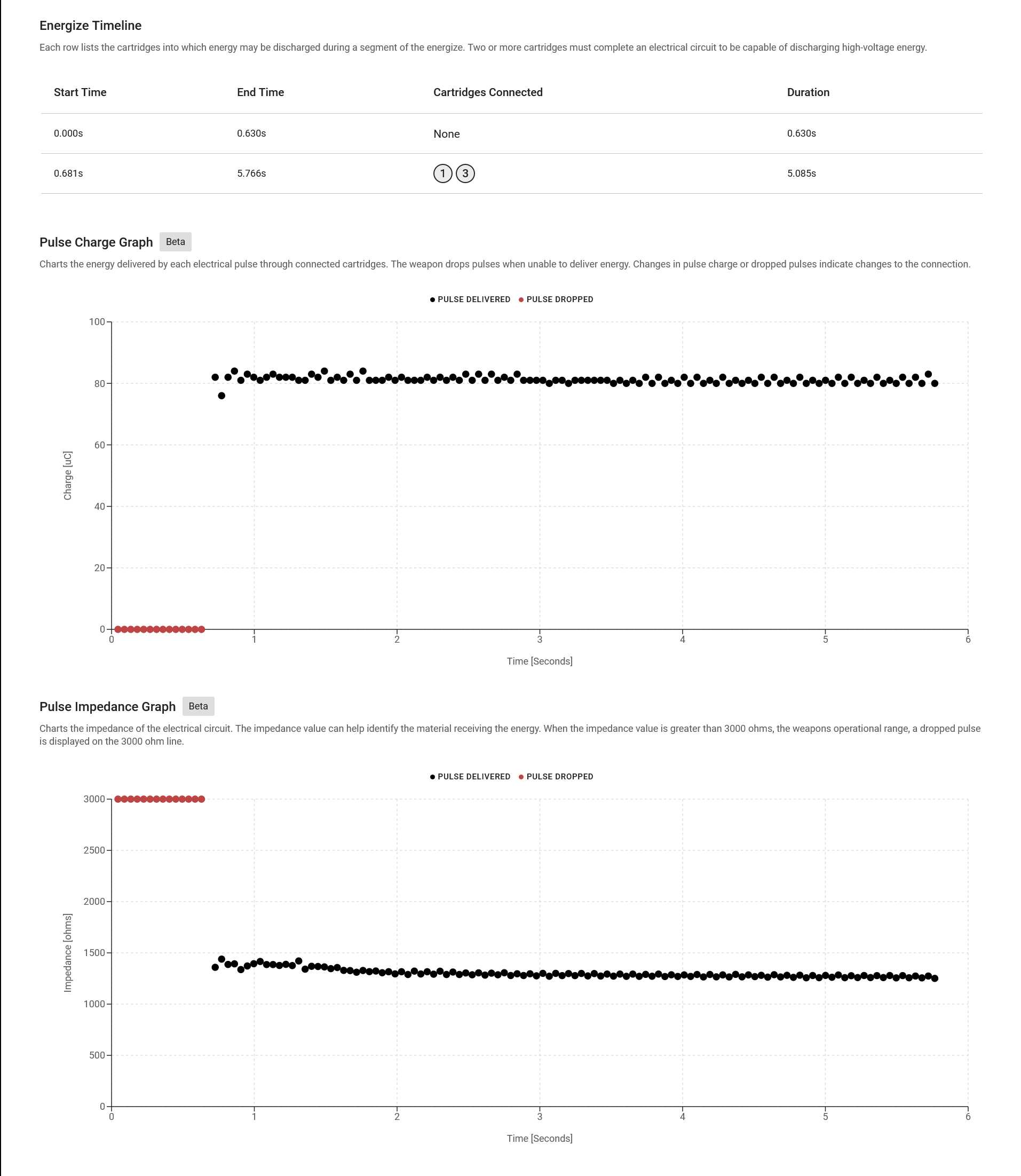
Just because the weapon can detect a connection doesn't mean it can discharge energy. For example, it can't discharge if the resistance is too high (perhaps caused by thick clothing preventing probe contact). In this case, the Energize Timeline in the Pulse Graph lists that cartridges connected with a target but the weapon did not deliver any charge. These appear as red dropped pulses at the 3000 ohm line (outside operational range).
Sample pulse graphs and logs
The following two scenarios were created during voluntary exposures. The holster, un-holster, and magazine removal activity at the end would not be a normal action for a user.
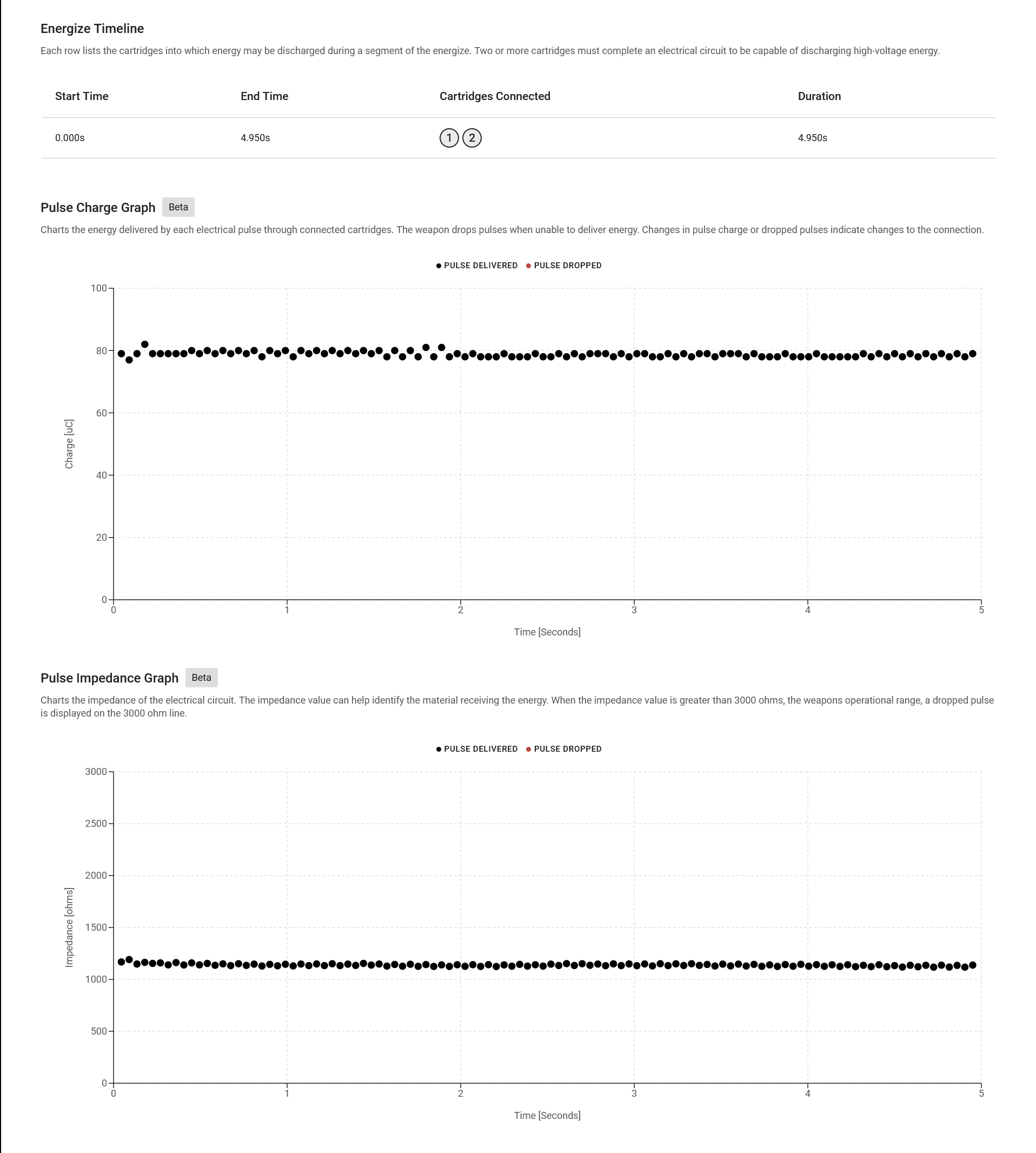
Two probes
Two probes deployed within five feet, with both attaining bodily connection: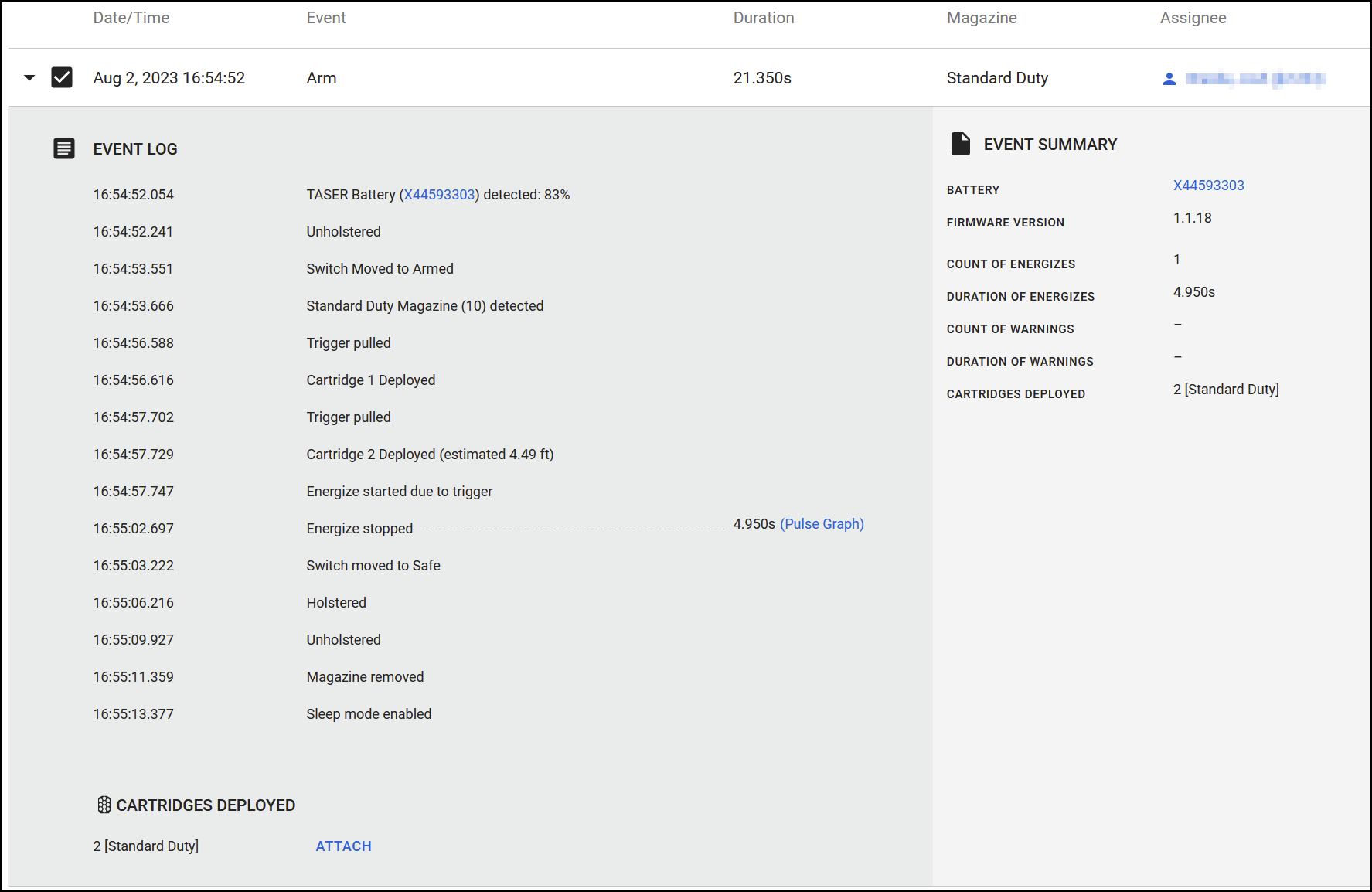
Three probes
Three probes deployed within seven feet, with first and third attaining bodily connection: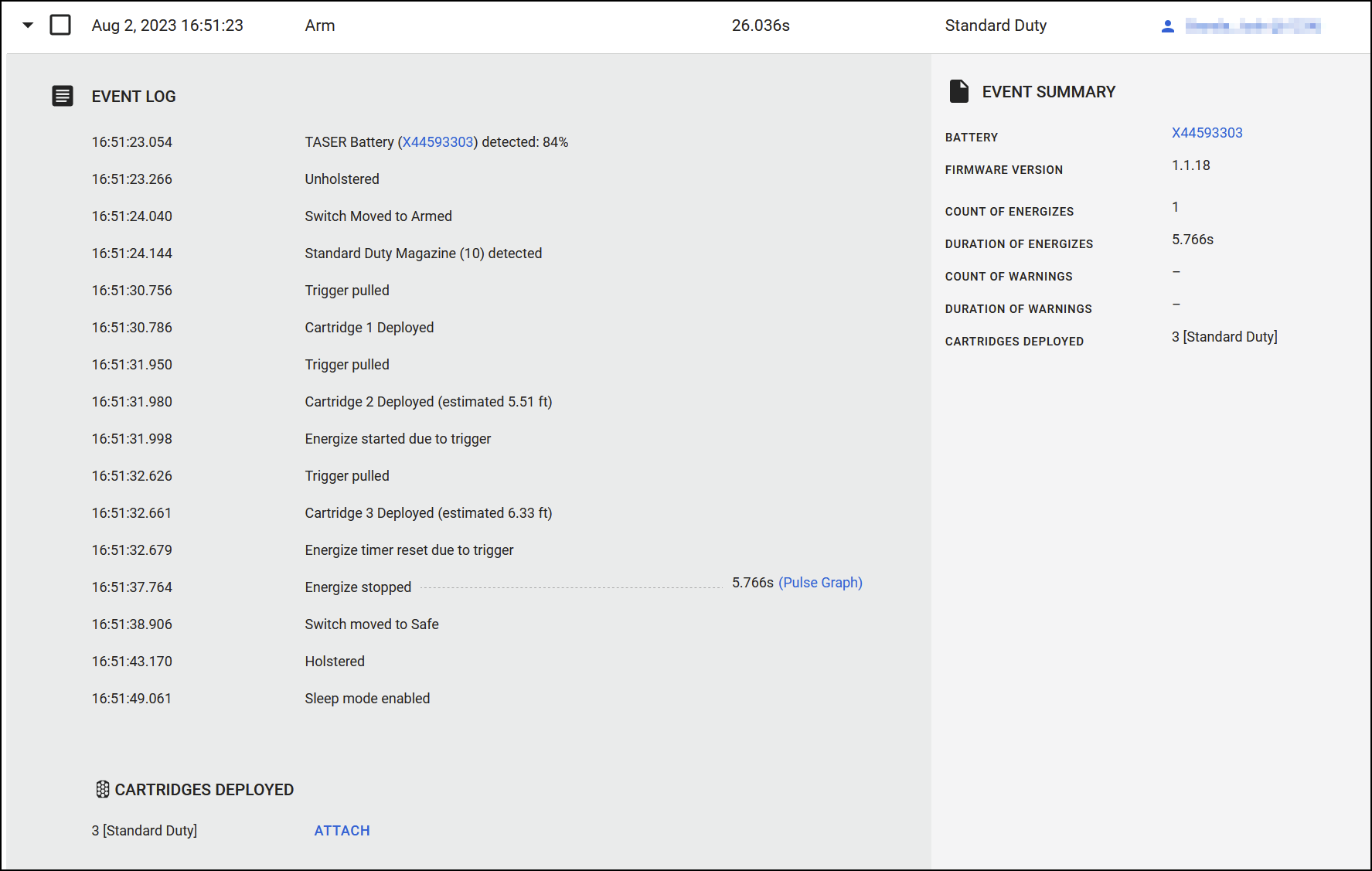
Pulse graph scenarios
The following scenarios occur over a period of time. That period can be the length of a single pulse or entire energize cycle: a connection can be good for just a moment or for the entire energize cycle.
- Good connection – Connection detected and impedance within operational range so energy will be delivered. Cartridges listed in the Cartridges Connected column of the Energize Timeline and pulses delivered in the Pulse Charge Graph and Pulse Impedance graph.
- No connection – No connection detected so no energy can be delivered. No cartridges listed in the Cartridges Connected column of the Energize Timeline and Pulses Dropped in Pulse Charge graph and Pulse Impedance graph.
- Low impedance connection – Connection detected and impedance is within operational range, though outside the range of human tissue. Cartridges listed in the Cartridges Connected column of the Energize Timeline and Pulses Delivered in the Pulse Charge Graph and Pulse Impedance Graph. Pulses in Pulse Impedance Graph are between 0 and 300 ohms.
- High impedance connection – Connection detected but impedance is too high to deliver charge. Cartridges listed in the Cartridges Connected section of the Energize Timeline and Pulses Dropped in the Pulse Charge Graph and the Pulse Impedance Graph. This occurs when the weapon has high impedance connections and is searching for good connections. The weapon searches for good connections when two probes are deployed with zero good connections, three probes are deployed with less than three good connections, and four or more probes are deployed with less than four good connections.


