Simulator Training: TASER 10 VR Validation Courses
The Simulator Training: TASER 10 VR Validation Courses efficiently test trainee competency through sequential, skill-based range skills exercises, helping to ensure proficiency in TASER energy weapon deployment without requiring one-on-one trainer involvement.
This article describes the available courses and their included exercises.
The Quick Start Guide and Instructor's Guides for all the Simulator Training: TASER 10 VR Validation courses are available for download on the Training Materials page on Axon Help.
TASER 10 VR Core I
Validate fundamental TASER 10 deployment skills through foundational exercises. Assess accuracy, probe placement, and response to varied distances, clothing, body positions, and moving targets.
In each exercise, the student will be presented with a sequence of ten character targets at random distances between 2-40 feet and must complete the following tasks with each target:
- Vocalize “TASER, TASER, TASER” before deploying
- Deploy on the “THREAT” command when the first character target appears (This command only displays with the first character target in each exercise.)
- Achieve full NMI (12+ inches of probe spread in the preferred target areas)
This course includes the following exercises:
TASER 10 VR Core II
Validate TASER 10 proficiency with time-sensitive deployments, broken circuit recovery, and re-energizing techniques. Assess reaction to changing conditions and response time under pressure.
In each exercise, the student will be presented with a sequence of ten character targets at random distances between 2-40 feet and must complete the following tasks with each target:
- Holster the TASER 10 VR Controller between drills and draw it before starting each drill
- Vocalize “TASER, TASER, TASER” before deploying
- Deploy on the “THREAT” command when the first character target appears
- Deploy probes rapidly; the elapsed time from the first deployment to achieving full NMI must be three seconds or less
- Achieve full NMI (12+ inches of probe spread in the preferred target areas)
This course includes the following exercises:
TASER 10 VR Gauntlet
High-intensity skills evaluation validating TASER 10 deployment across 10 complex, variable drills. Adapt to changing distances, moving targets, and dynamic challenges, including broken circuits and re-energizing requirements, in a high-pressure environment.
In each exercise, the student will be presented with a sequence of ten character targets at random distances between 2-40 feet and must complete the following tasks with each target:
- Holster the TASER 10 VR Controller between drills and draw it before starting each drill
- Vocalize “TASER, TASER, TASER” before deploying
- Deploy on the “THREAT” command when the first character target appears
- Deploy probes rapidly; the elapsed time from the first deployment to achieving full NMI must be three seconds or less
- Achieve full NMI (12+ inches of probe spread in the preferred target areas)
This course includes the following exercises:
Metrics
Simulator Training: TASER 10 VR Validation Courses and applicable Simulator Training: Range Skills exercises include real-time performance metrics and replay options to improve training effectiveness. These features provide instant feedback during exercises through a heads-up display to help trainees refine their skills.
These features include:
-
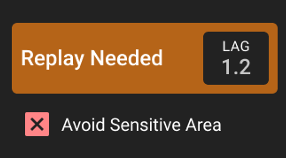
Drill Replay: Retry drills instantly using the previous drill using the same conditions after a sensitive area (head, neck, chest, groin) placement
-
Drill Summary: Provides immediate performance feedback after each drill
-
Lag Time: Measure time from the first deployment of a TASER energy weapon to partial or full neuromuscular incapacitation (NMI)
-
Time to Incapacitation: Track time from threat appearance to full NMI
Drill Replay
Drill Replay requires trainees to retry the previous drill instantly using the same conditions, such as distance, position, and clothing. This feature activates when a trainee hits a sensitive area with a probe, letting them correct their technique.
- If a trainee fails a drill due to another factor—like achieving only partial NMI—the drill remains a failed attempt and will not be replayed, even if a sensitive area was struck.
- Trainees can replay the drill indefinitely if they meet all passing criteria except for striking a sensitive area.
A drill is considered successful if the trainee meets all of the following criteria:
- Achieves full NMI of the target
- Maintains proper deployment timing (Lag Time)
- No sensitive areas are hit
Available in
Drill Replay is a mandatory requirement for:
Drill Summary
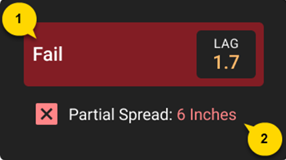
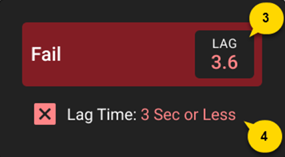
A focused performance summary appears immediately after each failed drill, highlighting executed actions, identifying the failures, and surfacing key performance insights. The Drill Summary provides instant feedback, enabling students to quickly review their failed performance without waiting for the full After-Action Report (AAR).
- Fail: Indicates failed results for the validation exercise
- Spread: Probe spread in inches
- LAG: Elapsed time from the first trigger pull to partial or full NMI
- Lag time: To meet the passing criteria, Lag Time must be three seconds or less
Available in
Simulator Training: TASER 10 VR Validation Courses
Lag Time
Lag Time is the elapsed from the first deployment of a TASER energy weapon to achieving partial or full NMI.
To meet the passing criteria in this setting, the Lag Time must be three seconds or less.
This metric helps trainees to achieve proper deployment timing and decision-making under stress.
Available in
Time to Incapacitation
Time to Incapacitation is the elapsed time from when a target first appears to when the target is fully incapacitated by NMI.
This metric helps trainees:
- Improve reaction time in high-stress situations
- Optimize TASER energy weapon deployment for better effectiveness
- Evaluate and refine their performance based on real-time data
Available in
Simulator Training: TASER 10 VR Validation Courses
FAQ
Why am I being asked to update my headset or controller firmware before training?
Starting April 14, 2026, Simulator Training and vRBT Live Action require all VR headsets and controllers to be on the latest firmware versions. These updates are required to support new platform features and ensure compatibility with supported hardware. Once the updates are complete, you can relaunch the application and continue training as normal. For more information how to update firmware, see Update firmware for VR Controllers and the FAQ How do I check or update the headset firmware?.
Will I lose any content or scenarios after updating?
No. All existing scenarios and training content remain available after completing the required firmware updates.
Troubleshooting
The app is unresponsive
If the app is unresponsive, try the following:
1. Exit the app: Depending on the app, either look down and select Exit, or use gaze selection to select Exit App.
2. In the library, use your hand to pinch and select the app tile to relaunch it.


