Incident and case profiles
An incident profile opens when you select an Incident ID from Reports search, a task inbox, or the More actions menu of a report associated with the incident. If a case is created from an incident, the incident profile becomes a case profile that contains additional information and options.
Incident profiles
An incident profile is created as soon as an incident report is started. The profile is updated in real-time as the incident report is completed. The top portion of an incident profile displays basic information about the incident, including date and time, address, district/beat/zone, report purpose, and involved officers. If the incident contains any juvenile persons or restrictions, these labels also appear at the top of the profile.
While the report is in progress, a Draft label appears at the top of the incident profile, as well as on all areas of the profile where information appears in a draft report. These draft labels remain until the report is finalized by the Records department. If additional reports or supplements are created for the incident, the Draft label reappears on the incident profile until those reports are finalized.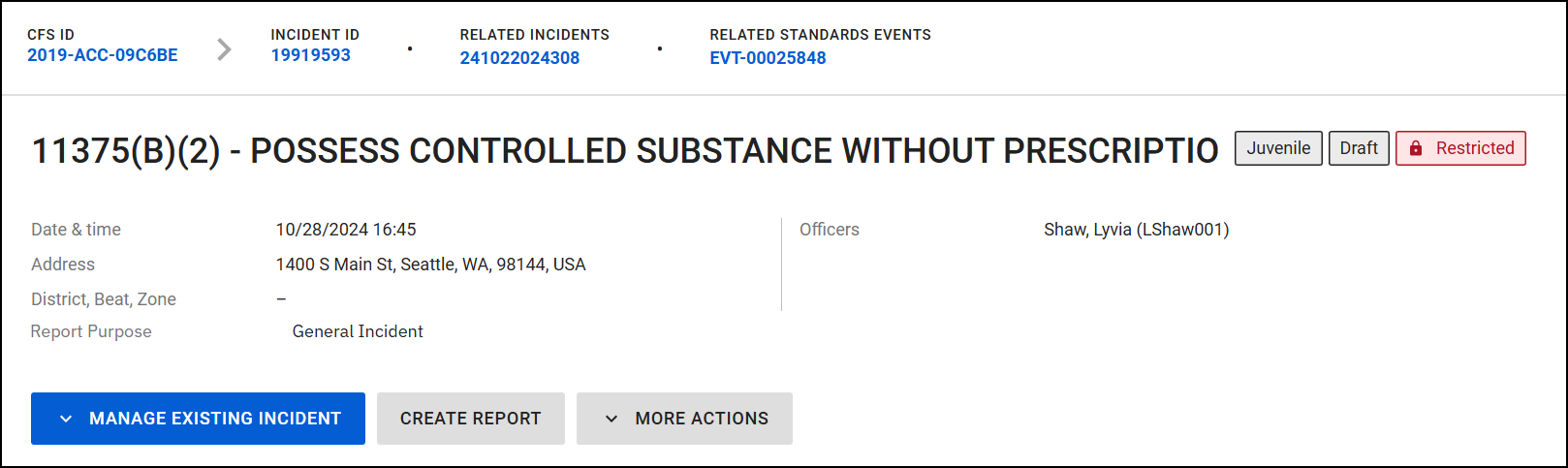
From this top section of the profile, you can take the following actions:
- Select the blue hyperlinks above the offense name to open the linked CFS profile and related incidents and events.
- Use the blue and gray buttons to:
- Manage the existing incident.
- If the incident report is still in progress, you will be added to the report as a contributor.
- If the incident has been finalized, editing the incident generates a supplement.
- Create a new report for the incident.
- Open the More actions menu to take additional actions:
- Manage the existing incident.
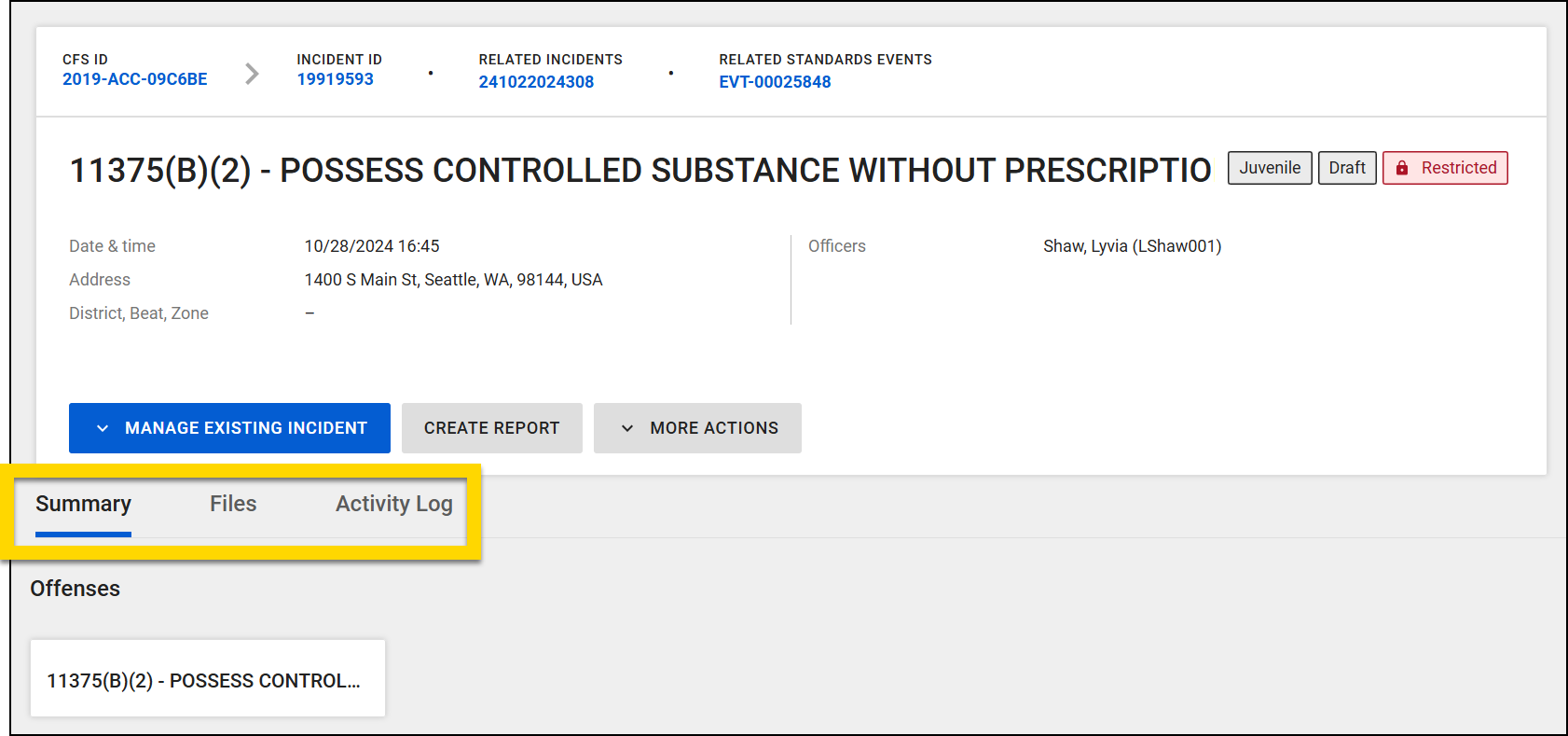
Below the top heading section, you can switch among the tabs to view information and take various additional actions:
- Summary: View offenses, people, organizations, narratives, vehicles, property, and reports associated with the incident.
- Files: Mange all files that have been added to the incident, either to the incident report or directly to the incident.
- Activity Log: Manage the log of all actions taken on the incident.
Case profiles
When a case is created for an incident, the incident profile becomes a case profile, which shows additional information and actions.
The case profile is the primary workspace for investigators. It consolidates all information related to the case--reports, tasks, evidence, activity history--in a single view. This unified view helps users manage and progress the investigation efficiently, including:
- View case details, including:
- Unit(s) the case is assigned to
- Lead detective(s) the case is assigned to
- Status (for each assigned unit)
- Internal disposition (for each assigned unit)
- NIBRS disposition
- Use the buttons to:
- Create or update the case summary
- Create case documents
- Take case-related actions from the More actions menu:
- View the new case-related tabs:
Some of these options may not appear to all users based on the privileges they have been assigned.
Summary tab
The Summary tab displays all information and reports associated with the incident and is broken into the various sections detailed below.
Offenses
The Offenses section displays all offenses added to the incident report. If offenses are added to other reports associated with the incident, the do NOT appear in this section.
People
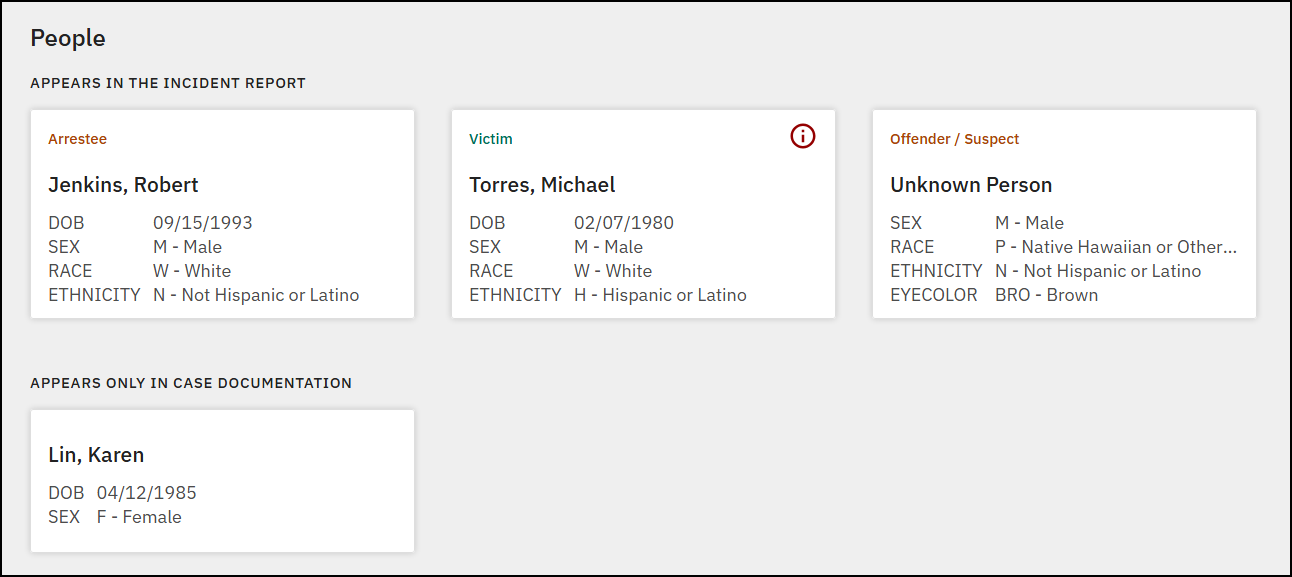
The People section contains all people who were added to the incident report, incident report supplements, and case documentation (if a case has been created for the incident). When it has been added to a report, basic information about each person is displayed, including name, DOB, sex, race, and ethnicity.
The information for each person reflects data that was accurate at the time of the incident. When viewing a past incident, this information may not match the person's current details. For example, at the time of the incident, the victim’s name was Debbie Miller. Two years later, her name changes to Debbie Smith. The incident profile displays “Debbie Miller,” the name recorded at the time of the incident, even after her name changes.
Similarly, the age field in the incident report shows the person’s age at the time of the incident, regardless of their current age, if it took place in the past. If the incident does not have a date, the age field shows the person's current age.
On case profiles, if a person, organization, or vehicle that doesn't already appear in the incident report is added to a case task or case document, it appears in its corresponding section under the label, Appears only in Case Documentation. These parts of a case profile will only appear to users who have the appropriate privileges to view case-related information.

|
Some people display a red "i" (information) icon in the top right corner. This icon indicates that after the report was finalized, a supplement was created and the person's role in the incident was updated. Select the person's name to open a preview of their profile. Their initial role appears below their name with an annotation of "(Reclassified)". The updated role appears below the original role, with a link to the supplement in which the role was updated. |
Narratives
The Narratives section, contains all narratives written in the incident report, its supplements, and Narrative Only reports. The narratives are sorted by creation date, with the most recent appearing at the top.
Vehicles
The Vehicles section contains all vehicles who were added to the incident report, incident report supplements, and case documentation (if a case has been created for the incident).
|
|
Some vehicles display a red "i" (information) icon in the top right corner. This icon indicates that after the report was finalized, a supplement was created and the vehicle's role in the incident was updated. Select the vehicle to open a preview of its profile. The initial role appears below the vehicle year, make, and model with an annotation of "(Reclassified)". The updated role appears below the original role, with a link to the supplement in which the role was updated. |
Property
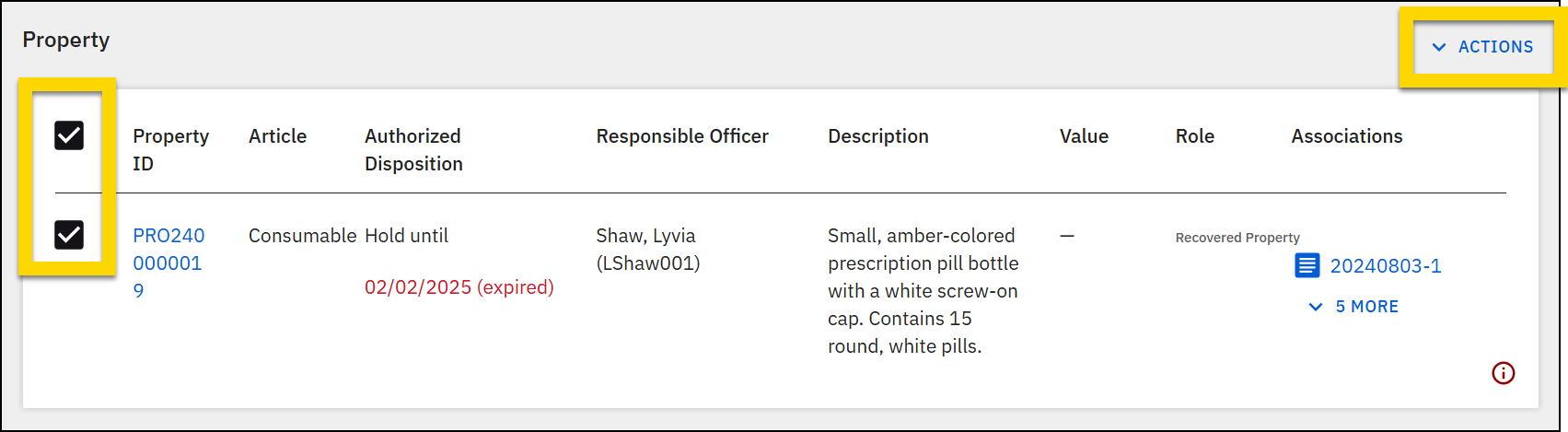
The Property section contains all property items that have been added to the incident report or other reports that have been created for the incident. Select the ID in the Property ID column to open the property profile. Select the Report ID in the Associations column to open the report in which that item was submitted to the Property department.
|
|
Some property items display a red "i" (information) icon in the bottom right corner of the row. This icon indicates that after the report was finalized, a supplement was created and the property item's role in the incident was updated. Select the property item to open a preview of its profile. The initial role appears below the property name with an annotation of "(Reclassified)". The updated role appears below the original role, with a link to the supplement in which the role was updated. |
Select a checkbox beside one or more items, and then open the Actions menu to take action on the items:
Reports
The Reports section contains links to the incident report, its supplements, as well as all reports that have been added to the incident using the Create report button at the top of the profile.
Select the Report ID in the Report column to open and view the report in Report Writer. To unlink a report from the incident, select More actions [...] > Unlink from incident. (Supplements and Narrative Only reports can't be unlinked from an incident.)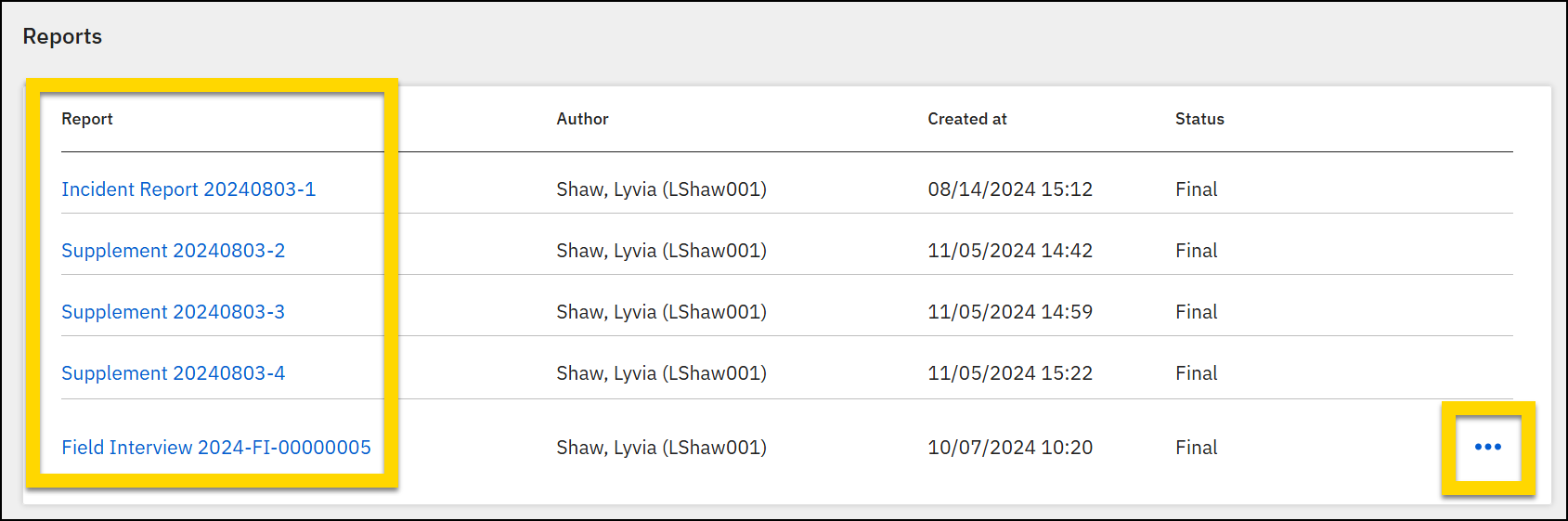
Files tab
All files added directly to an incident, or to reports associated with that incident appear on the Files tab of the incident profile.
See Evidence and file management for more information.
Activity log tab
The Activity log tab includes all activities performed on that incident (e.g., report created, finalized, files added, etc.).
See Activity log management for more information.


